


Erbium laser resurfacing
In Hale, Cheshire
Erbium laser resurfacing · Hale, Cheshire
Erbium laser resurfacing in Hale, Cheshire
From a light NanoPeel to deep resurfacing, treatment planned around your skin and the recovery you can accommodate
When patients ask about laser resurfacing, the first question is often whether Erbium is a gentler alternative to CO2. The more useful question is not simply which laser is stronger. It is how much skin needs to be treated, whether that treatment should be full-field or fractional, how much thermal effect is appropriate and what level of recovery is justified by the concern.
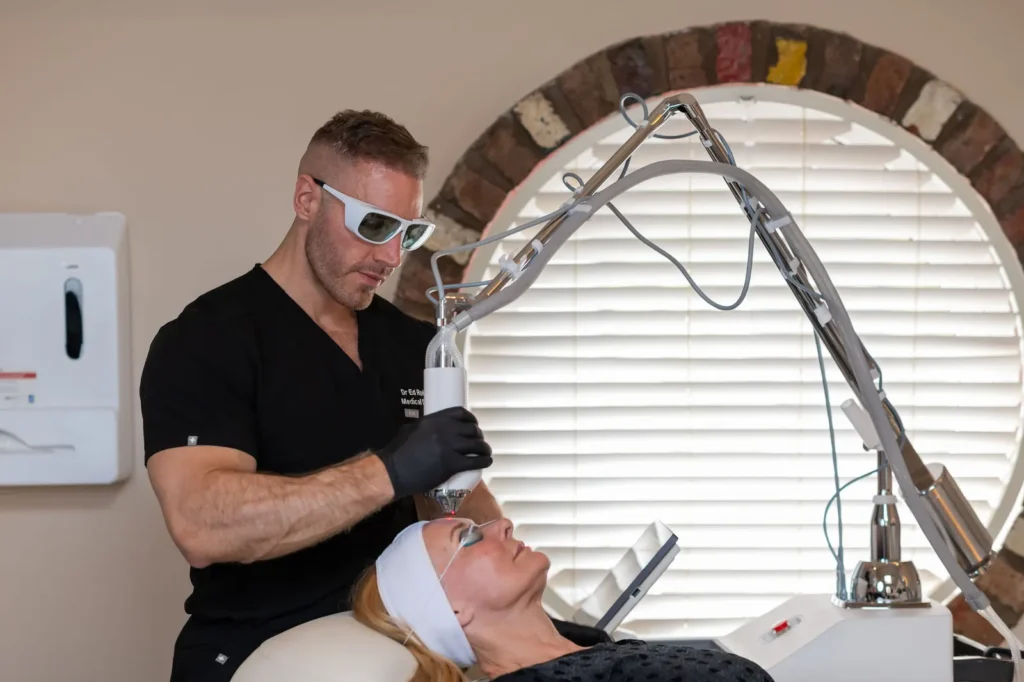
At Dr Ed Robinson Clinics, the Sciton JouleX platform is used to deliver several distinct forms of 2940 nm Erbium laser resurfacing. These range from a superficial NanoPeel with minimal downtime, through a MicroPeel and fractional ProFractional treatment, to deep full-field Erbium resurfacing for more established lines, scarring and photoageing.
They use the same Erbium wavelength, but they are not the same treatment. A light peel and deep resurfacing differ substantially in what they can achieve, how comfort is managed, the wound care required and how long the skin takes to recover.
The aim is to establish what is causing the change that concerns you, decide whether resurfacing is appropriate, and recommend the least intensive treatment that has a reasonable chance of delivering a worthwhile improvement. It will also be clear when another treatment, a combined approach or no treatment would be more sensible.
Hale clinic · Consultation first
Erbium laser resurfacing is available at our Hale clinic only. A consultation comes first so that we can agree which form of Erbium treatment is appropriate and the recovery you can accommodate.
Erbium laser resurfacing at a glance
What to expect
 Appointment time
Commonly 60 to 90 minutes, including preparation. Deep full-face, regional anaesthesia or combined treatment may take longer.
 Anaesthesia and comfort
May include topical anaesthetic, cooling, local anaesthetic infiltration and nerve blocks provided by Dr Ed.
 Visible recovery
From minimal after a NanoPeel to around 5 days (MicroPeel), around 10 days (ProFractional) and 2 to 4 weeks (deep). Pinkness can persist.
 Results
Early improvement after the surface has healed, then further change as collagen remodels over about 3 to 6 months.
Number of treatmentsLighter treatments may be repeated. ProFractional may be staged. Deeper treatment is often a single substantial procedure before review.
These are planning guides rather than promises. The area, depth, treatment density, use of thermal coagulation and your individual healing response all affect the experience.
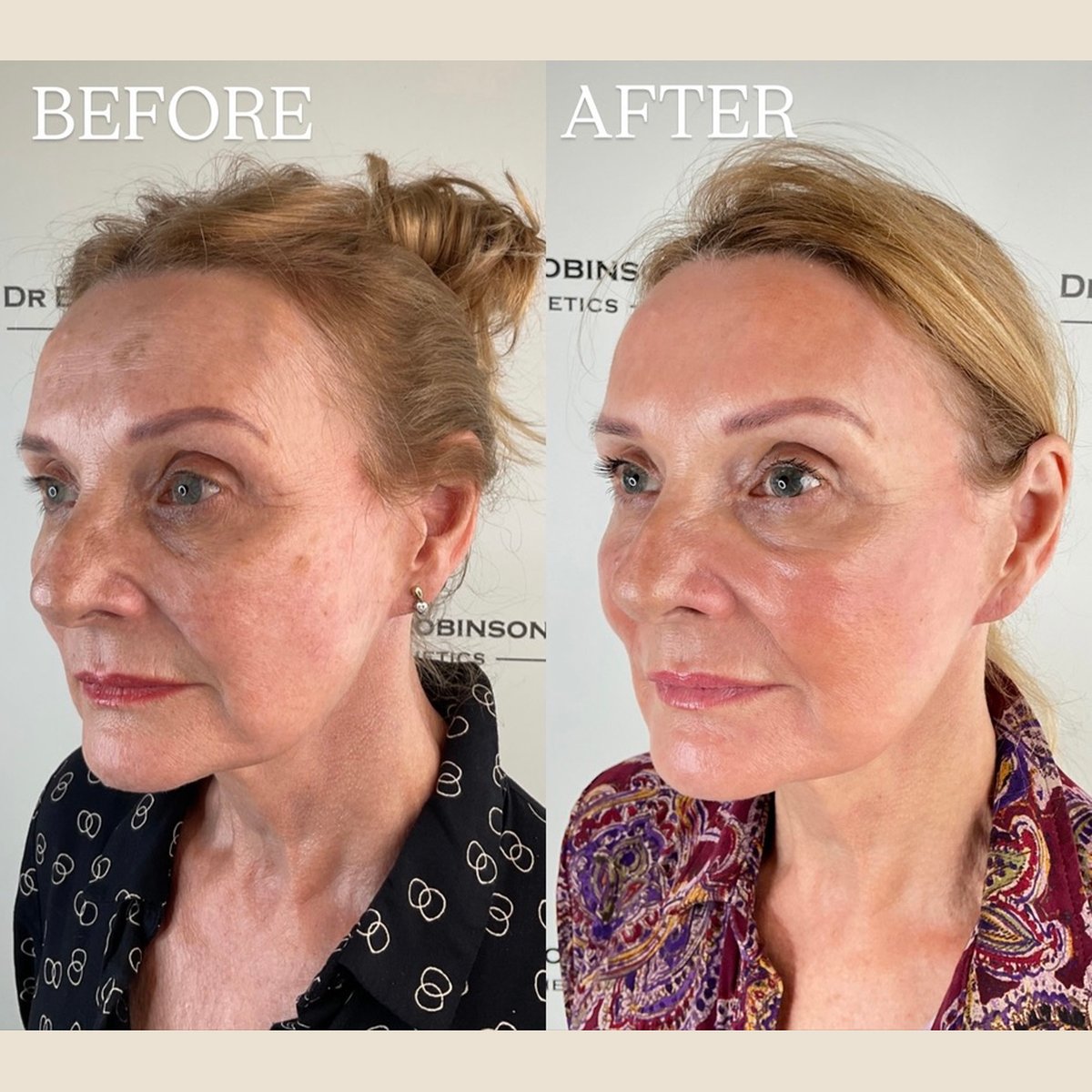


What is Erbium laser resurfacing?
Erbium laser resurfacing is an ablative skin treatment. Ablative means that the laser removes controlled amounts of tissue rather than only heating the skin beneath an intact surface.
The JouleX platform uses an Er:YAG laser at a wavelength of 2940 nm. This wavelength is strongly absorbed by water, which is abundant within the skin. When the laser energy is delivered, water within the targeted tissue absorbs it and the tissue is removed with a high degree of precision.
That description can make the treatment sound more uniform than it really is. Depth of ablation, the amount of skin covered and the degree of additional thermal effect can be changed. A continuous layer can be removed across a treatment area, known as full-field resurfacing, or separated microscopic channels can be created, known as fractional resurfacing.
This gives four broad treatment pathways on JouleX:
NanoPeel
A superficial full-field refresh for surface sun damage, fine texture and early lines, with minimal downtime.
MicroPeel
A more substantial full-field peel for moderate lines, early scarring and uneven tone, usually with around 5 days of visible recovery.
ProFractional Erbium
Fractional columns of ablation placed at a planned depth and density, often used for acne scarring and textural irregularity, with around 10 days of downtime.
Deep Erbium resurfacing
The most intensive full-field option for suitable patients with significant acne scarring, deep lines around the mouth or advanced photoageing, with a recovery period that can range from 2 to 4 weeks.
The treatment name is only the beginning. Two patients having "Erbium laser" may be having procedures of completely different depth and intensity. Before you decide, you should know which pathway is being proposed, which areas will be treated, why that level has been recommended and what the recovery will involve.
How does Erbium laser resurfacing work?
Why the 2940 nm wavelength matters
The 2940 nm Er:YAG wavelength has a strong affinity for water. This allows it to remove very thin, controlled layers of water-containing skin. The JouleX platform also allows the practitioner to adjust the balance between ablation and coagulation, or the amount of heat left within the tissue.
The ablative component removes some damaged tissue and creates a new healing surface. The controlled thermal component, when used, contributes to the wound-healing response within the dermis. During recovery, the surface re-epithelialises and collagen is reorganised over time. This is why the final result cannot be judged as soon as peeling has finished.
Precision is valuable, but it does not make resurfacing risk-free. As depth, density and thermal effect increase, so do the demands of anaesthesia, wound care and recovery. A more intensive treatment should therefore have a clear clinical purpose.
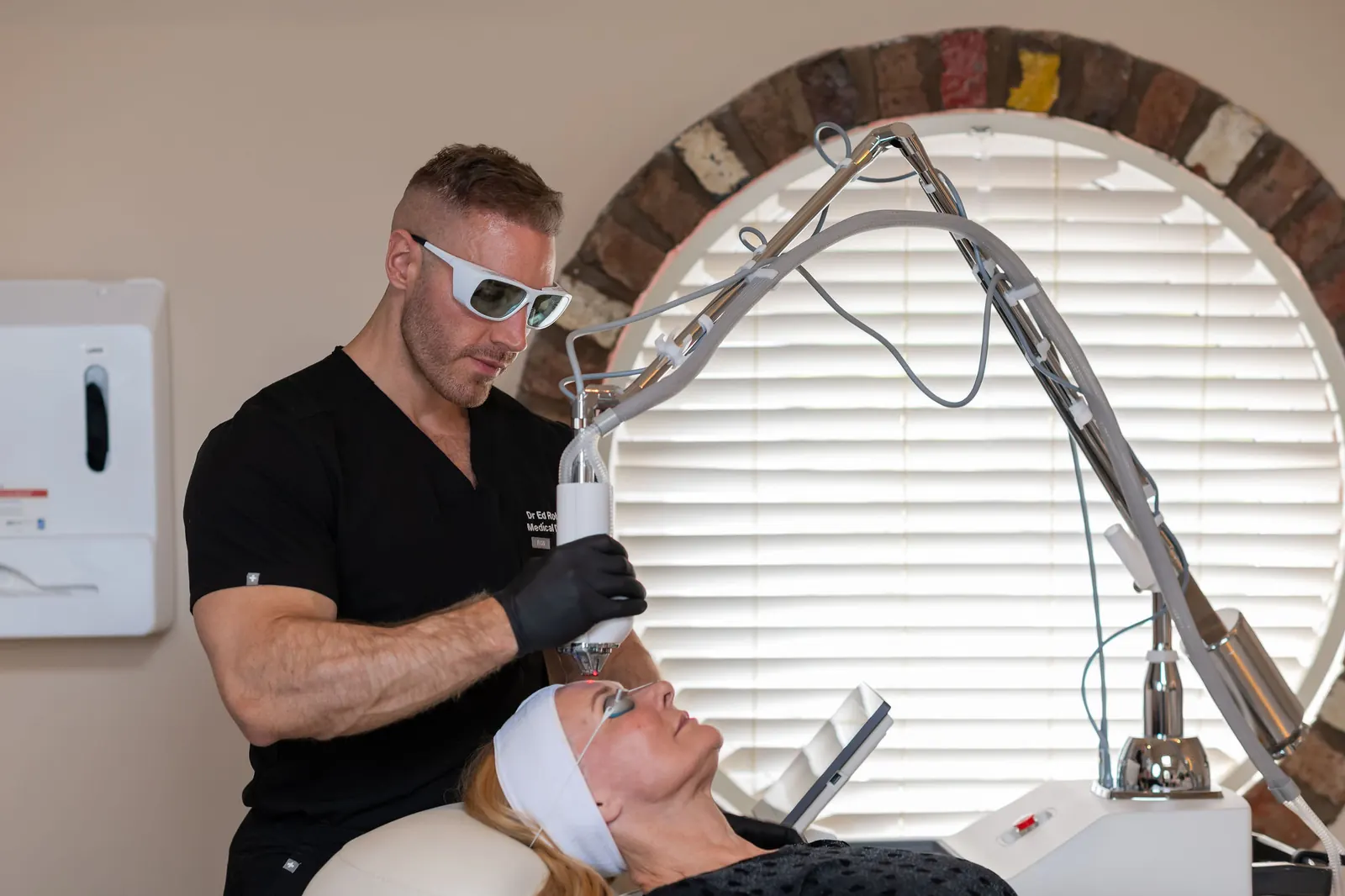
The four Erbium pathways
Each pathway uses the same 2940 nm wavelength on JouleX, but the depth, coverage and recovery differ substantially.
NanoPeel
A NanoPeel removes a very superficial, continuous layer from the treatment area. It is intended as a lighter refresh for rough surface texture, early fine lines and some superficial sun damage.
Because the treatment is shallow, recovery is usually relatively brief. The trade-off is that the improvement is more modest. A NanoPeel should not be presented as though it will reproduce the effect of deep resurfacing without the downtime.
MicroPeel
A MicroPeel is also a full-field treatment, but it reaches more deeply than a NanoPeel. It may be considered when there are more established textural changes, moderate fine lines, early acne scarring or uneven tone that would not be expected to respond sufficiently to a very superficial peel.
Around 5 days of visible recovery is a useful guide, although depth, area and individual healing can change this. The skin may be red, swollen, tight and peel as the treated surface is replaced.
ProFractional Erbium
ProFractional treatment creates narrow columns of ablation at a chosen depth while leaving bridges of untreated skin between them. Those intervening areas help the surface repair more quickly than it would after treating the whole area to the same depth.
Depth and density are separate decisions. A treatment can create deeper channels at a lower density, or treat a greater proportion of the surface at a different depth. This flexibility is particularly useful when treating acne scars or localised textural irregularities.
Fractional does not automatically mean mild. A deep or dense ProFractional treatment can still produce swelling, pinpoint bleeding or oozing, crusting and a meaningful recovery period. Around 10 days is a sensible planning guide for the treatment commonly performed, but your individual plan takes priority.
Deep Erbium resurfacing
Deep Erbium resurfacing removes a continuous layer of skin across the treatment area, with the depth and thermal effect adjusted to the anatomy and concern. It may be considered for significant photoageing, deeper acne scarring or established lines around the mouth when a lighter approach is unlikely to deliver enough change.
This is a medical procedure with a genuine wound-healing phase. The skin can be raw, swollen and weeping before a new surface forms. Visible recovery can take 2 to 4 weeks, and residual pinkness may last considerably longer.
Deep treatment can produce a more meaningful single-session change, but it is not automatically the best choice. It also carries greater potential for infection, prolonged redness, pigment change, delayed healing and scarring. It is recommended only when the likely benefit justifies that recovery and risk.
Why the treatment plan may vary across the face
Skin thickness, movement and healing characteristics are not identical across the face. Deep lines around the mouth may justify a different approach from the upper cheeks, forehead or eyelids. Treating every area at one uniform setting can either undertreat the main concern or expose more delicate areas to unnecessary risk.
Depth, density or technique may therefore vary by facial region. Those boundaries are explained before treatment so that "full-face" does not become a vague label that leaves you uncertain about what is actually included.
What concerns can Erbium laser resurfacing improve?
Erbium resurfacing can be considered for some lines and wrinkles, acne scarring, sun-related surface damage, uneven texture and certain surgical or traumatic scars. The appropriate pathway depends on the type and severity of the concern.
Assessment considers whether a line is mainly within the skin or whether movement, volume loss, dental support and changes in deeper facial structure are also contributing.
Surface lines can soften as damaged tissue is removed and collagen remodels. Deep movement-related folds are unlikely to disappear completely, however, and resurfacing does not replace structural support.
The lines around the mouth are a common reason patients consider deep Erbium treatment. This area can respond well in suitable patients, but it also moves constantly and requires careful depth planning and aftercare. The aim is meaningful softening, not a completely smooth or expressionless mouth.
Read more about lines and wrinkles"Acne scarring" describes several different changes. Some scars are shallow and rolling, some are sharply edged, some are narrow and deep, and others are tethered to deeper tissue. They do not all respond in the same way.
ProFractional or deeper full-field resurfacing may improve some depressed scars and the overall transition between scarred and unscarred skin. It cannot guarantee that every scar will disappear. Deep, narrow or tethered scars may require a different or combined procedure, and active acne should be appropriately managed before elective resurfacing.
Read more about acne scars and marks after acneRemoving superficial damaged tissue can improve some sun-related roughness and uneven brown pigmentation. Before treating a pigmented mark, it is necessary to understand what it is. A solar lentigo, post-inflammatory pigmentation and melasma are not interchangeable diagnoses and do not behave in the same way after laser.
Any lesion that is changing, bleeding, symptomatic or clinically uncertain should be assessed through an appropriate medical pathway before cosmetic laser treatment is considered.
Read more about pigmentation melasma and sun spotsNanoPeel, MicroPeel or fractional treatment may improve roughness and make pores appear less prominent by creating a smoother surface and supporting dermal remodelling. Pores are normal anatomical structures and cannot be permanently removed.
Whether the degree of change you want is proportionate will be explained to the recovery involved.
Read more about uneven skin texture and roughnessScars may be treated once they are appropriately assessed and mature enough for intervention. Resurfacing can help soften an abrupt texture or level difference, but it cannot remove a scar or return injured skin to its pre-injury state.
The age, colour, thickness, orientation and symptoms of the scar all influence whether Erbium is appropriate. A raised, actively inflamed or functionally restrictive scar may need a different medical or surgical pathway.
Read more about scars and scar revisionLaser resurfacing that renews the outer skin and can tighten crepey areas.
Read more about skin laxity and saggingErbium laser resurfacing may improve an etched skin component but does not reposition all the deeper tissues responsible for a fold.
Read more about nose to mouth folds and marionette linesLaser resurfacing that can tighten crepey skin around the brow and eyes.
Read more about heavy or drooping eyebrowsLaser treatment that can remove a stubborn wart layer by layer when other treatments have not worked.
Read more about warts and persistent viral skin growthsErbium laser resurfacing may be relevant where surrounding skin lines are the main issue.
Read more about lip volume and definitionErbium laser resurfacing may be considered for established perioral skin lines.
Read more about lines around the lips


Which areas can be treated?
Erbium resurfacing is most commonly used on the face. Treatment may cover the full face or focus on a particular region, such as:
The eyelids and immediate eye area require specific assessment and eye protection. Previous eyelid surgery, laxity and the position of the lower lid all matter when planning treatment.
The neck, chest and non-facial skin do not heal in the same way as the face. They generally require a more conservative approach and may not be suitable for the same depth of full-field treatment. These areas are assessed separately rather than transferring facial settings onto them.
At consultation, the treatment boundaries are confirmed and whether the jawline, ears, hairline or other transitions need to be blended. This helps reduce an obvious contrast between treated and untreated skin.
Is Erbium laser resurfacing suitable for me?
Suitability depends on your diagnosis, skin tone, medical history, previous treatments and ability to complete the preparation and aftercare.
The practical context also needs to be understood. A technically possible treatment may still be the wrong treatment if you cannot avoid sun exposure, manage wound care or allow enough time before an important event.
Please tell the clinic about:
Please tell us about:
- Current medicines and supplements, including current or previous isotretinoin and medicines that affect healing, bleeding or light sensitivity.
- Previous darkening or lightening of the skin after inflammation, injury or treatment.
- A personal or family history of unusual, thickened or keloid scarring.
- Cold sores, active infection, acne flare, eczema, dermatitis or another condition affecting the treatment area.
- Diabetes, immune suppression or another condition that may influence infection risk or healing.
- Previous laser treatment, surgery, filler, threads or other procedures in the area.
- Recent tanning, sunbed use, fake tan, significant sun exposure or an upcoming sunny holiday.
- Smoking or vaping, which may affect healing.
- Pregnancy or breastfeeding.
Do not stop prescribed medicine without advice from the clinician responsible for it. A test area may sometimes be useful, but it cannot guarantee that a larger or deeper treatment will heal in exactly the same way.
Melasma is a chronic, relapsing pigment condition that can be aggravated by heat, light and inflammation. It needs a long-term management plan and should not be treated as though it were an ordinary sun spot.
Erbium resurfacing is not a routine cure for melasma. In some circumstances a laser may form one part of a wider plan, but the risk of worsening or recurrence needs to be discussed clearly. Topical management or another approach may be recommended instead.
Erbium treatment can be considered across a range of skin tones, but that does not mean every depth or setting is appropriate for every skin.
The risk of post-inflammatory hyperpigmentation, and in some cases loss of pigment, needs particular consideration. Baseline skin colour is assessed separately from any recent tan, ask about previous pigment changes and discuss whether preparation, a lower-intensity treatment or a different technology would be safer.
How should I prepare for treatment?
Preparation depends on the treatment level. A NanoPeel does not require the same planning as deep full-field resurfacing.
Your skincare plan
Bring a list or photographs of the skincare and prescription products you use, particularly retinoids, exfoliating acids, benzoyl peroxide, hydroquinone and treatments for pigmentation or acne.
For deeper treatment, or where pigment risk needs to be managed, a preparation programme may be prescribed before the procedure. This can include products that regulate pigment and skin turnover, but the exact combination and timing are individual.
If preparation has been prescribed as part of your safety plan, it needs to be completed. Please contact the clinic if a product causes persistent irritation or you have not been able to follow the programme. It is preferable to review or postpone treatment than to proceed with inflamed or inadequately prepared skin.
Sun exposure and treatment timing
Tell the clinic about recent sun exposure, sunbeds and planned travel before booking. An active tan can change how the skin responds and increase pigmentary risk.
Your diary should allow for the realistic recovery of the proposed treatment, not only the shortest possible estimate. For weddings, photography, public appearances or another important event, leave a generous margin in case swelling, peeling or pinkness lasts longer than expected.
Cold sores and medicines
Ablative resurfacing can reactivate herpes simplex. Tell the clinic about any history of cold sores, even if outbreaks are infrequent. Antiviral medication may be prescribed, particularly for treatment around the mouth or more extensive resurfacing.
Medicines will be reviewed and any required changes explained. Follow the instructions issued for your own treatment rather than copying a regimen from another patient or clinic.
Planning for recovery at home
For deeper resurfacing, you will need the recommended cleanser, ointment and any dressings before treatment. Arrange time away from public-facing work, help at home if needed and a clean environment in which to complete wound care.
Travel from the clinic and whether you need someone to accompany you will also be discussed. Do not make assumptions about driving or public transport until the anaesthetic and medication plan has been agreed.

What happens at the appointment?
You should arrive knowing which form of Erbium treatment has been recommended, which areas are included, the expected recovery and the agreed price. There will still be an opportunity to ask questions and tell the clinic about any change in your health, medication, skincare or sun exposure.
Confirm the plan
The plan is reviewed, standardised photographs are taken and the skin is prepared. Appropriate eye protection is chosen for the area being treated.
Anaesthesia
The anaesthetic plan is completed and allowed enough time to work.
Treatment
The laser is passed across the agreed area. Full-field peels remove a continuous layer; ProFractional creates separated channels. Regions may receive different settings.
Before you leave
Recovery products or dressings are applied, the first stage of wound care is reviewed and how to contact the clinic is confirmed. Deeper treatment includes planned follow-up.
You may notice heat, pressure, prickling or sharper sensations in more sensitive areas. Comfort and the clinical response are monitored throughout. The appearance immediately afterwards depends on intensity and may range from redness after a superficial peel to pinpoint bleeding, oozing and a raw surface after deeper treatment.
How do you make Erbium laser resurfacing more comfortable?
Discomfort varies substantially with depth, treatment area and the individual. A superficial peel and deep perioral resurfacing need different anaesthetic plans.
Depending on the procedure, comfort measures may include strong topical anaesthetic cream, cooling, local anaesthetic placed directly into the treatment area and regional nerve blocks provided by Dr Ed.
What is a nerve block?
A nerve block involves placing local anaesthetic near a nerve to temporarily reduce sensation in the area it supplies. It requires an injection and is different from applying numbing cream to the surface.
Dr Ed's background in NHS anaesthesia informs how blocks are planned for some laser procedures. The expected benefit, limitations and risks are explained before treatment.
A nerve block does not necessarily remove every sensation. You may still be aware of pressure, movement or warmth, and some areas can be supplied by overlapping nerves. Temporary bruising, tenderness or altered sensation can occur, and you will be advised how to protect numb skin until sensation returns.
Deep Erbium resurfacing is not described as painless. Discomfort is discussed honestly and an appropriate anaesthetic plan is built rather than minimising it.

What does recovery look like?
Recovery is determined by the treatment actually performed. The four JouleX pathways should not be given one generic downtime figure.
| Treatment pathway | Typical recovery pattern |
|---|---|
| NanoPeel | Redness, dryness or a tight feeling followed by light flaking. Visible downtime is usually minimal, although the skin still needs gentle care and sun protection. |
| MicroPeel | More obvious redness, swelling, dryness and peeling as the treated surface renews. Around 5 days of visible recovery is a useful guide. |
| ProFractional Erbium | Redness, swelling, pinpoint bleeding or oozing and small crusts or a rough texture over the fractional channels. Allow around 10 days, depending on depth and density. |
| Deep Erbium resurfacing | A raw, swollen and weeping surface followed by re-epithelialisation, peeling and persistent pinkness. Visible recovery can take 2 to 4 weeks, with residual redness lasting longer. |
The early healing sequence after more intensive treatment
Immediately
Heat, redness, swelling and tenderness. Fractional or deep treatment may produce pinpoint bleeding, oozing or a raw appearance.
First 24 to 72 hours
Swelling can become more noticeable, particularly around the eyes. The skin may weep and require regular cleansing and ointment.
Following days
The surface begins to close. Peeling, crusting, itching and tightness can occur.
After surface healing
The skin may look pink and remain more reactive. Makeup and sunscreen only when advised.
Weeks and months
Pinkness gradually fades and collagen remodelling continues. Judge texture and lines over time.
How much time should I take off?
Plan according to what your work involves and how private your recovery needs to be. Working from home is different from facing clients, working outdoors, wearing protective equipment or exercising heavily.
For deep resurfacing, the question is not only when you could technically work. It is when you are likely to feel comfortable being seen, when wound care is manageable and when your work environment is compatible with healing skin.
Tell the clinic what you need to return to. The proposed procedure can then be discussed rather than give you a generic "back to work" answer.
How do I look after my skin afterwards?
Follow the written plan issued for your treatment. Instructions for a light NanoPeel are not sufficient after deep full-field resurfacing.
For deeper treatment, think of the early phase as wound care rather than an ordinary skincare routine. Use the prescribed cleansing method, ointment and dressings at the frequency advised. Wash your hands before touching the area and do not pick, scrub or pull away peeling skin or crusts.
Avoid makeup, retinoids, acids, exfoliants and unapproved products while the surface is open or incompletely healed. Avoid intense exercise, heat, saunas, steam rooms, swimming and friction during the period specified in your aftercare.
Shade and physical protection from sunlight are important from the outset. Sunscreen is introduced when the surface has re-epithelialised sufficiently to tolerate it. Once advised, use broad-spectrum sun protection consistently and avoid deliberate tanning.
Sleep slightly elevated during the early period if advised, particularly when swelling is expected. Keep your follow-up appointments even if the skin appears to be settling normally.
When should I contact the clinic?
Contact the clinic promptly if pain is increasing rather than settling, redness or swelling is spreading, or you develop pus, an unpleasant discharge, fever, new blisters, cold-sore symptoms, dark or pale patches that concern you, or healing that does not follow the pattern explained.
New eye pain, visual disturbance or rapidly increasing swelling around the eye requires urgent assessment. For a serious or rapidly worsening problem, seek urgent medical care rather than waiting for a routine message response. Call 999 for a severe allergic reaction, breathing difficulty or another medical emergency.
Existing patients with a concern after treatment: WhatsApp our complications line on 07868 809125. New enquiries: call or WhatsApp 0161 399 0631.
What are the risks?
Redness, swelling, tenderness, peeling and temporary sensitivity are expected consequences of resurfacing. Oozing, crusting and a raw appearance are also expected after deeper procedures. These are different from complications, although you should still contact the clinic if the pattern or severity concerns you.
Potential complications include:
- Bacterial, viral or fungal infection.
- Reactivation of cold sores.
- Prolonged redness or sensitivity.
- Post-inflammatory hyperpigmentation or loss of pigment.
- Acne or milia during recovery.
- Irritant or allergic contact dermatitis from recovery products.
- Delayed healing, persistent texture change or visible treatment boundaries.
- Scarring, including a raised or depressed scar.
- Eye injury or a change in eyelid position when treating close to the eye, although these are uncommon with appropriate assessment and protection.
Risk is affected by the treatment depth, thermal effect, area, skin type, medical history, preparation and aftercare. Careful planning reduces avoidable risk, but no practitioner or device can remove it entirely.
The risks that are relevant to your proposed treatment are discussed before consent. A NanoPeel should not carry the same conversation as deep perioral or full-face resurfacing.
When will I see results?
The first visible change appears as the treated surface heals. Skin may look smoother and fresher once peeling has settled, but early swelling can temporarily exaggerate improvement and persistent redness can make the final tone difficult to judge.
Collagen remodelling takes longer. Lines, scars and texture are assessed over the following 3 to 6 months, with the timing influenced by the depth of treatment and your healing response.
The result should be described as improvement rather than erasure. Deep lines may remain, acne scars will not all respond equally and resurfacing cannot replace volume, reposition descended tissue or reproduce the effect of surgery.
Results can be long-lasting because the skin has genuinely remodelled, but treatment does not stop ageing or future sun damage. Maintenance depends on the original concern and may involve skincare, sun protection, lighter laser treatment or another planned procedure.
Lighter peels are more likely to be repeated. ProFractional treatment may form part of a course for scarring. After deep resurfacing, enough time is allowed for recovery and remodelling before deciding whether any additional treatment is justified.
How does Erbium laser resurfacing compare with other treatments?
You do not need to choose the device or treatment depth before attending a consultation. The consultation should identify the concern first and then explain which option offers a proportionate balance of improvement, downtime and risk.
| Option | What would be discussed |
|---|---|
| NanoPeel | Whether a superficial full-field refresh is enough for early texture, fine lines or surface sun damage. |
| MicroPeel | Whether a medium-depth full-field peel provides an appropriate step up in correction and recovery. |
| ProFractional Erbium | Whether fractional channels are better suited to acne scarring or focal texture while preserving intervening skin. |
| Deep Erbium resurfacing | Whether significant lines, scarring or photoageing justify a deeper full-field procedure and 2 to 4 weeks of visible recovery. |
| HALO TRIBRID | Whether hybrid fractional treatment can address tone and texture with less extensive surface removal than deep full-field Erbium. |
| MOXI | Whether a lighter non-ablative treatment is sufficient when recovery time is a priority and the concern is less established. |
| BBL HEROic | Whether the main priority is suitable brown or vascular colour rather than textural resurfacing. |
| SkinPen microneedling | Whether some scars or texture can be treated with a different mechanism and recovery profile. |
| CO2 resurfacing | CO2 is not offered. Both CO2 and Erbium can be ablative, but wavelength alone does not decide the result. Why JouleX Erbium is or is not appropriate is explained rather than claiming that one laser is universally superior. |
The useful question is not which treatment sounds strongest. It is which treatment has a sensible chance of improving your concern without asking you to accept unnecessary recovery or risk.
Complementary Treatments
HALO TRIBRID provides hybrid fractional treatment. MOXI offers a lighter non-ablative option. BBL HEROic addresses suitable brown or vascular colour. SkinPen microneedling may be considered for some scars with a different recovery profile.


BBL HEROic
For suitable brown or vascular colour rather than textural resurfacing.
Explore BBL HEROic
SkinPen microneedling
Scars or texture with a different recovery profile.
Explore SkinPen microneedlingSkincare before and after Erbium laser resurfacing
Ythe skincare needs change during the treatment process.
Before treatment
The priority is calm, appropriately prepared skin. Follow the prescribed programme and stop or continue active products according to your individual instructions. More irritation is not a sign of better preparation.
During recovery
Use only the recovery products advised for the procedure. Do not introduce a new serum, active ingredient or home device because you want to speed the result up.
After deep resurfacing, ointment-based wound care may be more important than conventional moisturiser in the early phase. Sunscreen and makeup are introduced only when healing allows.
Longer-term maintenance
Once the barrier has recovered, the routine that supports your treatment goals is reviewed. This commonly includes daily broad-spectrum sun protection and may include prescription or medical-grade skincare where appropriate.
Ask the clinic which products are essential, which are optional and how they fit with products you already own. A product appearing in the shop does not mean it is suitable for freshly resurfaced skin. Your written aftercare takes priority.

Medical thinking
Why choose Dr Ed Robinson Clinics?
The approach starts with understanding your concern and what you would like to change.
A recommendation based on the concern, not simply the machine
Several levels of Erbium treatment are offered alongside other laser, light, injectable and skin treatments. That allows the consultation to lead to a lighter approach, a different device or no treatment when deep resurfacing is not justified.
Four distinct JouleX treatment pathways
NanoPeel, MicroPeel, ProFractional and deep Erbium resurfacing allow depth, coverage and recovery to be changed rather than offering one fixed "laser facial". The actual plan is explained so you can make an informed decision.
Comfort planned with the procedure
Dr Ed's background in NHS anaesthesia informs the clinic's approach to topical anaesthesia, local infiltration and regional nerve blocks for some laser treatments. Comfort planning is discussed before the treatment day.
Preparation, wound care and follow-up
Deep resurfacing is not a treatment that ends when the laser is switched off. Preparation, the procedure, early wound care and follow-up are treated as one clinical pathway.
The Hale clinic is CQC rated Good
The Hale service is rated Good overall and Outstanding in leadership. The report was published on 14 August 2026. The CQC listing currently appears under the former clinic name, Dr Ed Robinson Aesthetics.
Erbium laser resurfacing prices
| Treatment | Current price |
|---|---|
| NanoPeel | Priced at consultation |
| MicroPeel | Priced at consultation |
| ProFractional Erbium resurfacing | £1,500 |
| Deep Erbium resurfacing with a doctor | £4,000 |
| Doctor consultation | £100 |
Your treatment area, practitioner and plan are confirmed at consultation. The consultation fee is separate and is not deducted from treatment.
Before proceeding, you should have a clear explanation of the total cost, what the treatment includes and whether prescribed preparation products involve an additional charge.
What our patients say
Rated 5.0 on Google from 478 reviews
Frequently asked questions
What is Erbium laser resurfacing?
Erbium laser resurfacing is an ablative treatment that uses a 2940 nm Er:YAG wavelength to remove controlled amounts of water-containing skin. Healing creates a new surface and triggers longer-term collagen remodelling.
At Dr Ed Robinson Clinics, the Sciton JouleX platform is used for treatments ranging from a superficial NanoPeel to deep full-field resurfacing.
What is the difference between full-field and fractional Erbium?
Full-field treatment removes a continuous layer across the treatment area. NanoPeel, MicroPeel and deep Erbium resurfacing are full-field approaches performed at very different depths.
ProFractional creates separated columns, leaving bridges of untreated skin between them. Those bridges support faster surface healing, although deep or dense fractional treatment can still involve significant downtime.
Neither label tells you the whole intensity. Depth, density, coagulation and treatment area also matter.
How do I know whether I need NanoPeel, MicroPeel, ProFractional or deep Erbium?
The choice depends on what is causing the concern, how established it is and how much recovery is reasonable for the likely improvement.
A superficial surface change may suit NanoPeel. More established texture may justify MicroPeel. Acne scarring often lends itself to fractional planning, while deep perioral lines or marked photoageing may need discussion of deep full-field treatment. These are examples, not a substitute for assessment.
Is Erbium laser resurfacing better than CO2 laser?
There is no honest universal answer. Both wavelengths can be used for ablative resurfacing, but they differ in water absorption and thermal behaviour. The device, pulse characteristics, depth, technique, indication and practitioner all influence the result and recovery.
JouleX Erbium is used rather than CO2 at the clinic. Why that pathway fits your concern will be explained, without suggesting that the word "Erbium" automatically makes every treatment safer or better.
Does Erbium laser resurfacing hurt?
Sensation depends on the depth and area. A superficial peel is very different from deep treatment around the mouth.
An anaesthetic plan appropriate to the procedure is used, which may include strong topical anaesthetic, cooling, local infiltration and regional nerve blocks. You may still feel heat, pressure or discomfort, and deep resurfacing is not called painless.
How long is the downtime after Erbium laser resurfacing?
As a planning guide, a NanoPeel has minimal downtime, a MicroPeel around 5 days, ProFractional treatment around 10 days and deep resurfacing 2 to 4 weeks.
These figures describe visible recovery, not a guarantee that all redness has gone. Pinkness and sensitivity can last beyond surface healing, particularly after deeper treatment.
How long will my face remain red?
It depends on treatment depth, thermal effect and your healing response. Mild redness after a superficial treatment may settle relatively quickly. After deep resurfacing, pinkness can persist for weeks and sometimes longer.
Surface closure and complete colour recovery are not the same thing. Both are explained before you book.
When can I wear makeup after Erbium laser?
Makeup should not be applied to raw, weeping or incompletely healed skin. The appropriate timing depends on the treatment performed and how your surface is healing.
Follow the written aftercare rather than a fixed date found online. If the skin is still sore, crusted or unusually reactive, contact the clinic before applying makeup.
Can Erbium laser improve deep lines around the mouth?
Deep full-field Erbium resurfacing may significantly soften some perioral lines. It cannot remove every line, stop movement or correct all of the volume and structural changes contributing to the area.
The skin, movement, dental support and surrounding face are assessed before deciding whether the likely improvement justifies deep treatment and recovery.
Can Erbium laser remove acne scars?
It can improve some atrophic acne scars and overall texture, but it does not erase every scar. Scar type matters. Deep, narrow or tethered scars may respond incompletely to resurfacing alone and can require a different or combined approach.
The scar pattern is assessed before deciding between ProFractional, full-field treatment or another option.
Will one Erbium treatment be enough?
It depends on the pathway and the outcome you want. Lighter peels are often repeated. ProFractional treatment for scarring may be delivered as a course. One deep treatment may produce a substantial change, but the result still needs time to mature before any further procedure is considered.
The same number of sessions is not sold to every patient before assessing the response.
How long do Erbium laser results last?
Improvements from tissue removal and collagen remodelling can be long-lasting. The treatment does not stop natural ageing, facial movement or new sun damage.
Daily sun protection, appropriate skincare and avoiding smoking help protect the result. Maintenance is individual and does not necessarily mean repeating deep resurfacing.
Is Erbium laser suitable for darker skin?
It may be suitable for some patients, but pigmentary risk needs careful assessment. Skin tone, recent tanning, previous post-inflammatory pigmentation, treatment depth and aftercare all matter.
Some patients are better served by a lighter setting, additional preparation, a different treatment or no laser treatment. The ability of a platform to treat a range of skin types does not make every protocol suitable for every person.
Can Erbium laser treat melasma?
Melasma is not the same as an ordinary sun spot. It can recur and may worsen after heat or inflammation.
Erbium is not a routine cure for melasma. A longer-term topical plan or another approach may be recommended, and any role for laser needs a careful discussion of recurrence and pigment risk.
Can you treat my neck at the same depth as my face?
Usually not. Neck skin has different healing characteristics and a greater risk from overly aggressive resurfacing. It needs a separate assessment and often a more conservative plan.
Lighter settings, another treatment or no treatment may be recommended rather than applying facial settings to the neck.
Why do I need skincare preparation before deep resurfacing?
Preparation can help bring the skin into a calmer, more predictable state and may form part of a plan to manage pigment risk. It also gives an opportunity to identify irritation before creating an ablative wound.
The prescribed products and timing depend on your skin. Preparation reduces avoidable risk; it does not remove every risk or guarantee a result.
Can I have Erbium laser before a holiday?
The timing needs to allow for preparation, surface healing, residual sensitivity and strict sun avoidance. A sunny holiday immediately before or after resurfacing is unlikely to be sensible.
Tell the clinic where you are travelling, when and what you plan to do. Advice can then be given on whether to move the laser treatment rather than rely on a universal number of days.
Can Erbium be combined with BBL HEROic, HALO or injectables?
Sometimes, but every component needs a clear purpose. BBL HEROic may address suitable brown or vascular colour, while Erbium addresses surface and textural change. HALO is itself a fractional resurfacing treatment and would not be added automatically.
Injectables usually need to be sequenced around laser healing. Tell the clinic about any treatment performed elsewhere so that treatment can be planned safely rather than assume everything can be combined on one day.
Is Erbium resurfacing available at your London clinic?
No. JouleX Erbium laser treatments are currently available at the Hale clinic only. Harley Street visits are for injectables.
If you are travelling from London or elsewhere, speak to the team about planning the consultation, treatment, accommodation if relevant and follow-up.
Before you decide
Learn more before deciding
A little more understanding, when you want it.
Watch and learn
How much does the sun age your skin?
How daily sun exposure adds to lines, uneven tone and pigmentation.
On the journal
Read the skin and laser articles
Articles and notes from the clinic that help explain how treatments are planned and what to expect.
In the press
Explore Dr Ed's media contributions
Press and media features exploring skin health, sun protection and clinic care.
In the press
More from Dr Ed
Related press articles from the clinic.
Business Cheshire
Dr Ed Robinson combines medical techniques and new technology to advance aesthetic treatments
How Dr Ed combines established medical techniques with new technology: regional nerve blocks, ultrasound, and AI to support clinic care.
Gathered
Are you secretly damaging your skin? Experts want you to make this change when applying SPF
Common SPF mistakes, including storing sunscreen in hot cars and applying too little, with the two-finger rule for face and neck.
World Lifestyler
Sun Safety Over Social Media Myths: Why Anti-SPF Advice Puts Young People at Risk
Bylined article by Dr Ed on anti-SPF social media trends and why they put young people at risk.