


Face and body changes after weight loss
Doctor-led assessment in Hale, Cheshire
Face and body changes after weight loss · Hale, Cheshire

Losing weight can improve health and confidence, yet the change in your face or skin may feel unfamiliar. Some people notice looser skin, less facial volume, a more visible neck or changes in body contour. We do not assume that weight loss has made you look “worse”. We listen to what bothers you, assess the anatomy and build a conservative plan around stable health and proportion.
Hale clinic · Consultation first
You do not need to choose a treatment before contacting us. We start by understanding the cause, then explain whether a clinic pathway, observation or a referral is the more sensible next step.
At a glance
How we think about face and body changes after weight loss
 Assessment focus
We ask about the amount and pace of weight change, current stability, nutrition, strength, medication and future goals.
 Possible pathways
Full-face dermal filler assessment, Skin-tightening assessment or Morpheus8, Skin-quality treatments, Plastic-surgery assessment
 Our approach
Understand the cause first; recommend treatment only when the likely benefit justifies the risk, recovery and cost.
 Medical care first
Unintentional continuing weight loss, fainting, persistent vomiting, marked weakness, abdominal pain or signs of dehydration need medical advice.
What this concern can involve
Weight loss reduces fat in different compartments at different rates. In the face, this can reveal pre-existing skeletal structure, flatten the cheeks or temples and make laxity more visible. On the body, skin may not fully contract after a large or rapid change, particularly where age, genetics, pregnancy or previous weight cycling have affected elasticity. The medication used to support weight loss is not a unique anatomical diagnosis: phrases such as “Ozempic face” often describe the consequences of fat loss rather than a toxic effect specific to one medicine.
Volume loss
Facial fat loss can hollow the cheeks and temples.
Loose skin
Skin may not shrink back after major weight loss.
Neck
The neck and jawline can look more visible.

Body contour
Body skin changes often need a surgical opinion.
How we assess it
We ask about the amount and pace of weight change, current stability, nutrition, strength, medication and future goals. We assess the whole face rather than chasing individual folds, and we distinguish volume loss from skin laxity. For body concerns, the amount and site of excess skin determine whether non-surgical treatment is likely to be worthwhile. Ongoing unexplained weight loss or symptoms of malnutrition need medical review before an elective procedure.
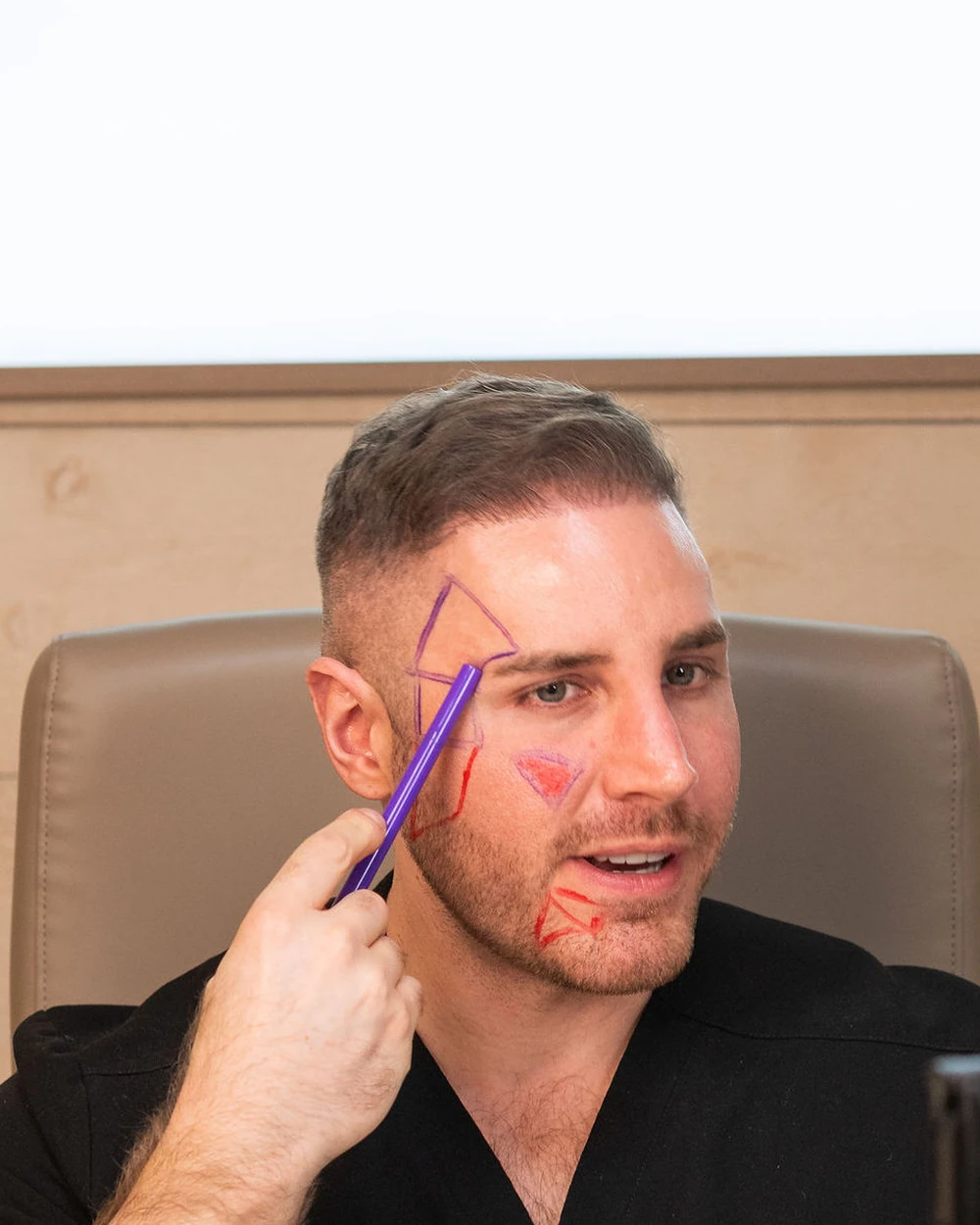
Assessment pathway
A useful consultation for weight-loss change follows a clear sequence rather than jumping to a product.
History
Weight change, stability, medicines including GLP-1 treatment, and goals.
Examination
Face, neck and skin quality, at rest and moving.
Priority
Volume, laxity, skin quality or body contour.
Plan
Support, skin tightening, skin quality, a surgical referral, or no treatment.
Your consultation
You do not need to choose a treatment before contacting us. Tell us what you have noticed, when it changed, what you have already tried and what a worthwhile result would look like to you. We consider your health, medication, previous procedures, skin or tissue characteristics and practical tolerance for recovery.
A useful consultation may lead to treatment, a staged plan, a period of observation or a referral. We would rather explain that an option is unlikely to help than place you into a course simply because the treatment is available.

Options we may discuss
Weight-loss change has more than one cause, so there is no single fix. The right option depends on what we find at consultation.
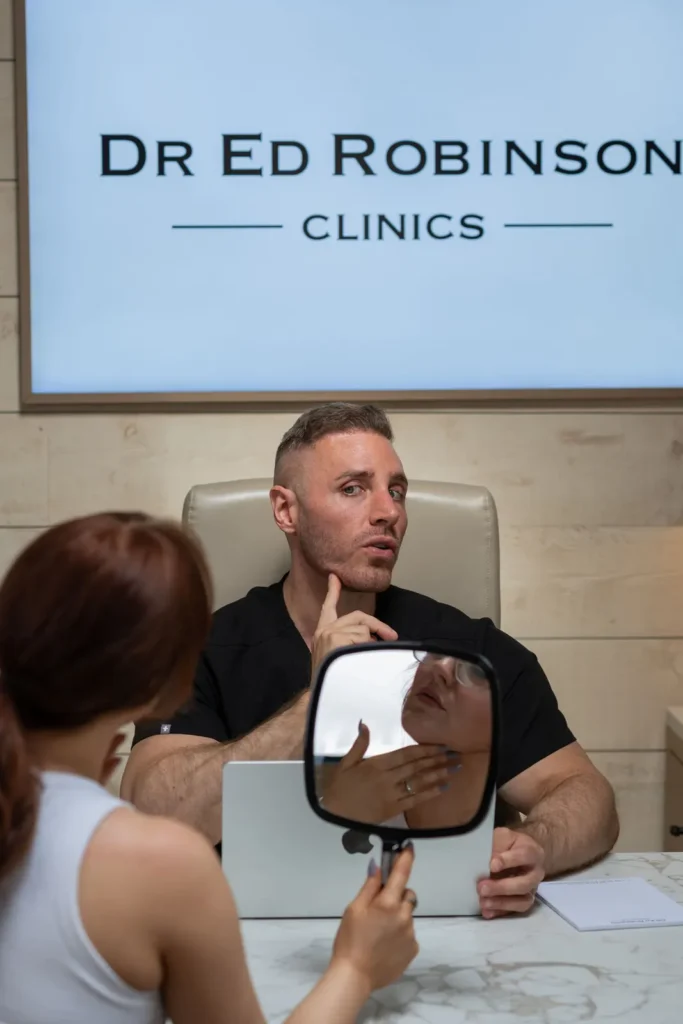




What treatment may realistically achieve
A good result should look like you at a healthy, stable weight, not a recreation of a previous body at any cost. Facial filler may restore balance but cannot tighten large amounts of skin. Devices may create gradual, modest improvement and have meaningful risks. Body skin excision creates scars but may achieve a change non-surgical treatments cannot. We prioritise proportion and a staged plan, then stop when further treatment would add cost or risk without a clear benefit.
Related concerns we may also discuss
Weight-loss change often sits alongside other related findings. These related concerns help frame the wider assessment.



Comfort, safety and clinical judgement
Comfort planning depends on the procedure. It may include topical or local anaesthetic, cooling, paced treatment or a nerve block where clinically appropriate. A nerve block is not needed for every concern, and comfort measures do not remove treatment risk.
For some injectable assessments, ultrasound may help answer an anatomical question, identify existing filler or guide aspects of treatment or complication management. It is an additional clinical tool, not a guarantee against bruising, vascular occlusion or other complications. Device treatments require the same attention to diagnosis, skin type, settings, eye protection, aftercare and escalation.
Nerve blocks and comfort
Where clinically appropriate, a nerve block can form part of comfort planning for injectable pathways. It is discussed beforehand and is not needed for every weight-loss change concern.
Ultrasound as a clinical tool
Ultrasound can help when anatomy or residual filler is unclear. It supports clinical judgement; it does not remove the risks of treatment.
Medical thinking
Why choose Dr Ed Robinson Clinics
Our approach is medical, conservative and consultation-led. We look at how the concern fits the whole face, skin or health picture rather than treating an isolated photograph.
Cause before product
Volume, laxity and skin quality change differently after weight loss. We assess them together before recommending a pathway.
Comfort planned with judgement
Comfort planning may include topical or local anaesthetic, cooling, paced treatment or a nerve block where clinically appropriate.
Honest next steps
A useful consultation may lead to treatment, observation or a referral. We would rather explain when an option is unlikely to help.
CQC Good · Hale registered service
The registered Hale service is rated Good overall and Outstanding in leadership by the CQC. That rating relates to the registered service at Hale; it should not be read as separate CQC approval of every cosmetic procedure.
Read the CQC report for the registered Hale service · Meet Dr Ed
5.0 Google rating from 478 reviews
“Lots of subtle changes have made such a difference and I really can’t thank the team enough for helping me get my confidence back.”
“Absolutely delighted with the treatments Dr Ed carried out to address the age related volume loss in my face; highly recommend!”
What you can do at home
Allow weight and health to stabilise, follow the nutrition and medication plan agreed with your prescribing clinician, eat adequate protein and include resistance exercise where medically suitable. These support wellbeing and muscle but do not reliably remove established excess skin. Do not stop prescribed weight-management medication solely for a cosmetic procedure without speaking to the prescriber and treating clinician.
When to seek medical advice
Unintentional continuing weight loss, fainting, persistent vomiting, marked weakness, abdominal pain or signs of dehydration need medical advice. A new painful or irreducible bulge in loose abdominal tissue may require urgent assessment.
Related videos, articles and results
Further reading and clinic media that can help you understand weight-loss change in context.


Frequently asked questions
What is Ozempic face
It is a popular, non-medical phrase for facial hollowing or laxity noticed after weight loss. Similar changes can follow weight loss achieved in other ways, so treatment should target the anatomy rather than blame a brand.
How long should my weight be stable before treatment
It depends on the procedure and your health. Stability helps us judge the tissue accurately and reduces the chance that further loss will quickly change the result. Surgical teams may have specific requirements.
Should I replace all the volume I have lost with filler
No. Facial fat loss is three-dimensional and occurs alongside skin and structural change. Large volumes of filler can distort movement or make lax tissue heavy. A conservative staged plan is safer and often looks better.
Can a device remove loose body skin
It may modestly improve mild laxity, but it cannot remove a substantial fold. Surgery is the more predictable route when actual skin excision is required.
Can I have treatment while taking a GLP-1 medicine
Possibly, but the medication, side effects, procedure and any sedation or fasting requirements must be reviewed. Do not change prescribed treatment without coordinated medical advice.
Will my face return to normal if I regain weight
Weight regain is not a reliable or targeted facial treatment and may affect health. Facial compartments do not refill in a predictable aesthetic pattern.