


Searches for Ozempic face, Mounjaro face, facial ageing after weight loss and loose skin after weight loss have risen sharply as more people achieve significant weight loss with GLP-1 medications such as Ozempic® and Mounjaro®, as well as through lifestyle changes and bariatric surgery. Despite the names, these facial changes are not unique to the medications themselves. They are a common consequence of rapid weight loss, which reduces the fat that naturally supports the face.
In this guide, we’ll explore why facial ageing can become more noticeable after weight loss, the factors that influence how much the face changes, and the treatments most commonly used to restore facial support, improve skin quality and tighten loose skin. At Dr Ed Robinson Aesthetics in Cheshire, we take a personalised approach, helping patients understand the changes they are experiencing before recommending a treatment plan tailored to their individual needs.
Rapid Weight Loss and Facial Ageing: Why Does Your Face Change?
One of the most common concerns following rapid weight loss is the change it can have on the face. Often referred to online as “Ozempic face” or “Mounjaro face,” this isn’t a medical diagnosis and isn’t caused by the medication itself. These changes can occur after any significant weight loss, whether achieved through GLP-1 weight loss medications, dieting, bariatric surgery or illness.
Common Signs of Facial Ageing After Weight Loss
As body fat reduces, the face can lose volume in areas that naturally provide youthful support, while the skin may not tighten at the same pace.
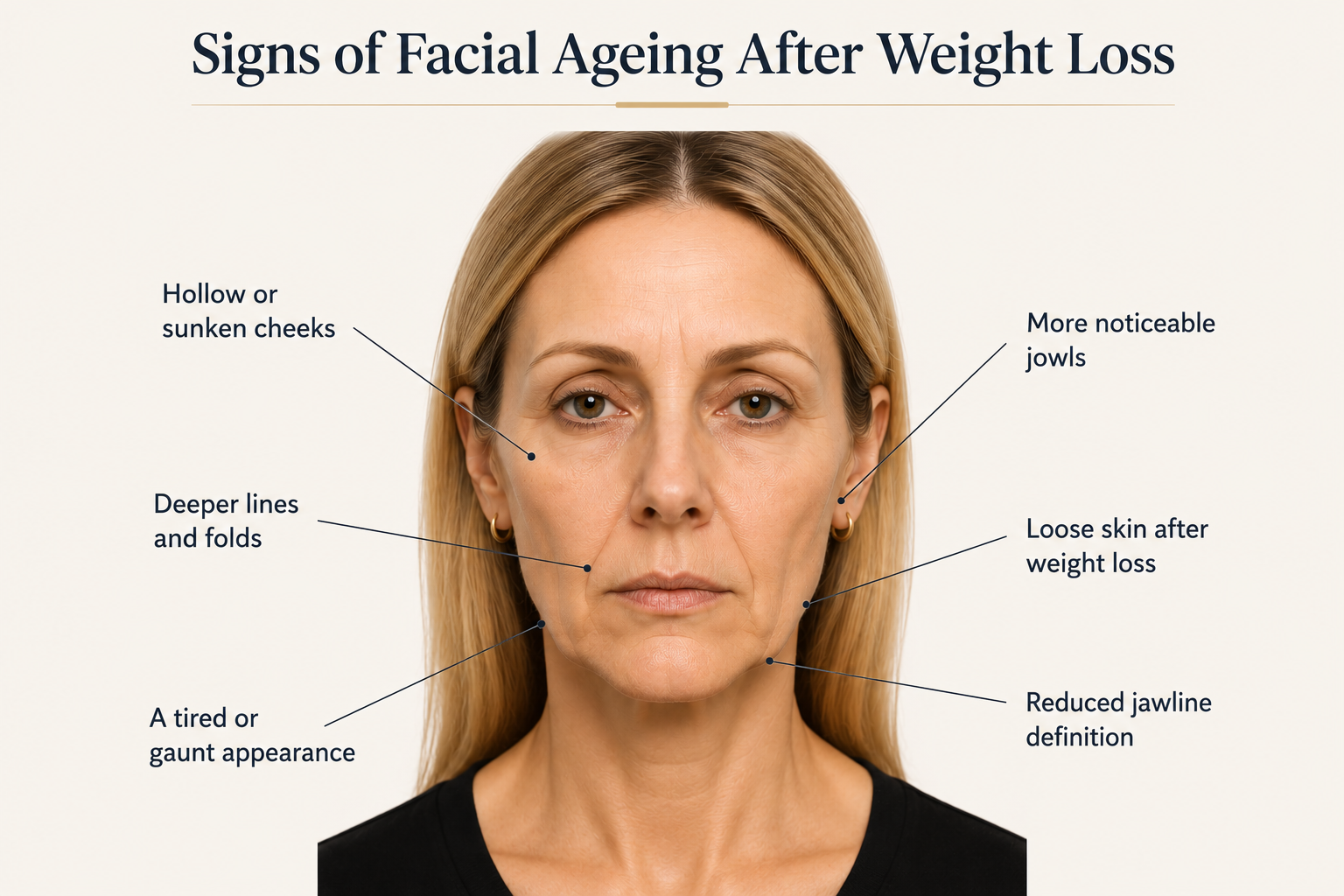
Rapid weight loss can also make existing signs of ageing more noticeable. As we age, we naturally lose collagen, elastin and facial fat. When weight is lost quickly, facial volume can reduce faster than the skin can adapt, making the face appear older despite the rest of the body looking healthier and more defined.
Does Everyone Get Ozempic Face?
No. Some people notice very little change, while others experience significant facial volume loss and loose skin. The degree of facial ageing after weight loss depends on several factors, including:
- Age
- Genetics
- Skin quality and elasticity
- Natural collagen levels
- How much weight has been lost
- How quickly the weight has been lost
Which treatments work best after rapid weight loss?
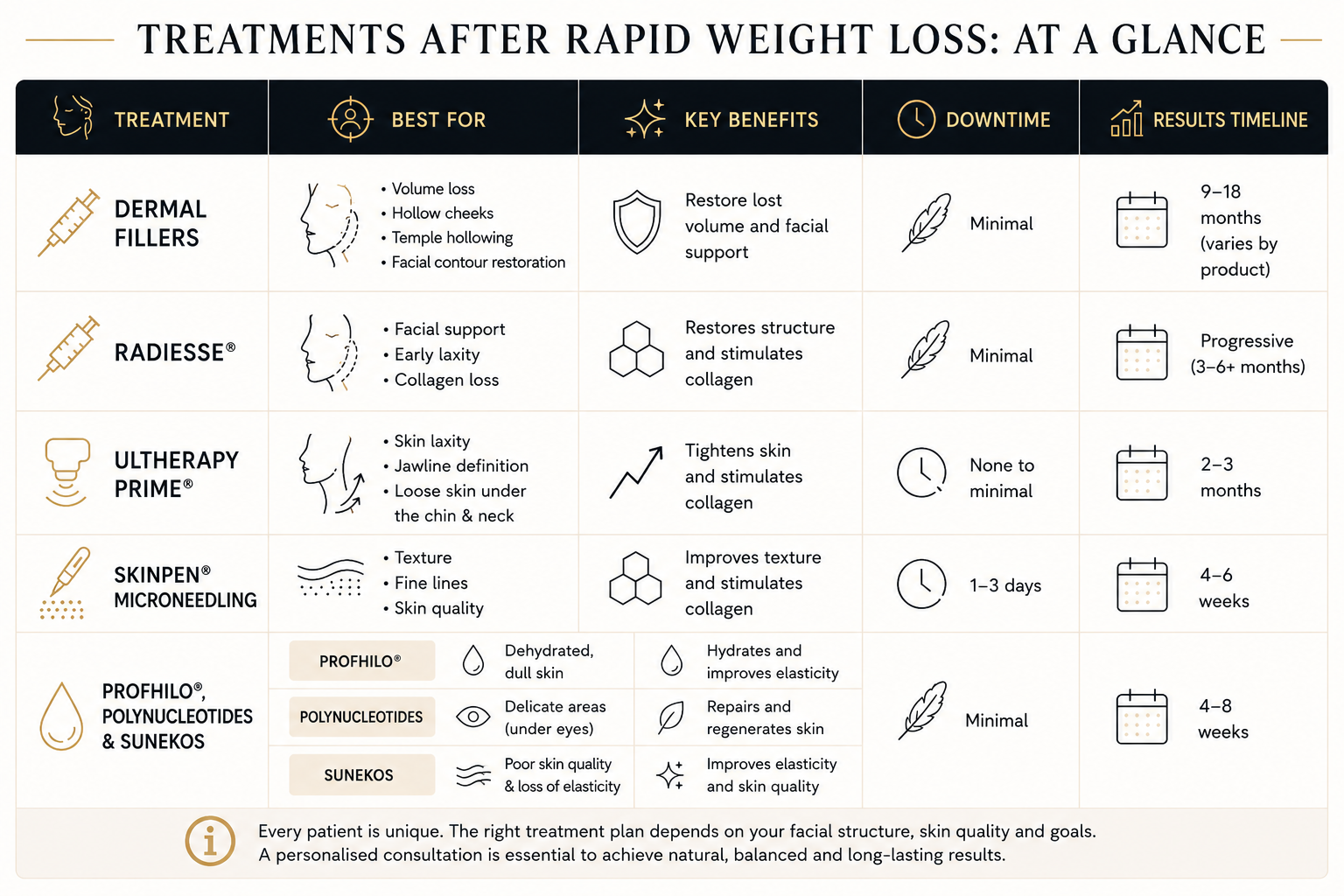
There is no universal treatment for Ozempic face or Mounjaro face. Every patient presents differently, which is why treatment plans are personalised after a detailed consultation.
Dermal Fillers for Restoring Lost Facial Volume
Dermal Fillers can be an effective way to restore facial volume that has been lost following rapid weight loss. Hyaluronic acid fillers are used to carefully replace support in areas such as the cheeks, temples or jawline, helping to soften a hollow or gaunt appearance while maintaining natural facial proportions.
Rather than adding unnecessary volume, the aim is to restore balance and support where it has been lost. Following significant weight loss, dermal fillers are often used conservatively and may be combined with collagen-stimulating or skin tightening treatments to achieve the most natural-looking outcome.
Patients who may benefit from dermal fillers include those with:
- Hollow or sunken cheeks
- Temple hollowing
- Loss of facial definition
- Reduced support around the mid-face
Radiesse®
Radiesse® is often chosen when facial support has been lost following rapid weight loss. Unlike traditional hyaluronic acid fillers, it also stimulates collagen production, making it particularly useful for patients with:
- Hollow cheeks
- Reduced jawline definition
- Early skin laxity
Because it both restores structure and encourages collagen production, Radiesse is frequently used as part of a broader treatment plan rather than as a standalone treatment.
Ultherapy Prime for skin tightening after weight loss
Ultherapy Prime is an advanced ultrasound treatment that works deep beneath the surface of the skin, stimulating new collagen without surgery.
Patients often choose Ultherapy Prime when they notice:
- Mild to moderate skin laxity
- Early jowls
- Reduced definition along the jawline
- Loose skin beneath the chin
- Neck laxity after weight loss
Results develop gradually as collagen is produced naturally, making improvements subtle and progressive rather than immediately obvious.
SkinPen® Microneedling for improving skin quality
SkinPen® Microneedling creates controlled micro-injuries that stimulate collagen and elastin production, helping improve:
- Fine lines
- Skin texture
- Crepey skin
- Overall skin quality
For patients who have experienced moderate weight loss but mainly notice thinner or less resilient skin, SkinPen can be an excellent starting point.
Profhilo®, Polynucleotides and Sunekos for skin rejuvenation
Following rapid weight loss, many patients find their skin looks less hydrated and less resilient. This is where regenerative injectable treatments can play an important role.
Depending on your skin condition, we may recommend:
Profhilo®
Designed to improve hydration while stimulating collagen and elastin, Profhilo is ideal when skin appears dull, dehydrated or lacks elasticity.
Polynucleotides
Polynucleotides are regenerative injectables that support tissue repair and improve overall skin quality. They are particularly useful around delicate areas such as the eyes where weight loss can make hollowing and skin thinning more noticeable.
Sunekos
Sunekos combines amino acids with hyaluronic acid to encourage collagen and elastin production while improving skin texture and elasticity. It is often chosen when skin quality is the primary concern rather than facial volume.
These treatments do not replace lost fat, but they can significantly improve the quality of the skin that sits over the facial framework.
Can You Prevent Facial Ageing During Weight Loss?
Some degree of facial volume loss is often unavoidable during significant weight loss, particularly if the weight is lost rapidly. However, there are steps you can take to help support your skin and potentially reduce the appearance of facial ageing as your body changes.
Healthy lifestyle habits play an important role in maintaining skin quality during weight loss. These include:
- Aiming for gradual, sustainable weight loss where possible
- Eating enough protein to support collagen production and tissue repair
- Staying well hydrated
- Protecting your skin with a broad-spectrum SPF every day
- Following a consistent medical-grade skincare routine recommended for your skin
When should you consider treatment after weight loss?
If you are still actively losing weight, it is usually best to wait until your weight has stabilised before starting facial rejuvenation treatments. This allows your facial contours to settle and ensures any treatment plan is based on your long-term appearance, rather than changes that may continue over the following weeks or months.
Once your weight has remained relatively stable, we can assess your skin quality, facial structure and degree of volume loss to create a personalised treatment plan that delivers natural-looking results.
If you’re interested in how this works in practice, you may also find our blog on Gemma Collins’ post-weight loss transformation helpful. It explores the facial changes that can occur after significant weight loss and explains how treatments such as regenerative injectables and anti-wrinkle treatments can be combined to restore a fresher, more balanced appearance without looking overdone.
Frequently Asked Questions
Is Ozempic face permanent?
Not necessarily. While lost facial fat does not automatically return, treatments that restore support, stimulate collagen and improve skin quality can significantly improve facial appearance.
Can loose skin after rapid weight loss tighten naturally?
Some improvement can occur naturally, particularly in younger patients. However, collagen production slows with age, so professional skin tightening treatments are often beneficial.
Will I need dermal filler?
Not always. Some patients benefit more from collagen-stimulating treatments such as Radiesse®, Ultherapy Prime or SkinPen® Microneedling before considering additional volume.
Which treatment is best for Mounjaro face?
There is no single best treatment. The right approach depends on whether volume loss, skin laxity, skin quality or a combination of these concerns is present.
How many treatments will I need?
This varies from person to person. Some patients achieve their goals with one treatment, while others benefit from a staged approach over several months to allow collagen to develop naturally.
Will my face return to normal if I regain weight?
Not necessarily. Although some facial volume may return with weight gain, it is unpredictable and rarely restores the face exactly as it was before. Most people prefer to maintain their healthy weight and consider treatments that restore facial support and improve skin quality instead.
Considering treatment after rapid weight loss?
Losing weight is an incredible achievement, and your face should reflect how healthy and confident you feel.
At Dr Ed Robinson Aesthetics, we take a personalised approach to facial rejuvenation after rapid weight loss. Rather than recommending a single treatment, we assess your facial structure, skin quality and degree of volume loss to create a bespoke plan that delivers natural-looking results.
Whether you are concerned about Ozempic face, Mounjaro face, loose skin after weight loss or facial ageing following significant weight loss, our experienced team can guide you through the options available.
Book a consultation at our Hale, Cheshire clinic, or during Dr Ed Robinson’s London Harley Street residency, to discuss the most appropriate treatment plan for you.