


Concerns about nose shape
Assessed by our doctors in Hale, Cheshire
Nose shape concerns · Hale, Cheshire
The right approach to a nose concern depends on what you want to change. Smoothing a small contour irregularity is different from making the nose smaller or improving breathing. We explain where non-surgical treatment may help and where a surgical or ENT opinion is more appropriate.
Hale clinic · Consultation first
You do not need to choose a treatment before contacting us. We start by understanding the cause, then explain whether a clinic pathway, observation or a referral is the more sensible next step.
At a glance
How we think about nose shape
 Assessment focus
We examine the nose from several views, assess the skin and discuss your specific goal.
 Possible pathways
Non-surgical rhinoplasty, Profile balancing, Rhinoplasty or ENT assessment
 Our approach
Understand the cause first; recommend treatment only when the likely benefit justifies the risk, recovery and cost.
 Medical care first
Sudden visual disturbance, severe or unusual pain, or pale or mottled skin after filler requires immediate medical assessment.
What this concern can involve
Nose shape reflects bone, cartilage, skin thickness and previous injury or surgery. A bump may look more prominent because of the surrounding profile, while an apparent asymmetry may change between photographs and real-life movement. Breathing difficulty can involve internal structures that cosmetic filler cannot correct. A treatment described as non-surgical still carries important risks.
Bone and cartilage
The underlying structure sets what filler can and cannot change.

Skin thickness
Skin quality affects how contour changes show on the surface.
Surrounding profile
A bump may look more prominent because of the chin and lips around it.
Breathing
Breathing difficulty involves internal structures that filler cannot correct.
How we assess it
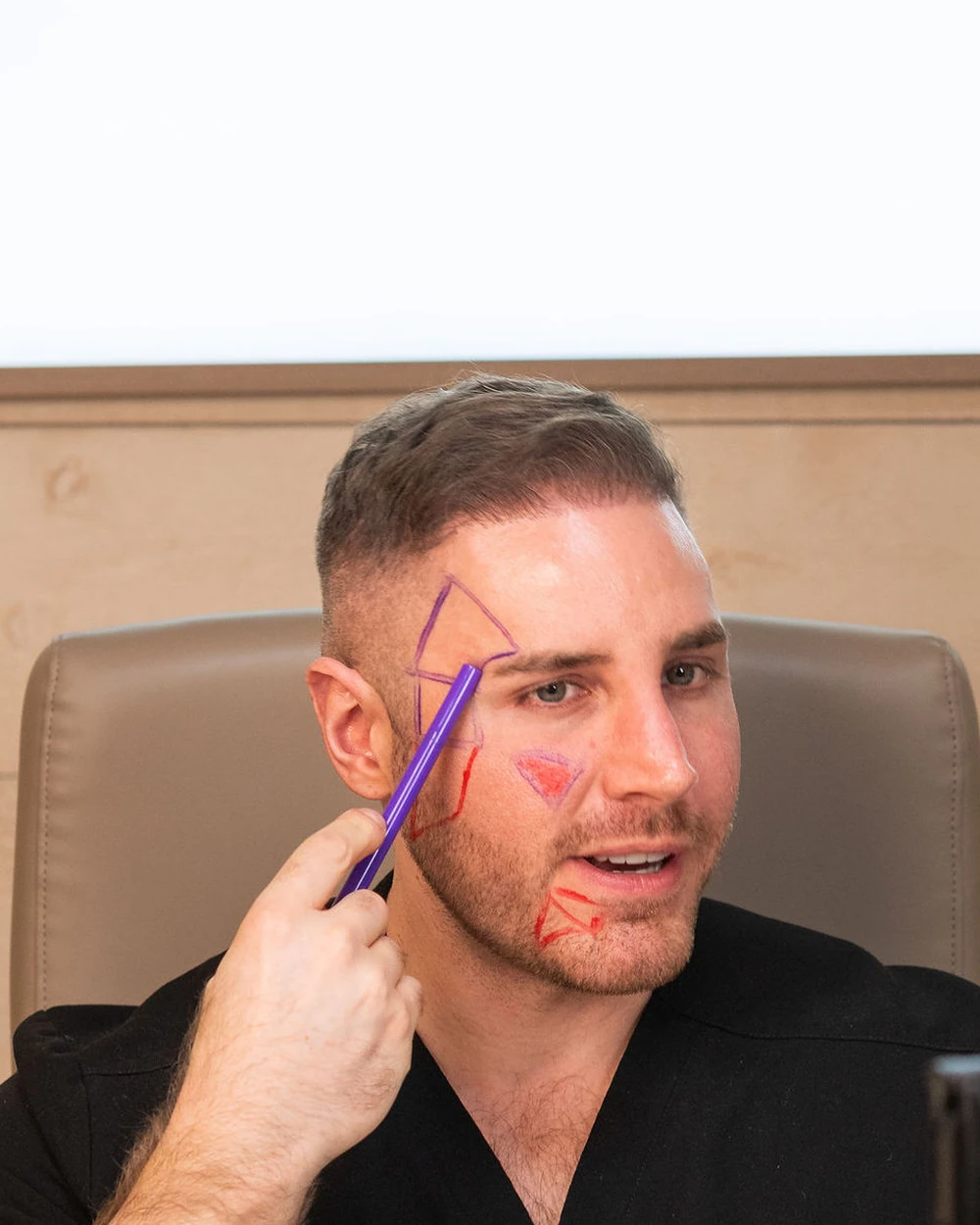
We examine the nose from several views, assess the skin and discuss your specific goal. Previous rhinoplasty, injury or filler is particularly important because it may change anatomy and risk. Tell us about blocked breathing or recurrent bleeding. We will not recommend filler if achieving the requested change would require adding inappropriate volume.
Assessment pathway
A useful nose consultation follows a clear sequence rather than jumping to a product.
Your goal
Smoothing a contour, making the nose smaller and improving breathing are different goals.
History
Previous rhinoplasty, injury or filler, blocked breathing and recurrent bleeding.
Examination
Several views and the skin, alongside the surrounding profile.
Plan
Non-surgical treatment where suitable, or a surgical or ENT referral when that is the better option.
Your consultation
You do not need to choose a treatment before contacting us. Tell us what you have noticed, when it changed, what you have already tried and what a worthwhile result would look like to you. We consider your health, medication, previous procedures, skin or tissue characteristics and practical tolerance for recovery.
A useful consultation may lead to treatment, a staged plan, a period of observation or a referral. We would rather explain that an option is unlikely to help than place you into a course simply because the treatment is available.
Options we may discuss
Nose concerns range from a small contour irregularity to breathing problems, so there is no single fix. The nose is a higher-risk injection area, and the right option depends on your goal and anatomy.



What treatment may realistically achieve
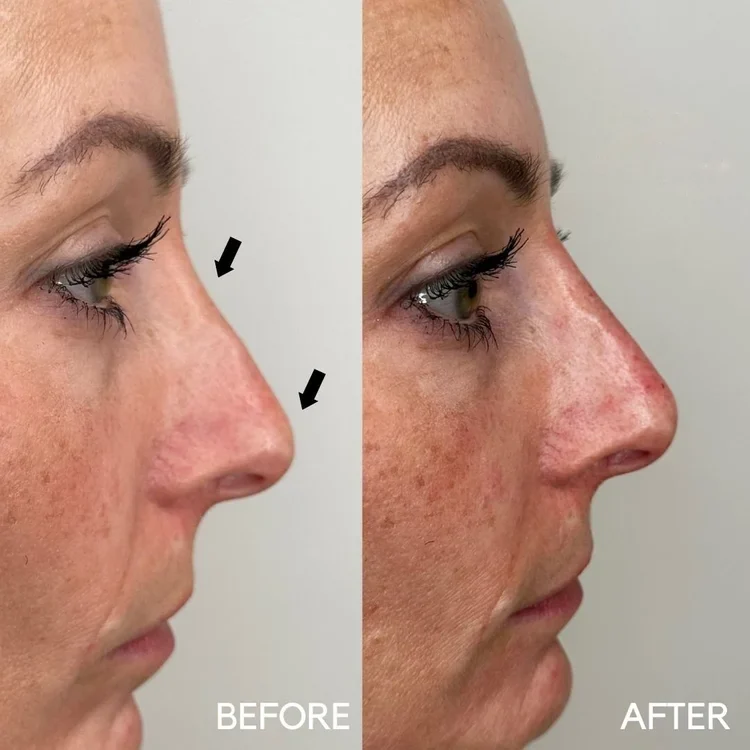
The potential cosmetic benefit must be weighed against rare but serious complications, including skin injury and permanent visual loss from vascular blockage. Ultrasound may support some assessments or procedures but does not eliminate this risk. Dissolving hyaluronic acid filler is not a guaranteed rescue or a guaranteed return to the starting appearance.
Related concerns we may also discuss
Nose shape is often judged against the rest of the profile. These related concerns help frame the wider assessment.


Comfort, safety and clinical judgement
Comfort planning depends on the procedure. It may include topical or local anaesthetic, cooling, paced treatment or a nerve block where clinically appropriate. A nerve block is not needed for every concern, and comfort measures do not remove treatment risk.
For some injectable assessments, ultrasound may help answer an anatomical question, identify existing filler or guide aspects of treatment or complication management. It is an additional clinical tool, not a guarantee against bruising, vascular occlusion or other complications. Device treatments require the same attention to diagnosis, skin type, settings, eye protection, aftercare and escalation.
Nerve blocks and comfort
Where clinically appropriate, a nerve block can form part of comfort planning for injectable pathways. It is discussed beforehand and is not needed for every nose concern.
Ultrasound as a clinical tool
Ultrasound can help when anatomy or residual filler is unclear. It supports clinical judgement; it does not remove the risks of treatment.
Medical thinking
Why choose Dr Ed Robinson Clinics
Our approach is medical, conservative and consultation-led. We look at how the concern fits the whole face, skin or health picture rather than treating an isolated photograph.
Cause before product
Contour, size and breathing are different goals. We explain honestly where non-surgical treatment may help and where it will not.
Comfort planned with judgement
Comfort planning may include topical or local anaesthetic, cooling, paced treatment or a nerve block where clinically appropriate.
Honest next steps
A useful consultation may lead to treatment, observation or a referral. We would rather explain when an option is unlikely to help.
CQC Good · Hale registered service
The registered Hale service is rated Good overall and Outstanding in leadership by the CQC. That rating relates to the registered service at Hale; it should not be read as separate CQC approval of every cosmetic procedure.
Read the CQC report for the registered Hale service · Meet Dr Ed
5.0 Google rating from 478 reviews
“Dr Ed did my non-surgical rhinoplasty and I feel incredible. It has transformed my confidence.”
“With his expertise, confidence and artistry the results are meticulous and look so natural, exactly what I had in mind but wasn’t sure could be achieved.”
What you can do at home
Do not use pressure devices or home injections to reshape the nose. Sun protection and gentle skincare help surface health but do not change nasal bone or cartilage.
When to seek medical advice
Sudden visual disturbance, severe or unusual pain, or pale or mottled skin after filler requires immediate medical assessment. Do not wait for a routine WhatsApp reply. Call 999 for sudden visual loss or stroke symptoms.
Related videos, articles and results
Further reading and clinic media that can help you understand nose shape concerns in context.

Frequently asked questions
Can a drooping nose tip be lifted without surgery
Sometimes, by a small amount. In suitable noses, a carefully placed anti-wrinkle injection can relax the small muscle that pulls the tip down when you smile, and a small amount of filler can support the tip angle. The change is subtle and temporary, and it cannot shorten a long nose or reshape cartilage. Nose filler carries important risks, which Dr Ed explains first, and some patients are better served by a surgical opinion. Watch Dr Ed’s video on drooping nose tips.
Can nose filler make my nose smaller
No. It adds volume. A smoother profile may change the visual impression, but it cannot remove tissue or narrow the nasal bones.
Is non-surgical rhinoplasty safer than surgery
The risks are different. Filler in the nose has a rare risk of severe vascular injury and visual loss, so it should not be described as a risk-free alternative.
Can I have filler after rhinoplasty
Previous surgery changes the assessment and may increase complexity. Operative history and an in-person examination are essential; we may advise against treatment.
Can filler fix a blocked nose
It is not an appropriate substitute for investigating breathing obstruction. An ENT or surgical assessment may be needed.
Does ultrasound remove the risk of blindness
No. It can provide useful anatomical information in some circumstances but cannot guarantee avoidance or reversal of a vascular complication.