


Hair loss treatment
Doctor-led care for women and men in Hale, Cheshire
Patient information · Hale, Cheshire
Hair loss treatment for women and men in Hale, Cheshire
Hair loss is common, but that does not make it trivial. A widening parting, a receding hairline, more hair in the shower or a ponytail that suddenly feels thinner can affect confidence in a way that is difficult to explain to somebody who has not experienced it. It can also be the first visible sign of a wider medical, hormonal or nutritional issue. That is why we do not begin with a treatment menu. We begin by working out what your hair is doing, why it may be happening and whether the follicles we are trying to support are still viable.
At Dr Ed Robinson Clinics, hair loss is assessed medically at our Hale clinic. We look at the pattern and speed of change, your scalp, family history, health, medicines, diet, weight change, periods and hormonal symptoms where relevant. Targeted blood tests may be recommended if the history suggests iron deficiency, thyroid dysfunction, hormonal change or another contributor. Some patients need treatment of an underlying cause, some may be suitable for prescription options after consultation, and some benefit from a regenerative programme. Quite often, the right plan contains more than one of these elements.
The six-session regenerative programme
Six sessions
Medically sequenced appointments, usually around four weeks apart.
PRP with polynucleotides
Three sessions of platelet-rich plasma combined with polynucleotides, alternating through the course.
Microneedling, exosomes and LED
Three sessions of scalp microneedling with an exosome-based preparation and Dermalux® LED phototherapy.
Comfort and guide price
A scalp nerve block is used where appropriate. Current guide price £3,000.
The aim is to support existing, viable follicles and improve the environment in which they function. Depending on the diagnosis and your biology, that may mean reduced shedding, stronger hair calibre, improved density or better maintenance of the hair you still have. It does not create new follicles, revive follicles that have been permanently destroyed or guarantee that a severely bald or scarred area will regrow. Hair biology is slow, and honest treatment is measured in months rather than days.
Hale clinic · Consultation first
Hair-loss assessment and treatment are available at our Hale clinic only. A consultation comes first so that we can work out what your hair is doing and why before recommending any treatment, including whether the six-session regenerative programme is appropriate. Adults aged 18 and over.
Hair-loss treatment at a glance
What to expect
 Treatment time
Varies by session; allow approximately 45 to 90 minutes, with PRP appointments commonly around one hour.
 Anaesthesia and comfort
A local-anaesthetic scalp nerve block is used where appropriate for the regenerative programme; temporary numbness is expected.
 Visible recovery
Redness, tenderness, pinpoint marks or mild swelling are usually most noticeable for 24 to 72 hours; the exact recovery depends on the session.
 Best results
Gradual; early change may be reviewed from around three months, with more meaningful comparison at six months and continued evolution up to 12 months.
Usual treatment planSix sessions, usually around four weeks apart: three PRP plus polynucleotide sessions alternating with three microneedling, exosome-based and Dermalux LED sessions.
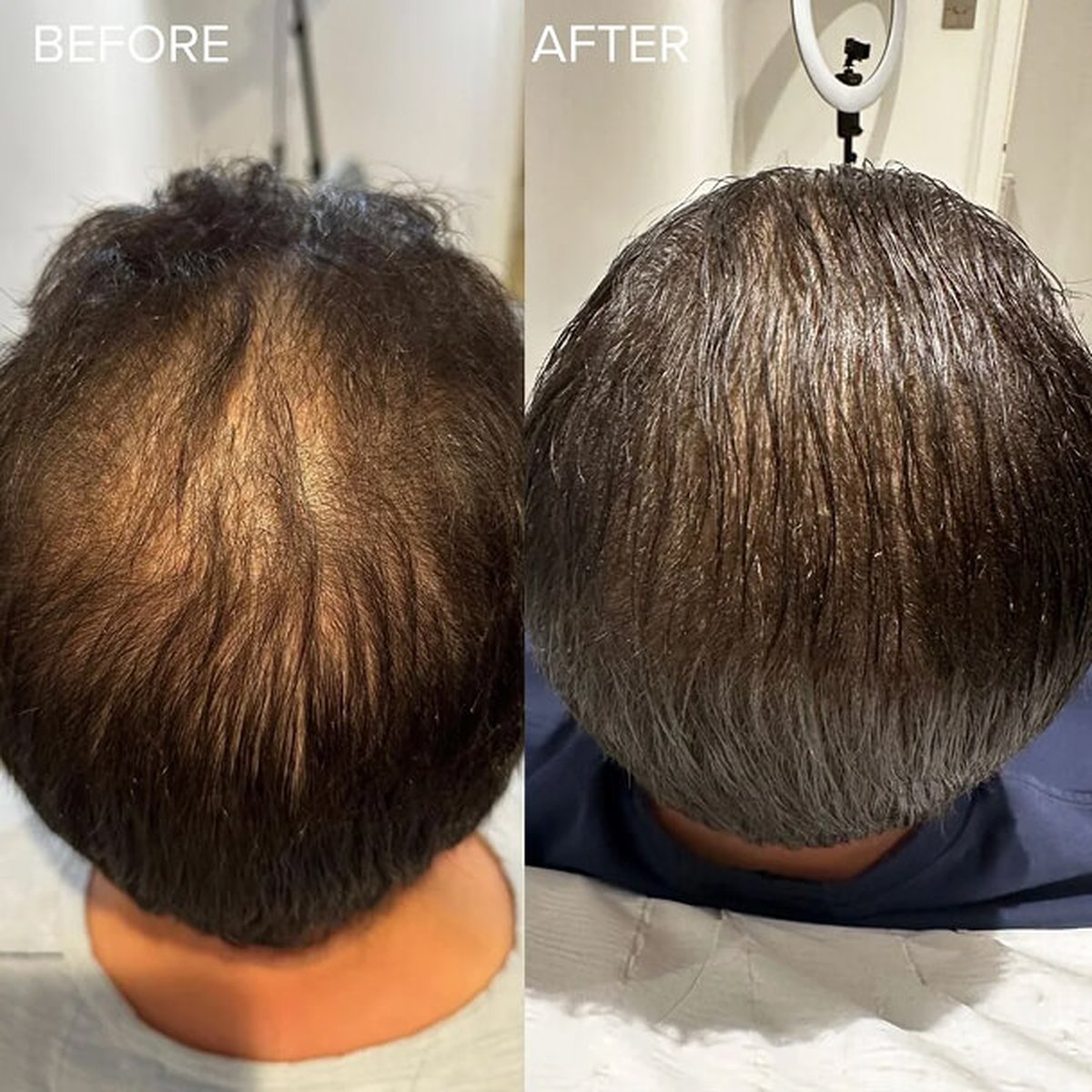
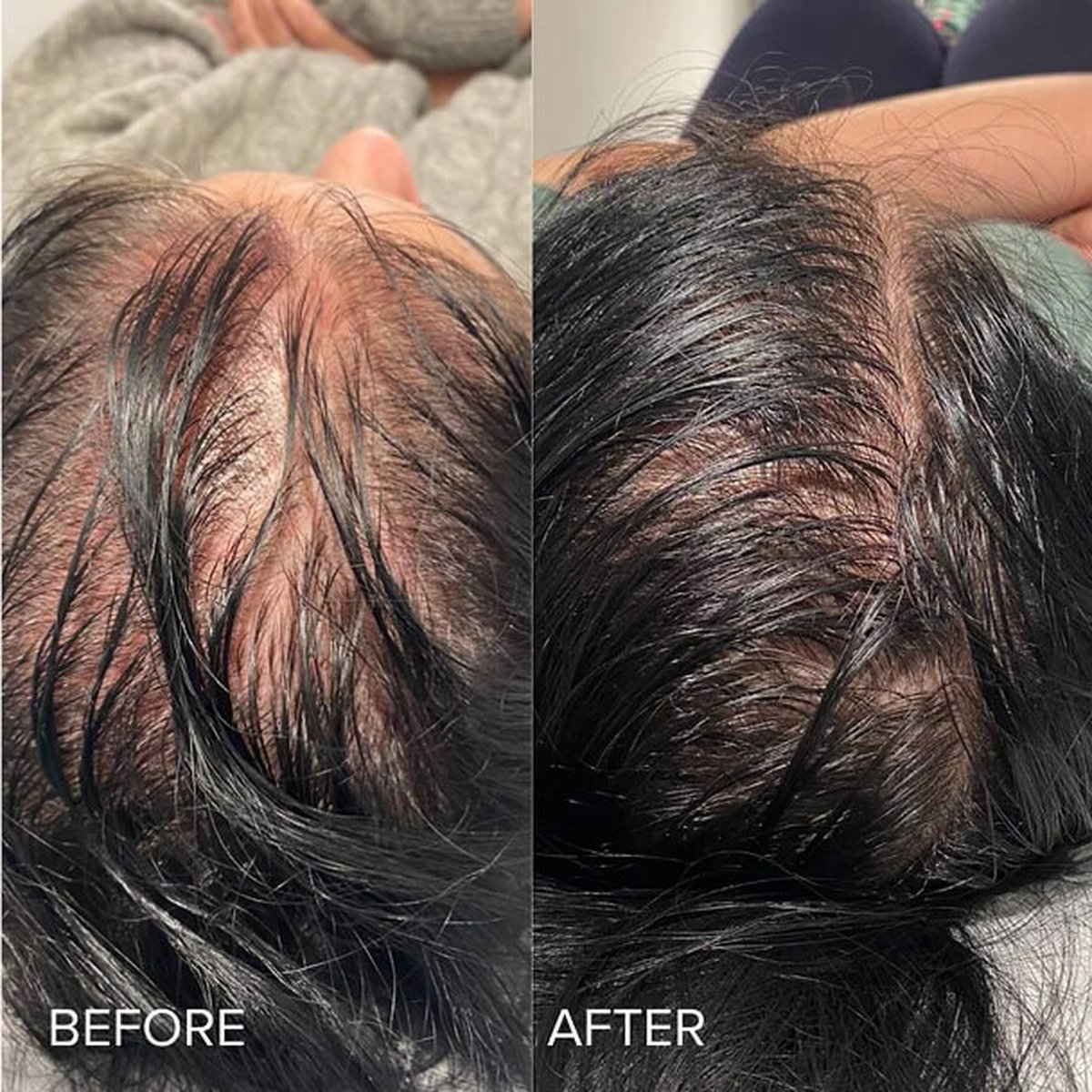


What is hair-loss treatment?
Hair loss is not one diagnosis. "My hair is thinning" can describe several different biological processes, and they do not all respond to the same treatment.
The most common progressive cause is androgenetic alopecia, also called male or female pattern hair loss. In genetically susceptible follicles, hormonal signalling gradually shortens the active growth phase. Each new hair can become finer, shorter and less pigmented, a process called miniaturisation. The follicle may still be present, but it produces less visible coverage. This is where early recognition matters: supporting a follicle that is still active is very different from trying to restore an area in which follicles have been lost.
Another common pattern is telogen effluvium. This is a diffuse increase in shedding that can follow illness, fever, surgery, childbirth, severe emotional stress, rapid weight loss, nutritional deficiency or a change in medication. The trigger often occurs two or three months before the shedding becomes obvious, which is why the connection can be missed. Telogen effluvium may improve once the trigger is addressed, but recovery takes time because hair must move back through its growth cycle. It can also uncover underlying pattern hair loss, so the two conditions may coexist.
Patchy autoimmune hair loss, traction from repeated tension, scalp infection and inflammatory or scarring forms of alopecia need a different pathway. A shiny area with loss of follicular openings, scalp burning or pain, marked scaling, pustules, sudden smooth patches, eyebrow loss or rapidly progressive change is not something to place automatically into a cosmetic PRP programme. It may need GP or dermatologist assessment and, in some cases, further investigation or biopsy.
The hair cycle explains why results take time
Each follicle cycles independently through active growth, transition, rest and shedding. A treatment given today cannot produce a full-length visible hair next week. Even if a follicle responds biologically, the new shaft grows gradually. Photography at sensible intervals is therefore more useful than checking the mirror every morning.
It is also normal to lose some hair each day. What matters is a change from your normal pattern: more shedding, reduced density, miniaturised hairs, a widening parting, recession or slower recovery after a shed. We assess the history and pattern rather than using a single daily hair count as a diagnosis.
The condition of the follicle sets the ceiling
Non-surgical treatment works with the follicles that remain. It may support a miniaturising follicle, improve the calibre of hair it produces or help preserve density. It cannot manufacture a new follicle or reliably repopulate smooth, long-standing bald scalp. This is why we sometimes recommend treatment to stabilise and strengthen, sometimes recommend observation or medical management, and sometimes discuss a transplant referral instead.
The honest question is not simply, "Does PRP work?" It is, "Is this the right diagnosis, is there enough viable hair to work with, and is the likely degree of improvement worthwhile for this patient?"
How does hair-loss treatment work?
1. Diagnosis comes before the programme
Your first appointment is a medical consultation, not the first treatment session. We discuss when the change began, whether it is shedding or patterned thinning, what was happening in the months beforehand, relevant family history and what you have already tried. We examine the scalp and the distribution and calibre of the hair. Standardised baseline photographs help us compare like with like later.
We also look beyond the scalp. In women, iron status, thyroid health, periods, pregnancy, menopause and symptoms of androgen excess can be relevant. In men and women, illness, medication, restricted diets, rapid weight loss, sleep, stress and inflammatory scalp symptoms can all change the plan. A test is useful only when it answers a clinical question, so blood tests are targeted rather than ordered as an identical panel for everybody.
If your history or examination suggests a condition that needs GP, dermatology, endocrinology or another specialist pathway, we will explain that. Regenerative treatment should not delay investigation of a medical cause.
2. We address drivers that treatment alone cannot correct
Low iron, thyroid dysfunction, significant nutritional restriction or an inflammatory scalp disorder cannot be corrected by adding growth factors to the scalp. Likewise, a continuing hormonal or genetic driver may require a long-term management conversation rather than a six-session course in isolation.
Where appropriate, prescription options can be discussed after an individual consultation, including expected benefits, side effects, monitoring and whether ongoing treatment would be required. We deliberately do not advertise named prescription-only hair-loss medicines on this public page. The decision to prescribe must follow assessment; treatment is not chosen from a website.
3. The six-session regenerative programme

Session type A · three visits
PRP with polynucleotides
We take a small sample of your blood, spin it to concentrate the platelets, then place that PRP into the thinning areas of scalp, with polynucleotides to support the tissue around your follicles. Simple idea: use your own healing signals where the hair still has something to work with.

Session type B · three visits
Microneedling, exosomes and LED
We gently microneedle the scalp, apply an exosome-based preparation, then finish with Dermalux LED light. It is designed to support the scalp environment and recovery between the PRP visits, without adding another heavy procedure every time.

How the course is paced
Why we alternate them
The two appointment types usually take turns, about four weeks apart, so you get three of each. That gives your scalp time to settle, and it means we see you often enough to check comfort and whether the plan still fits.
What concerns can hair-loss treatment help with?
Male and female pattern hair loss and some forms of non-scarring thinning may be suitable once the cause has been assessed. Suitability depends on diagnosis, follicular viability, health, expectations and the balance of benefit, risk and cost.
The programme cannot create new hair follicles, replace a depleted donor area or reliably restore smooth, scarred or long-standing bald scalp. It cannot correct iron deficiency, thyroid disease, hormonal imbalance, autoimmune alopecia or an inflammatory scalp disease. It cannot stop genetic progression permanently, and it does not remove the possible need for ongoing medical or maintenance treatment.
It is not a hair transplant and cannot reproduce the density that surgery may achieve in a suitable patient. Equally, a transplant relocates follicles; it does not switch off continuing pattern loss in the native hair. The two pathways can complement one another, but they solve different parts of the problem.
Results are not guaranteed. Some patients see reduced shedding or thicker-looking coverage; some see modest change; some do not achieve a visible benefit. The limitations are particularly important with newer adjuncts such as scalp polynucleotides and exosome-based products, where the evidence base is still developing.
Male pattern hair loss commonly causes recession at the temples, thinning through the frontal or mid-scalp and loss of density at the crown. The follicles become progressively miniaturised. Non-surgical treatment is most plausible where there are still visible, finer hairs to support. A smooth, long-standing bald area is much less likely to respond and may prompt a transplant conversation if the donor area and wider circumstances are suitable.
Read more about hair thinning and hair lossFemale pattern hair loss often presents as a widening central parting, reduced density over the crown or a ponytail that feels thinner. The frontal hairline may remain relatively preserved. It can occur before or after menopause and may overlap with iron deficiency, thyroid problems, telogen effluvium or androgen-related conditions. Women deserve a proper diagnostic work-up, not the assumption that all thinning is "stress".
Polycystic ovary syndrome (PCOS, increasingly also called PMOS) can contribute to scalp thinning, acne, irregular periods and increased facial or body hair. Treating the scalp does not diagnose or correct the hormonal condition. If these symptoms are present, GP assessment is important. Once the wider picture is understood, hair treatment may form one part of a longer plan.
If shedding follows illness, childbirth, surgery, severe stress, rapid weight loss or nutritional change, the priority is to identify and address the trigger. Many acute cases improve with time once the cause resolves. A regenerative programme is not automatically necessary. It may be discussed when shedding is prolonged, when there is overlap with pattern hair loss or when the clinical assessment suggests a reasonable role, but the biology and natural recovery must be explained honestly.
Hair is not essential for immediate survival, so the body may shift follicles into a resting phase when energy intake, protein or micronutrients are insufficient, or after major physiological stress. This can include rapid weight reduction, whether achieved through diet, illness, surgery or medication. The answer is not indiscriminate supplements. We look at the timing, nutritional intake and relevant symptoms, and involve your GP or prescriber when needed.
Postpartum shedding often becomes noticeable a few months after birth and commonly improves as the cycle normalises. Menopause can reveal or accelerate pattern thinning through hormonal change and ageing. These are different processes and need different expectations. Elective regenerative procedures are postponed during pregnancy, and timing while breastfeeding is discussed individually.
Non-surgical care may sometimes be used before or after transplant surgery to support the scalp and help maintain susceptible native hair. It does not replace careful surgical planning and cannot guarantee graft survival. Timing must be coordinated with the transplant team so that procedures do not interfere with healing.
Which areas can be treated?
The service focuses on scalp hair, including:
We do not assume that every thin area should be treated. The distribution helps identify the diagnosis, and the density of remaining follicles affects the likely ceiling of improvement. Eyebrow, eyelash, beard and body-hair loss require their own assessment and are not part of the standard six-session scalp programme described here.
Is hair-loss treatment suitable for me?
Suitability depends on diagnosis, follicular viability, health, expectations and the balance of benefit, risk and cost. Tell us about:
Please tell us about:
- When shedding or thinning began and how quickly it has changed
- Family history of hair loss and the pattern you have noticed
- Recent illness, fever, surgery, childbirth, severe stress or rapid weight change
- Menstrual changes, menopause, acne or increased facial or body hair
- Restricted diets, eating difficulties, low protein intake or known iron, vitamin or thyroid problems
- Medicines, supplements and recent changes in treatment
- Itching, burning, pain, scale, pustules, sores or scalp infection
- Autoimmune disease, bleeding or platelet disorders, anaemia or immune suppression
- Anticoagulant or antiplatelet medication and a tendency to bruise or faint
- Previous hair-loss treatment, scalp surgery or transplant procedures
- Allergies, particularly to local anaesthetic or products used during treatment
- Pregnancy, breastfeeding or plans to conceive
- A history of keloid or abnormal scarring
Do not stop prescribed medication or begin high-dose supplements to make yourself eligible. Bring an accurate medication list and tell us if anything changes during the programme.
Pregnancy and breastfeeding
We do not carry out the elective regenerative programme during pregnancy. Hair biology also changes substantially around pregnancy and childbirth, which can make early treatment planning misleading. Breastfeeding, postpartum shedding and any medicines or topical products are considered individually. A consultation can still help clarify the likely diagnosis and the most sensible time to act.
How should I prepare for treatment?
For consultation, bring a list of medicines and supplements, relevant blood results and a simple timeline of when you first noticed change. Photographs taken before the change can be useful, especially if they show the same parting or hairline clearly.
Before a treatment appointment
- Follow the clinic's instructions on washing your hair. Arrive with a clean scalp and avoid heavy oils, fibres, dry shampoo, concealer sprays or styling products unless advised otherwise.
- Tell us about new medicines, illness, infection, cold sores, antibiotics, anticoagulants or a change in health.
- Avoid alcohol and strenuous exercise for the period advised if they tend to increase flushing, bleeding or bruising.
- Do not take anti-inflammatory medication purely to suppress treatment discomfort unless it has been discussed. Do not stop medication prescribed for a medical reason.
- Avoid colouring, bleaching, chemical straightening or an irritating scalp treatment close to the appointment; follow the interval we give you.
- Protect the scalp from sunburn. A burnt, inflamed or broken scalp should not be treated.
- Eat normally and stay hydrated unless you have been given different medical instructions. Tell us if you tend to faint with blood tests.
- Plan around important events. Although most people return to routine quickly, redness, tenderness, small marks or swelling can remain visible for a few days.
Specific instructions differ between PRP and microneedling sessions. The written plan provided by the clinic takes precedence over general website guidance.
What happens at the appointment?
The consultation
History, scalp examination, photographs and a clear working diagnosis. Blood tests or medical review are arranged where indicated before treatment.
PRP and polynucleotides
Blood is taken and processed. A scalp nerve block is used where appropriate, then PRP and polynucleotides are placed across the planned area.
Microneedling, exosomes and LED
Controlled microneedling with an exosome-based preparation, followed by Dermalux LED photobiomodulation.
Review across the course
At each visit we review tolerance, shedding and whether the plan still fits. Comparison photographs matter after enough hair-cycle time.
You should leave the consultation knowing the working diagnosis, what remains uncertain, what the proposed plan can realistically achieve, the likely timeframe, cost and alternatives, including the option not to treat.
After a PRP and polynucleotide appointment, mild bleeding points, tenderness, tightness, redness or local swelling can occur. Numbness wears off gradually, so take care with heat and avoid rubbing or scratching the area while sensation is reduced.
After a microneedling session, the scalp may look red and feel warm, tight or tender. Pinpoint marks are possible. You receive session-specific instructions about washing, products, exercise, heat and sun exposure.
How do you make hair-loss treatment more comfortable?
The scalp can be sensitive and repeated injections or microneedling can be uncomfortable. For the regenerative programme, we use a local-anaesthetic scalp nerve block where appropriate. This numbs larger regions of the scalp by treating the sensory nerves that supply them, rather than relying only on topical cream at every point.
A nerve block reduces sensation but may not remove every feeling of pressure, movement or brief sharpness. The injections used to create the block can sting, and temporary numbness is expected afterwards. We allow time for it to work, check the area and keep communicating throughout treatment. If something feels unexpectedly painful, you should say so; treatment is not an endurance test.
We also improve comfort through calm pacing, a clear sequence, thoughtful positioning and avoiding unnecessary passes. Ultrasound guidance is valuable for some facial injectable procedures but is not routinely required for scalp PRP or microneedling. Safety here comes from diagnosis, anatomy, sterile technique, appropriate depth and product handling, not from adding technology without a clinical reason.
What does recovery look like?
Immediately afterwards
Numbness, redness, tightness, warmth, pinpoint bleeding or mild swelling; the scalp may feel tender as anaesthetic wears off
First 24 hours
Tenderness, sensitivity and small treatment marks; hair may look temporarily damp, separated or fuller from local swelling rather than growth
24 to 72 hours
Redness and discomfort usually settle; bruising, itching, flaking or localised swelling can last longer in some patients
First 1 to 2 weeks
The scalp should return to baseline; temporary shedding can occur but persistent or marked worsening should be reviewed
Around 3 months
Some patients begin to notice reduced shedding or early change in calibre; absence of visible change at this point does not confirm failure
Around 6 months
A more useful photographic review of density, part width and hair calibre; response remains individual
6 to 12 months
Hair-cycle change may continue to become visible; maintenance or a different pathway is discussed according to response
These timings are broad. The recovery after PRP is not identical to recovery after microneedling, and the visible result develops far more slowly than the scalp settles.
Aftercare
Follow the written advice for the session you have received. Common principles include:
- Keep the scalp clean and avoid touching it unnecessarily, particularly with unwashed hands.
- Wait for the advised interval before washing your hair. Use lukewarm rather than very hot water and a gentle shampoo when you restart.
- Avoid hair dye, bleach, chemical straightening, harsh scalp exfoliants and fragranced or active products until the scalp has fully settled and the clinic's interval has passed.
- Avoid vigorous exercise, saunas, steam rooms, swimming and excessive heat while redness, tenderness or swelling persists.
- Protect exposed or thinning scalp from sun. Use a hat once comfortable and a suitable broad-spectrum sunscreen when advised.
- Do not scratch, pick crusts or aggressively brush a tender scalp.
- Avoid applying minoxidil or any other medicated or active scalp product until the restart time given by your clinician. Continue prescribed treatment only as directed by the prescriber.
- Do not take anti-inflammatory medication solely for expected treatment soreness without checking, but never withhold medication needed for another medical condition.
- Contact the clinic if you are unsure whether a reaction is expected rather than waiting for the next scheduled appointment.
When should I contact the clinic?
Seek prompt review for increasing pain, spreading redness, marked or one-sided swelling, pus, fever, blistering, a persistent severe headache, facial weakness, visual symptoms, an allergic reaction or any symptom that feels medically urgent. Call 999 or seek emergency care for a medical emergency.
Existing patients with a concern after treatment: WhatsApp our complications line on 07868 809125. New enquiries: call or WhatsApp 0161 399 0631.
What are the risks?
No effective procedure is risk-free. The expected short-term effects are redness, tenderness, pinpoint bleeding, bruising, tightness, swelling and temporary numbness.
Potential complications of scalp injections and PRP include:
- Pain, bruising, bleeding or haematoma
- Infection
- Prolonged swelling, itching or inflammation
- Dizziness or fainting during blood collection
- Nerve irritation, headache or temporary altered sensation
- Injury to a blood vessel or other local structure
- Scarring or pigment change, which is uncommon
- Limited improvement or no visible response
Risks by treatment type
Because PRP is autologous, prepared from your own blood, the risk of allergy to the plasma itself is low, but that does not remove risks from venepuncture, equipment, local anaesthetic, cleansing agents or any product combined with it.
Potential complications of microneedling include prolonged redness, swelling, infection, irritation, pigment change, flare of an underlying scalp condition and, rarely, scarring. Treating too deeply or treating an inflamed or infected scalp increases risk.
Polynucleotide and exosome-based products can cause irritation, inflammatory or allergic reactions, infection or an unexpected response. Their long-term evidence and standardisation for hair loss are less mature than for established medical therapies. Product provenance, handling and consent therefore matter.
Local-anaesthetic nerve blocks can cause pain, bruising, temporary numbness, weakness or nerve irritation and, rarely, allergy, infection, intravascular injection or systemic anaesthetic toxicity. We take a medical history, use measured dosing and monitor your response.
Dermalux LED is non-invasive, but suitability still needs review where there is photosensitivity, a photosensitising medicine or another relevant medical condition. Eye protection is used according to the protocol.
Good safety is not a claim that complications never happen. It is careful assessment, sterile technique, appropriate products and settings, realistic consent, accessible aftercare and a willingness to stop or refer when the diagnosis is uncertain.
When will I see results?
Hair grows slowly. A decrease in shedding may be noticed before increased coverage, and early impressions can be distorted by hairstyle, hair length, lighting, washing and temporary scalp swelling. We therefore use standardised photographs and assess the same parting, hairline and crown under comparable conditions.
Some patients notice early change from around three months. Six months is often a more sensible point for a meaningful comparison, and improvement can continue to become apparent over 6 to 12 months. Pattern hair loss remains biologically active, so any benefit may need maintenance or ongoing medical management. We do not assume that a six-session course permanently switches off the condition.
At review, the next step may be maintenance, a medical management discussion, observation, investigation of another cause or a transplant assessment. Continuing the same procedure indefinitely without evidence that it is helping is not a treatment strategy.
What is a realistic result?
A realistic non-surgical result may be less shedding, improved hair calibre, a narrower-looking parting, better scalp coverage or slower progression. It is not usually the density you had as a teenager, and it is not a new hairline created where no viable follicles remain.
Our aim is for you to understand the likely ceiling before you invest in treatment. A modest but meaningful improvement can be worthwhile; a high-cost course for a biologically implausible goal is not.
How does hair-loss treatment compare with other treatments?
You do not need to choose the treatment before seeing us. The consultation should help you understand the options.
| Option | What we would discuss |
|---|---|
| Diagnosis and targeted investigation | The cause is unclear, shedding is sudden or medical contributors are possible. The foundation of the plan; a treatment package should not replace investigation. |
| Prescription or medical management | Pattern loss or another diagnosed condition is suitable for medical treatment. Discussed after consultation; benefits, side effects and ongoing use require individual review. |
| Six-session regenerative programme | Viable follicles remain and a non-surgical combined approach is reasonable. Alternates PRP plus polynucleotides with microneedling, exosome-based treatment and LED; £3,000 guide price. |
| PRP alone | A patient wants a more established regenerative modality without the full combined programme. Uses the patient's own platelet-rich plasma; response and protocols vary. |
| Low-level light or LED support | Adjunctive support or maintenance is appropriate. Non-invasive and gradual; devices and doses differ and it is not a replacement for diagnosis. |
| Zentrix FUE transplant assessment | Follicles in the recipient area are too depleted for non-surgical treatment and the donor area may be suitable. Surgery moves follicles; Zentrix is a separate provider and makes its own suitability and surgical decisions. |
| Camouflage, fibres, hair systems or scalp micropigmentation | Immediate visual coverage or a non-medical option is preferred. Does not alter the biological hair loss but can be a valid and confidence-restoring choice. |
| Observation | Hair loss is stable, likely to recover naturally or treatment burden outweighs benefit. Doing nothing immediately can be a medically sensible decision, with photography and review if needed. |
Complementary Treatments
PRP, polynucleotides, SkinPen microneedling, exosomes, LED therapy and MOXI each have their own clinic pages if you want more detail on a single modality within or alongside the hair pathway.

Platelet Rich Plasma (PRP)
Platelet-Rich Plasma (PRP) is a cutting-edge regenerative treatment that utilises the natural healing properties of your own blood to rejuvenate and enhance various aspects of…
Explore Treatment
Polynucleotides
Polynucleotides are biological protein messengers which are the building blocks of DNA, with natural healing and regenerative properties.
Explore Treatment
SkinPen® Microneedling
SkinPen microneedling at Dr Ed Robinson Clinics is a medical-grade treatment that supports collagen and elastin for texture, acne scarring and fine lines.
Explore Treatment
Exosomes
At Dr Ed Robinson Clinics we are delighted to introduce the latest in regenerative medicine: advanced exosome therapy using Purasomes.
Explore Treatment
LED Therapy
LED therapy uses specific wavelengths of light to support skin calming, healing and quality.
Explore Treatment
MOXI® Laser
We are a premier destination in Cheshire for Sciton’s results-driven skin treatments.
Explore TreatmentScalp care before and after treatment
A healthy scalp supports predictable treatment, but shampoo and supplements cannot solve every cause of hair loss. If there is dandruff, dermatitis, folliculitis or another inflammatory condition, that should be controlled rather than covered with increasingly complex products.
Use a gentle shampoo unless a medicated product has been recommended. Avoid repeatedly scratching the scalp, tight traction hairstyles and excessive heat or chemical processing when hair is fragile. Protect visible scalp from ultraviolet exposure. If camouflage fibres or sprays are useful to you, that is entirely reasonable. Just remove them as instructed before examination and treatment.
Supplements should follow a reason. High doses can be ineffective, interact with medication or even contribute to hair loss. Correct a demonstrated deficiency with appropriate advice rather than buying a "hair vitamin" because the label is persuasive. Protein and overall nutritional adequacy matter, particularly during weight loss.
We can review supportive products and advise whether anything in our skincare shop has a sensible role. You do not need to buy products from us to receive treatment, and a cosmetic product should never be presented as a substitute for medical investigation.
Medical thinking
Why choose Dr Ed Robinson Clinics?
Hair loss is one of Dr Ed's special interests, and assessment comes before treatment.
Hair loss is assessed as a medical problem
We do not assume that a widening parting, crown thinning and sudden diffuse shedding are the same condition. If the presentation needs a GP, dermatologist or another specialist, that is part of good care rather than a failure to sell a programme.
We explain the evidence in layers
PRP is the most studied regenerative component in the programme, but published protocols and outcomes still vary. Microneedling and photobiomodulation can be useful adjuncts. Polynucleotides and exosome-based treatments have emerging rather than definitive evidence for scalp hair. We will not turn early research into a guarantee.
Comfort is planned, not improvised
A scalp nerve block is used where appropriate to reduce discomfort. We explain what it can and cannot numb, allow time for it to work and keep communicating during treatment.
Our pathway with Zentrix Hair Clinic
Dr Ed Robinson Clinics does not perform hair-transplant surgery. When surgery is more likely to meet your goal, we can refer you to Zentrix Hair Clinic, our local doctor-led hair-transplant referral partner in Hale. Zentrix offers a free, no-obligation doctor consultation and specialises in FUE hair transplantation.
This is a referral relationship between separate providers. Zentrix carries out its own assessment, consent, pricing, surgery and surgical aftercare. Its Hale clinic is used for consultations, non-surgical care and pre- and postoperative review; Zentrix states that transplant surgery takes place at its separate CQC-regulated clinic in Bury. Our CQC registration does not cover Zentrix, and Zentrix's registration does not cover treatment at Dr Ed Robinson Clinics.
You can choose whether to attend and are free to seek another surgical opinion. If you proceed, we can coordinate non-surgical support where clinically appropriate, particularly for native hair that remains susceptible to ongoing pattern loss.
Our Hale clinic is CQC rated Good
The Hale service is rated Good overall and Outstanding in leadership. The report was published on 14 August 2026. The CQC listing currently appears under the former clinic name, Dr Ed Robinson Aesthetics.
Hair-loss treatment prices
The £3,000 guide price applies to the described six-session programme: three PRP plus polynucleotide sessions alternating with three microneedling, exosome-based and Dermalux LED sessions. Confirm exactly what is included, the payment terms and any separate consultation or investigation costs before starting.
| Plan | Current guide price |
|---|---|
| Six-session regenerative hair-restoration programme | £3,000 |
| Hair-loss consultation | Confirmed at booking |
| Targeted blood tests | Confirmed if recommended |
| Prescription treatment | Discussed and priced only after an appropriate consultation |
| Zentrix transplant consultation | Free, no-obligation doctor consultation according to Zentrix's current published information |
| Hair-transplant surgery | Quoted separately by Zentrix after its own assessment |
The consultation fee is separate and is not taken off treatment. Prices and partner arrangements may change; see our current clinic price list or ask the team for the most up-to-date information.
What our patients say
Rated 5.0 on Google from 478 reviews
Frequently asked questions
What is the best treatment for hair loss?
There is no single best treatment for every type of hair loss. The right plan depends on the diagnosis, how long the change has been present, whether follicles remain viable, your health, tolerance for ongoing treatment and your goal. Some people need investigation or medical management; some may benefit from regenerative treatment; others are better served by transplant assessment, camouflage or observation.
Why is my hair falling out?
Common reasons include genetic pattern hair loss, telogen effluvium after illness or stress, iron or thyroid problems, hormonal change, childbirth, menopause, PCOS/PMOS, rapid weight loss, medication, traction, autoimmune alopecia and inflammatory scalp disease. The pattern, timing, symptoms and examination help narrow the cause.
How do I know whether my hair loss is temporary or permanent?
Sudden diffuse shedding after a clear trigger is often more likely to recover than gradual patterned miniaturisation, but the distinction is not always simple. Telogen effluvium and pattern hair loss can occur together. Scarring alopecia can cause permanent loss and needs prompt medical assessment. A consultation is more reliable than trying to diagnose the cause from shed hairs alone.
Can thinning hair grow back?
It can, depending on the cause and the condition of the follicles. Hair shed during an acute telogen effluvium often regrows after the trigger resolves. Miniaturised follicles in pattern hair loss may produce thicker or more sustained hair with appropriate treatment, but response varies. A follicle that has been destroyed by scarring or is no longer active is not expected to be recreated by PRP or topical products.
How can you tell if my follicles are still active?
We assess the scalp and look for visible follicular openings, miniaturised hairs, the distribution of thinning and signs of scarring or inflammation. History and standardised photography add context. In uncertain or inflammatory cases, dermatologist assessment, trichoscopy or biopsy may be needed. No simple online photograph can determine viability with certainty.
What blood tests might I need for hair loss?
Tests are chosen from your history and examination. Depending on the presentation, a clinician may consider blood count, iron status, thyroid function or other nutritional or hormonal investigations. Not everybody needs the same panel, and an abnormal result should be interpreted in clinical context rather than treated with unmonitored supplements.
Can stress cause hair loss?
Significant physical or emotional stress can trigger telogen effluvium, often with increased shedding two or three months later. Stress may also worsen scalp conditions or make existing thinning feel harder to cope with. It should not be used as a catch-all explanation without considering other causes.
Can rapid weight loss or weight-loss medication cause hair shedding?
Rapid weight change, reduced protein or micronutrient intake and the physiological stress of weight loss can trigger telogen effluvium. Medication may be part of the context, but the mechanism is not always a direct drug effect. Speak to the original prescriber and do not stop medication abruptly. We can assess the pattern and advise whether blood tests or nutritional review are appropriate.
Does PCOS cause hair thinning?
Yes. Androgen-related signalling in PCOS/PMOS can contribute to thinning over the parting and crown, often alongside irregular periods, acne or increased facial hair. Scalp treatment does not diagnose or treat the syndrome itself. See your GP for appropriate investigation, then we can discuss the hair component within the wider plan.
Is postpartum hair loss normal?
Increased shedding a few months after childbirth is common because more follicles enter the resting and shedding phases together. It often improves with time, but persistent, severe or patterned thinning deserves assessment for iron, thyroid or underlying pattern hair loss. We postpone the elective regenerative programme during pregnancy and discuss breastfeeding and timing individually.
What does the six-session hair programme include?
It includes three sessions of PRP combined with polynucleotides and three sessions combining microneedling, an exosome-based preparation and Dermalux LED. The two session types are alternated, usually around four weeks apart. A scalp nerve block is used where appropriate for comfort.
What is PRP for hair loss?
Platelet-rich plasma is prepared from a sample of your own blood. After centrifugation, the platelet-rich fraction is placed into the planned areas of the scalp. Platelets release signalling proteins involved in tissue repair. Studies suggest PRP can improve density or calibre in some people with androgenetic alopecia, but methods and responses vary and it is not guaranteed.
Are polynucleotides proven for hair growth?
Evidence is emerging rather than definitive. Small clinical studies suggest possible improvement in hair density or diameter, but larger, well-controlled trials and standardised protocols are still needed. In our programme, polynucleotides are used as an adjunct with PRP, not described as a cure or a way to create new follicles.
Do exosomes regrow hair?
Exosome-based treatments are a developing field. Early human studies are encouraging, but products and protocols vary and long-term comparative evidence is limited. They should not be presented as guaranteed regrowth or as a replacement for diagnosis and established treatment. We discuss the product used, the proposed role and the uncertainty during consent.
Does microneedling help hair loss?
Microneedling may support a local wound-healing response and has evidence as an adjunct in androgenetic alopecia. The best-studied protocols often combine it with other treatment, so it is difficult to promise what microneedling alone will do. Depth, frequency and scalp health matter; over-treatment can cause inflammation, infection or scarring.
What does Dermalux LED do for the scalp?
Dermalux uses red and near-infrared light as photobiomodulation. Low-level light approaches have evidence for improving hair density in some patients with pattern hair loss, but devices, wavelengths and doses differ. In our programme, LED is a supportive, non-invasive part of the microneedling session rather than a stand-alone guarantee.
Is PRP hair treatment painful?
The scalp is sensitive, and blood collection, a nerve block and scalp treatment can all cause brief discomfort. We use a local-anaesthetic scalp nerve block where appropriate, allow time for numbness and check comfort throughout. You may still feel pressure or occasional sharper points, and the scalp can be tender afterwards.
Is there downtime after hair-loss treatment?
Most people return to ordinary non-strenuous activity quickly. Redness, tenderness, pinpoint marks, mild swelling or bruising may remain visible for 24 to 72 hours or occasionally longer. You may need to delay washing, exercise, swimming, heat, colouring and active scalp products according to the session-specific advice.
Can I wash my hair after PRP or microneedling?
Not immediately. The exact waiting period depends on the session and product protocol, so follow the written instructions you receive. When you restart, use lukewarm water and a gentle shampoo, and avoid vigorous rubbing or harsh products while the scalp is sensitive.
Can hair treatment cause shedding at first?
Temporary shedding can occur during the natural hair cycle or after a change in treatment, but it should not be assumed that every increase is a positive "purge". Tell us if shedding is marked, persistent, patchy or accompanied by scalp symptoms so that the cause and plan can be reviewed.
When will I see results from PRP and the combined programme?
Hair-cycle change is slow. Some people notice reduced shedding or early calibre change from around three months. A six-month comparison is usually more useful, and the appearance can continue to evolve over 6 to 12 months. There is no credible overnight result.
How long do hair-loss treatment results last?
That depends on the diagnosis and whether the underlying driver continues. Pattern hair loss is progressive, so maintenance or ongoing medical management may be needed. Telogen effluvium may recover after its trigger resolves. We review whether continued treatment has a clear benefit rather than promising permanence.
Do you prescribe medication for hair loss?
Where appropriate, prescription options can be discussed after medical consultation. Suitability, expected benefit, side effects, monitoring, pregnancy considerations and the need for ongoing use are individual. We do not advertise named prescription-only hair-loss medicines on this public treatment page.
Can PRP replace a hair transplant?
No. PRP may support viable, miniaturised follicles; a transplant moves suitable follicles from a donor area to a recipient area. If an area is smooth and follicles are no longer active, non-surgical treatment is unlikely to recreate them. PRP may still have a supporting role around surgery, but it is not a surgical substitute.
When would you refer me for a hair transplant?
We discuss referral when non-surgical treatment is unlikely to create enough visible improvement, when recipient-area follicles are too depleted, or when a new hairline or greater structural density is the goal. Donor supply, age, stability of loss, health and expectations all matter. Zentrix makes the final surgical suitability decision.
What is your relationship with Zentrix Hair Clinic?
Zentrix is our local doctor-led hair-transplant referral partner. Dr Ed Robinson Clinics does not perform hair surgery. We can make a referral for a free, no-obligation doctor consultation, but Zentrix is a separate provider responsible for its own assessment, consent, price, surgery and aftercare. You remain free to decline or seek another opinion.
Where does Zentrix perform hair-transplant surgery?
Zentrix's published information states that its Hale clinic is used for consultations, non-surgical treatment and pre- and postoperative care, while transplant surgery takes place at its separate CQC-regulated clinic in Bury. Confirm the current location, surgeon and aftercare arrangements directly with Zentrix before proceeding.
What is an FUE hair transplant?
Follicular unit extraction removes individual follicular units from a suitable donor area and places them into planned recipient sites. It avoids a long linear donor scar, but it is still surgery and can leave small dot scars. Donor supply is finite, growth is not immediate and ongoing loss of native hair still needs consideration.
Can I have PRP after a hair transplant?
Sometimes, but the timing and purpose must be agreed with the transplant surgeon. Non-surgical treatment may be used to support native hair or the wider scalp plan, but it should not disturb graft healing. Do not book scalp procedures independently during the postoperative period.
How much does hair-loss treatment cost near Altrincham or Manchester?
The current guide price for our six-session regenerative programme is £3,000. Consultation, targeted blood tests, prescriptions and transplant services may be charged separately. Treatment is provided at Dr Ed Robinson Clinics in Hale, near Altrincham and accessible from Cheshire and Manchester.
Before you decide
Learn more before deciding
A little more understanding, when you want it.
Watch and learn
Hair loss treatment options, and how we make them comfortable
How we plan comfort for scalp treatments, including local anaesthetic scalp blocks where appropriate.
Watch and learn
Video explanations from Dr Ed
Video explanations from Dr Ed on treatments and what to expect.
Treatment comfort
Nerve blocks and comfort planning
How Dr Ed uses nerve blocks alongside topical anaesthetic and cooling to plan comfort for some treatments.