


Loose skin and fullness beneath the chin, often called a turkey neck
Doctor-led assessment in Hale, Cheshire
Loose skin and fullness beneath the chin, often called a turkey neck · Hale, Cheshire

The phrase turkey neck can describe several different things: loose skin, a pocket of fat beneath the chin, visible neck-muscle bands, a less defined jawline or a combination of them. Those features do not respond to the same treatment. We assess the face, jaw and neck together, then tell you plainly what a non-surgical plan can and cannot change.
Hale clinic · Consultation first
You do not need to choose a treatment before contacting us. We start by understanding the cause, then explain whether a clinic pathway, observation or a referral is the more sensible next step.
At a glance
How we think about loose skin and fullness beneath the chin, often called a turkey neck
 Assessment focus
We examine you from the front and side, at rest and while you move the neck and lower face.
 Possible pathways
Neck rejuvenation consultation, Ultherapy Prime, Morpheus8, Surgical neck-lift assessment
 Our approach
Understand the cause first; recommend treatment only when the likely benefit justifies the risk, recovery and cost.
 Medical care first
A new neck lump, persistent hoarseness, difficulty swallowing, unexplained swelling or rapidly changing asymmetry needs medical assessment before any cosmetic procedure.
What this concern can involve
The lower face and neck change as skin loses elasticity, supporting tissues descend and the jawbone and deeper fat compartments alter with age. Weight change and genetics also influence the result. Fullness under the chin may be superficial fat, a lower-positioned salivary gland, muscle or deeper anatomy rather than simply “stubborn fat”. Vertical platysmal bands are muscular; crepey skin is a skin-quality issue; and substantial redundant skin is a surgical problem. A single label can therefore hide several separate causes.
Loose skin
Skin loses elasticity and drapes below the jaw.
Fat beneath the chin
A pocket of fat can sit above or below the neck muscle.
Muscle bands
Neck-muscle bands can become more visible with age.

Jawline
Jaw and chin shape change how the neck looks.
How we assess it
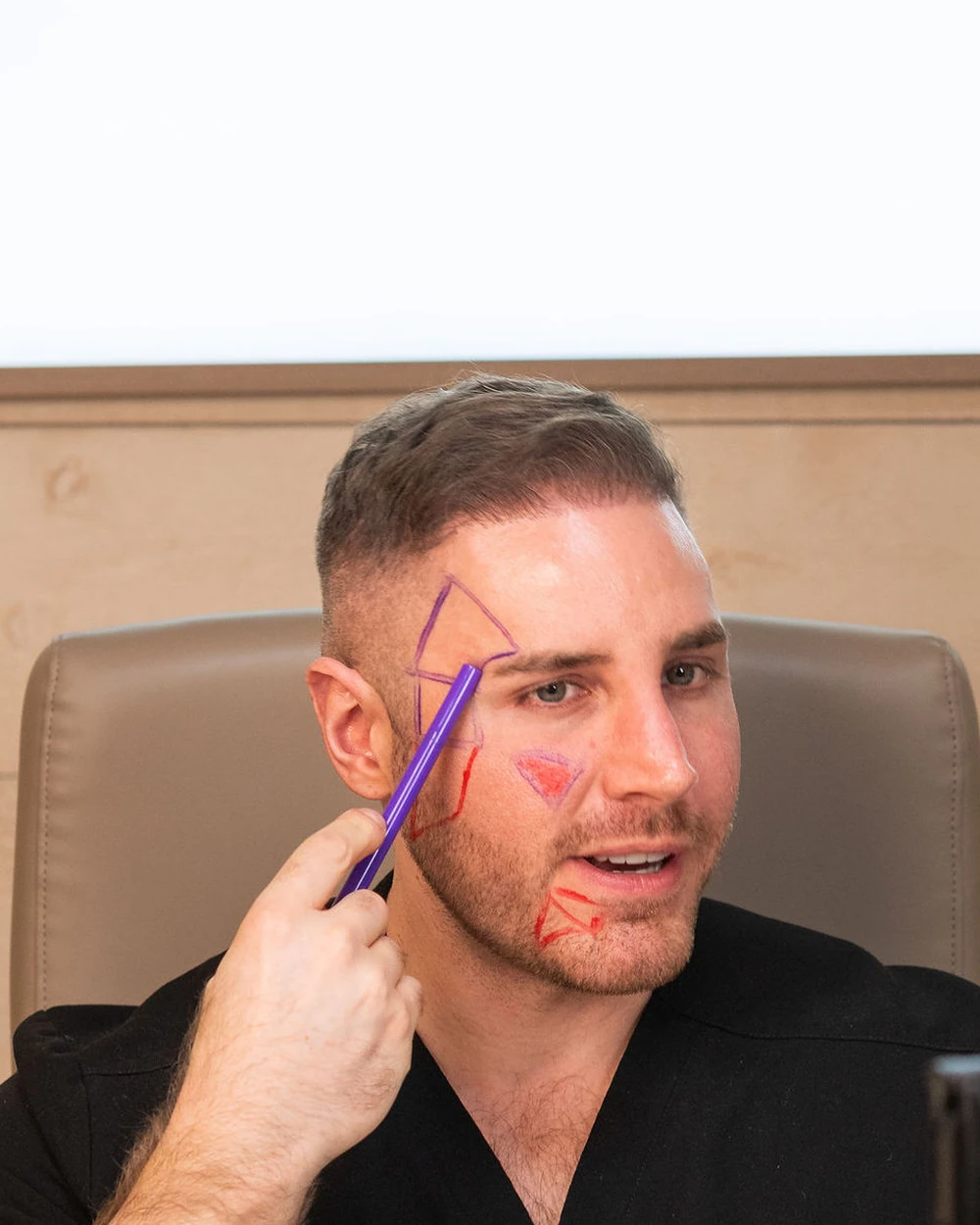
We examine you from the front and side, at rest and while you move the neck and lower face. We assess skin thickness, pinchable tissue, jaw and chin support, muscle bands and any previous treatment. Tell us about neck surgery, scars, thyroid disease, swallowing or voice symptoms and previous energy-based treatment. Ultrasound may help answer a specific anatomical question, but it does not turn every neck into a suitable injectable or device case.
Assessment pathway
A useful consultation for neck laxity follows a clear sequence rather than jumping to a product.
History
Weight change, previous treatment and any surgery.
Examination
The face, jaw and neck at rest and when the neck muscles tighten.
Components
Skin, fat, muscle bands or jaw shape, and which matters most.
Plan
An energy treatment, a referral for surgical assessment, or no treatment.
Your consultation
You do not need to choose a treatment before contacting us. Tell us what you have noticed, when it changed, what you have already tried and what a worthwhile result would look like to you. We consider your health, medication, previous procedures, skin or tissue characteristics and practical tolerance for recovery.
A useful consultation may lead to treatment, a staged plan, a period of observation or a referral. We would rather explain that an option is unlikely to help than place you into a course simply because the treatment is available.

Options we may discuss
Neck laxity has more than one cause, so there is no single fix. The right option depends on what we find at consultation.



What treatment may realistically achieve
A firmer-looking surface or a small improvement in contour may be realistic for a suitable patient. It is not realistic to promise that a device will remove a large skin fold or reproduce a surgical neck lift. Improvement develops gradually, varies between people and continues to sit within the normal ageing process. We compare the likely gain, recovery, cost and risk before recommending a course.
Related concerns we may also discuss
Neck laxity often sits alongside other related findings. These related concerns help frame the wider assessment.


Comfort, safety and clinical judgement
Comfort planning depends on the procedure. It may include topical or local anaesthetic, cooling, paced treatment or a nerve block where clinically appropriate. A nerve block is not needed for every concern, and comfort measures do not remove treatment risk.
Device and skin treatments require careful attention to diagnosis, skin type, settings, eye protection, aftercare and escalation.
Nerve blocks and comfort
Morpheus8 and Ultherapy Prime can be uncomfortable. Where clinically appropriate, a nerve block, topical anaesthetic or other comfort measures are discussed beforehand.
Medical thinking
Why choose Dr Ed Robinson Clinics
Our approach is medical, conservative and consultation-led. We look at how the concern fits the whole face, skin or health picture rather than treating an isolated photograph.
Cause before product
Skin, fat, muscle bands and jaw shape all affect the neck. We assess them together before recommending a pathway.
Comfort planned with judgement
Comfort planning may include topical or local anaesthetic, cooling, paced treatment or a nerve block where clinically appropriate.
Honest next steps
A useful consultation may lead to treatment, observation or a referral. We would rather explain when an option is unlikely to help.
CQC Good · Hale registered service
The registered Hale service is rated Good overall and Outstanding in leadership by the CQC. That rating relates to the registered service at Hale; it should not be read as separate CQC approval of every cosmetic procedure.
Read the CQC report for the registered Hale service · Meet Dr Ed
5.0 Google rating from 478 reviews
“What particularly impressed me was his honesty about treatments that he felt wouldn’t be appropriate or beneficial.”
“Be aware, he’ll be brutally honest if it’s not right for you and that’s why I cannot recommend him highly enough.”
What you can do at home
Sun protection, moisturiser, stable weight and avoiding smoking support skin health. They cannot tighten a substantial fold of excess skin. Neck exercises may help strength or posture, but there is no reliable evidence that they remove loose skin or an anatomical pocket beneath the chin.
When to seek medical advice
A new neck lump, persistent hoarseness, difficulty swallowing, unexplained swelling or rapidly changing asymmetry needs medical assessment before any cosmetic procedure.
Related videos, articles and results
Further reading and clinic media that can help you understand neck laxity in context.

Frequently asked questions
What is the difference between a turkey neck and tech neck
Turkey neck usually refers to laxity, fullness or bands beneath the jaw, whereas tech neck often describes horizontal creases. They can coexist, but the assessment and treatment targets are different.
Can Ultherapy replace a neck lift
No. It may produce a modest, gradual change in laxity, but it cannot remove substantial redundant skin or reposition tissues in the same way as surgery.
Is the fullness under my chin definitely fat
No. Skin, muscle, glands and skeletal support all influence the contour. Treating assumed fat without an anatomical assessment can produce little benefit or an uneven result.
Will one treatment be enough
That depends on the chosen procedure and the degree of change sought. A treatment course should not be sold before the anatomy, endpoint and review plan are clear.
Can treatment make my face or neck look thinner than I want
Yes. Some energy-based procedures can reduce fat unintentionally. We discuss where volume supports the face and neck and use conservative, anatomy-led planning.
How much downtime should I expect
It varies widely by procedure. Tenderness and swelling may be brief after some treatments; bruising, crusting or prolonged swelling can follow others. Your plan should state the expected recovery before you book.