


Non-Surgical Rhinoplasty
A non-surgical rhinoplasty (also known as a “liquid nose job”, “filler nose-job” or “lunchtime nose’-job”) offers a non-invasive alternative to traditional surgical procedures. This innovative treatment utilises advanced dermal fillers to reshape and contour the nose, addressing a variety of cosmetic concerns. Whether you’re looking to smooth out bumps and irregularities, refine the nasal tip, or enhance the overall facial profile, a liquid rhinoplasty can help you achieve the desired look with minimal downtime. Note that a non-surgical rhinoplasty cannot straighten a crooked nose.
At a glance

30 minutes

Topical Cream

Immediate

6 weeks
Benefits of Non-Surgical Rhinoplasty
-

NON-INVASIVE
Unlike a surgical rhinoplasty, dermal fillers do not require incisions or anesthesia, reducing both risk and recovery time. -
BESPOKE RESULTS
Each patient has unique nasal features and desired outcomes. I will work closely with you to create a personalised treatment plan that addresses your specific concerns and enhances your natural beauty. -
QUICK AND CONVENIENT
Non-surgical rhinoplasties are typically quick, often completed within 30 minutes. You can enjoy a noticeable improvement in your nasal appearance without disrupting your busy schedule. -
MINIMAL DOWNTIME
Following the procedure, most patients experience minimal swelling or bruising, allowing them to resume their daily activities immediately. -
REVERSIBLE
One of the remarkable advantages of a non-surgical rhinoplasty is its reversibility. If you're not completely satisfied with the result, I can adjust or dissolve the filler.
What areas can be treated?

Nose
What conditions can Non-Surgical Rhinoplasty treat?
Nose Reshaping

At Dr. Ed Robinson Aesthetics in Altrincham, we offer non-surgical nose reshaping, an innovative and less invasive alternative to traditional rhinoplasty. This procedure is ideal for those seeking to enhance the appearance of their nose without the downtime and risks associated with surgery.
Our Approach
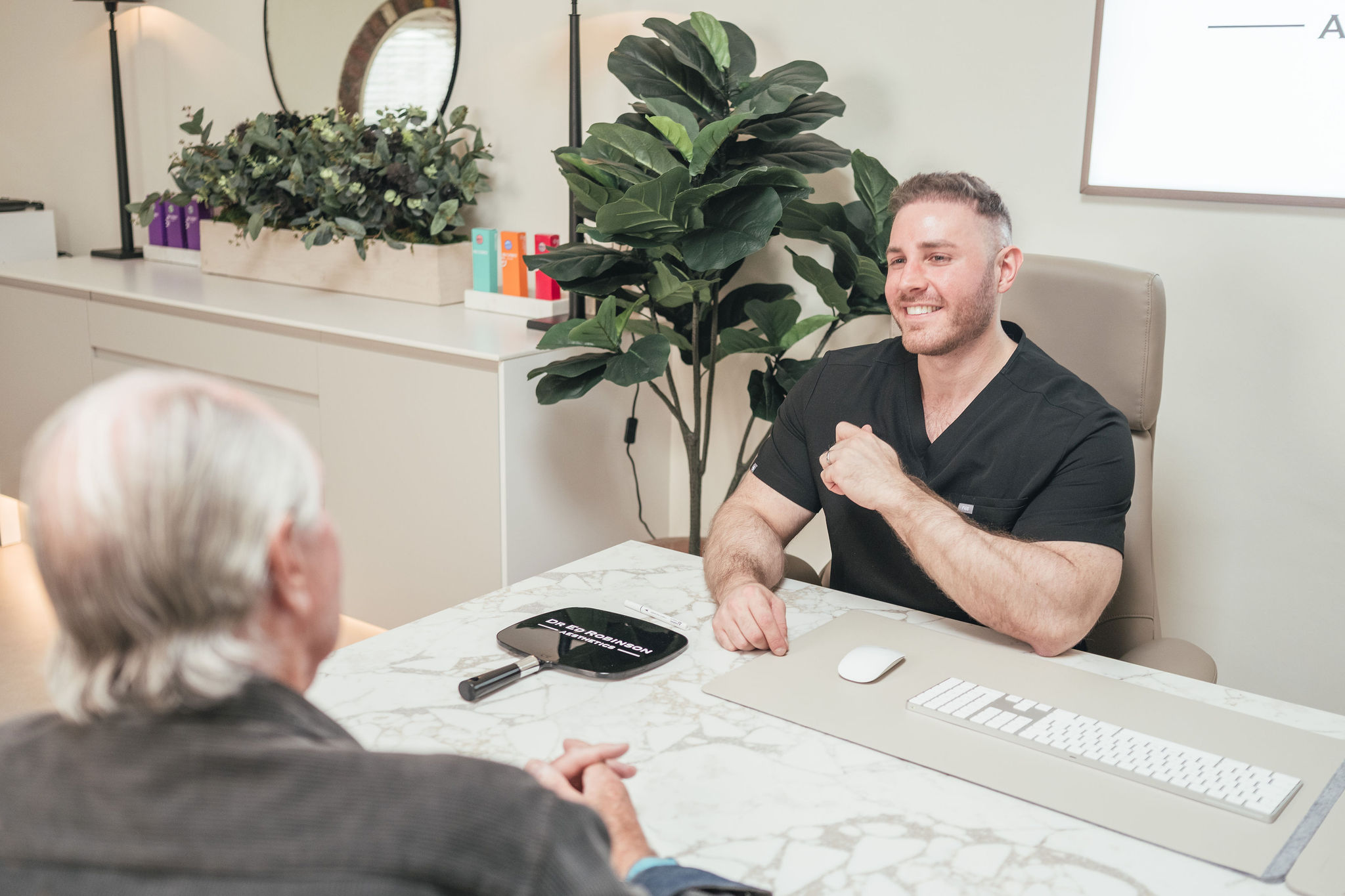
Patient Safety
We prioritise your safety and satisfaction.
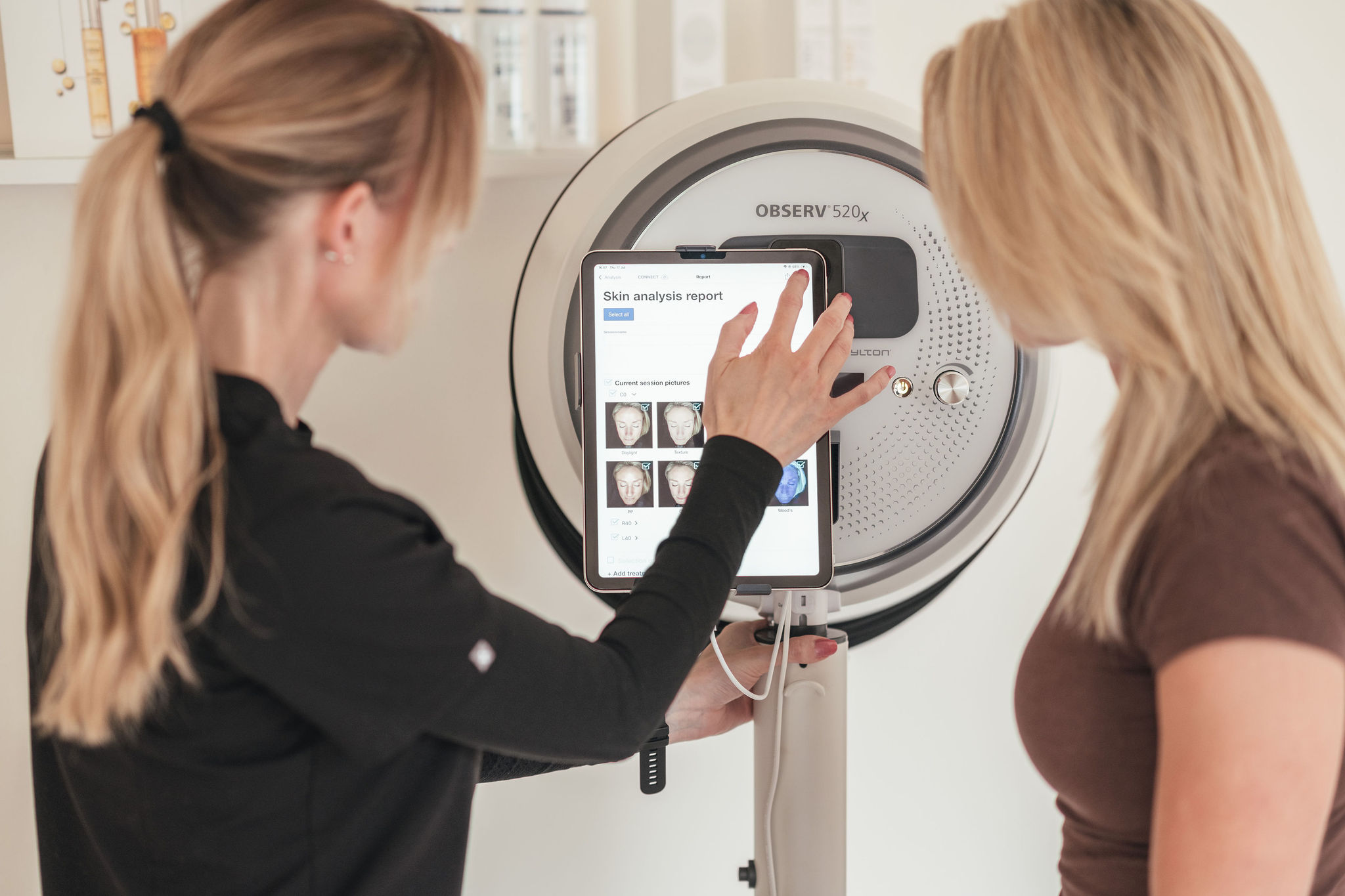
Evidence-Based Practice
Our treatments are based on the latest research and best practices in the field of aesthetics.
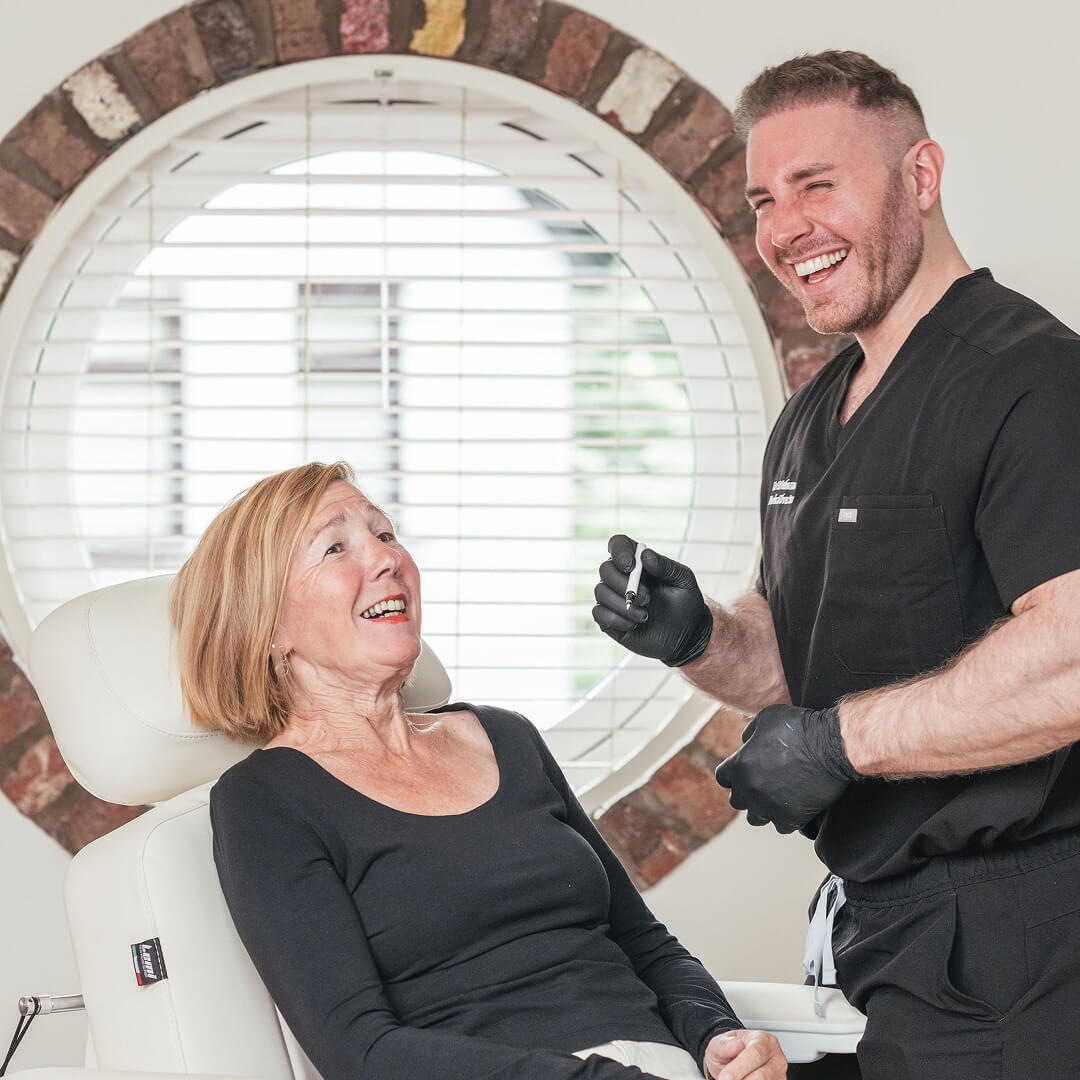
Bespoke Treatments
We always take the time to understand your goals and concerns, providing personalised treatment plans that are tailored to your unique needs.
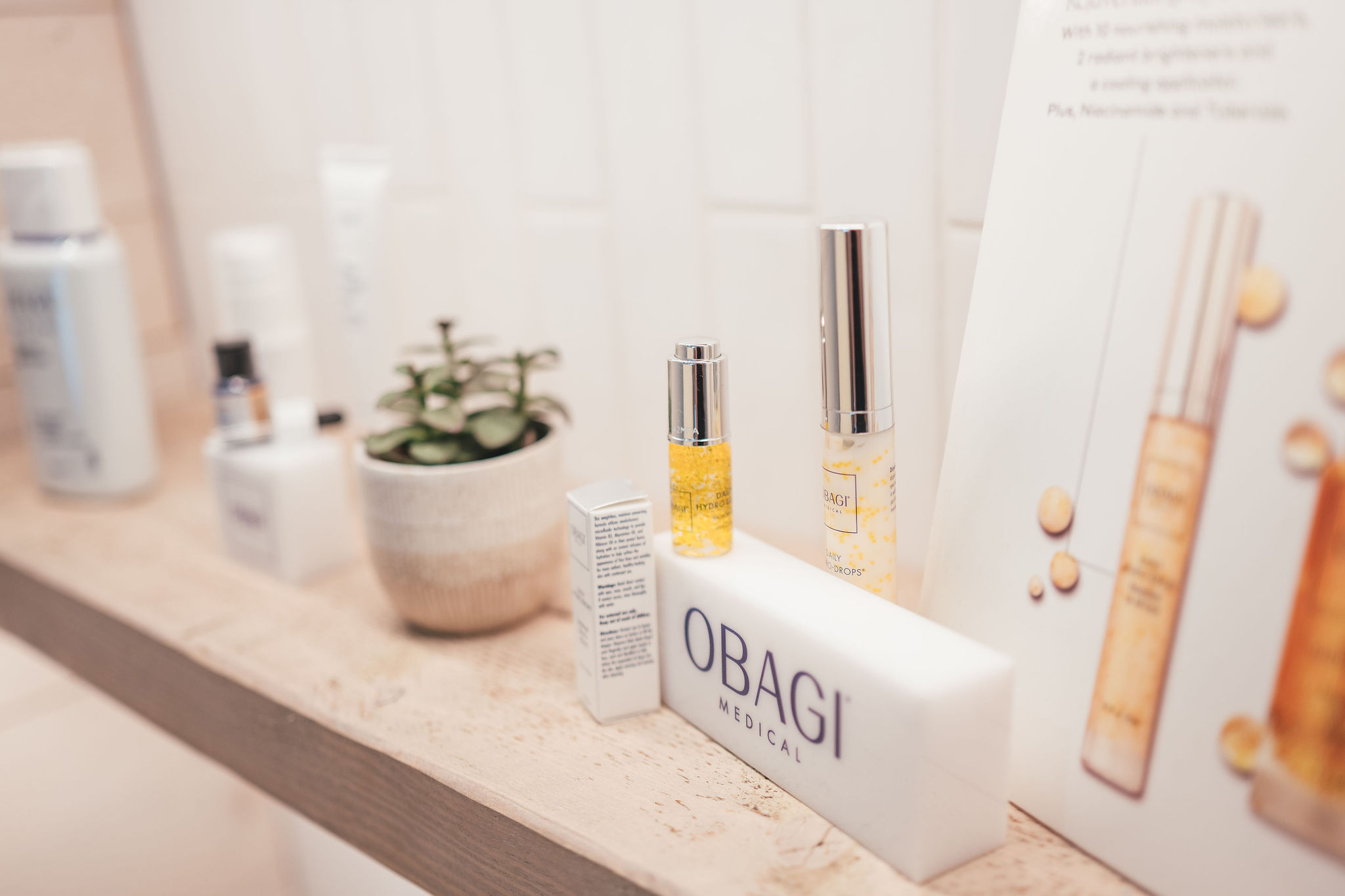
High Quality Products
Our commitment to using high-quality products sourced from reputable pharmacies ensures exceptional results and your peace of mind.
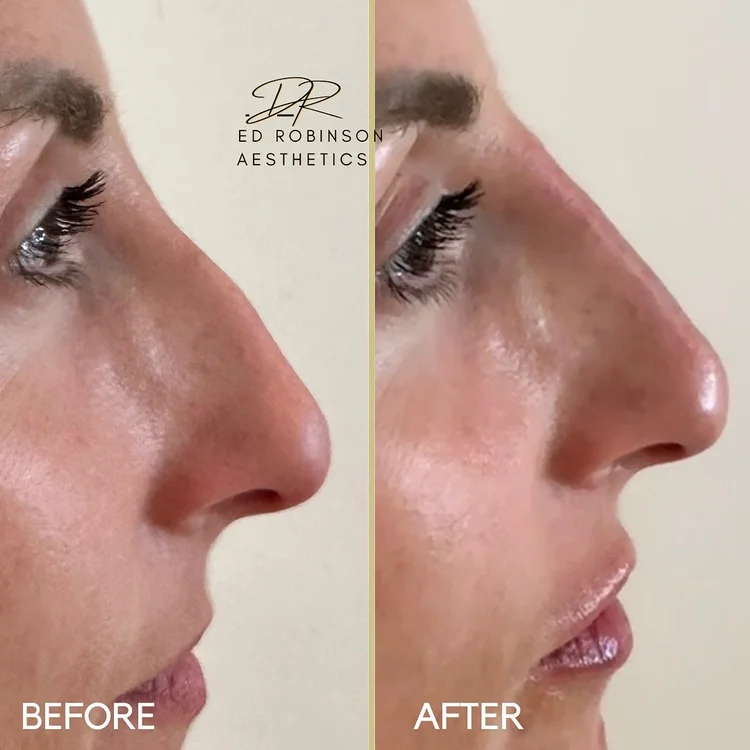
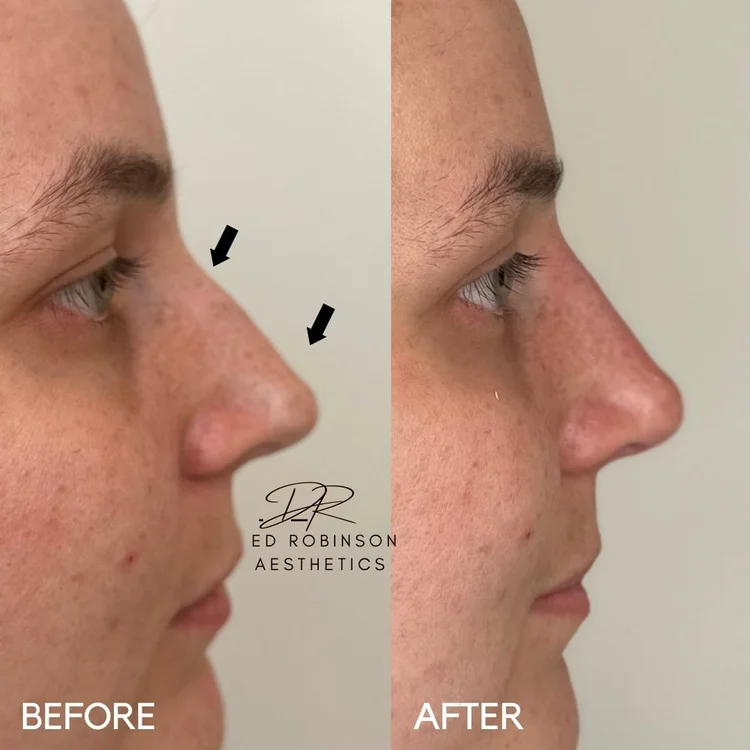
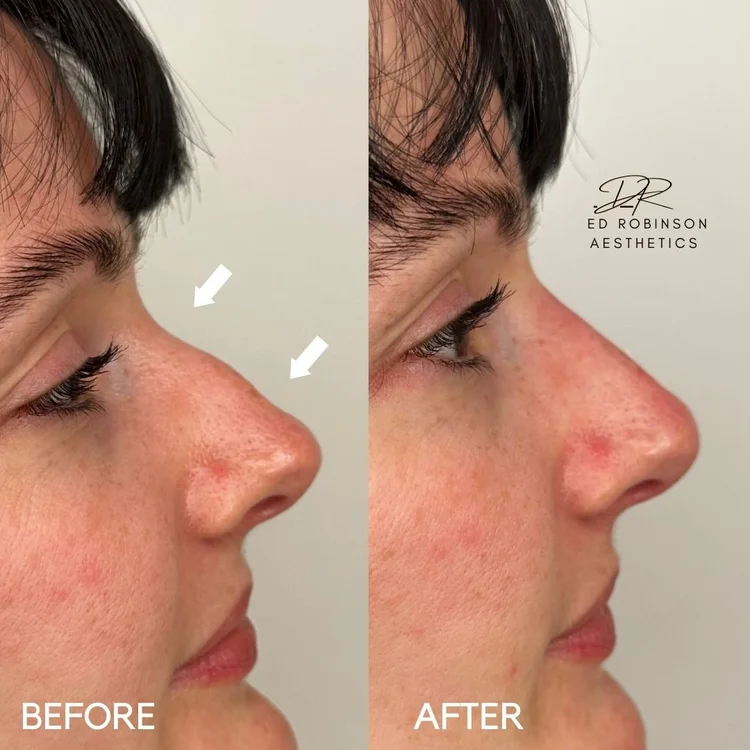
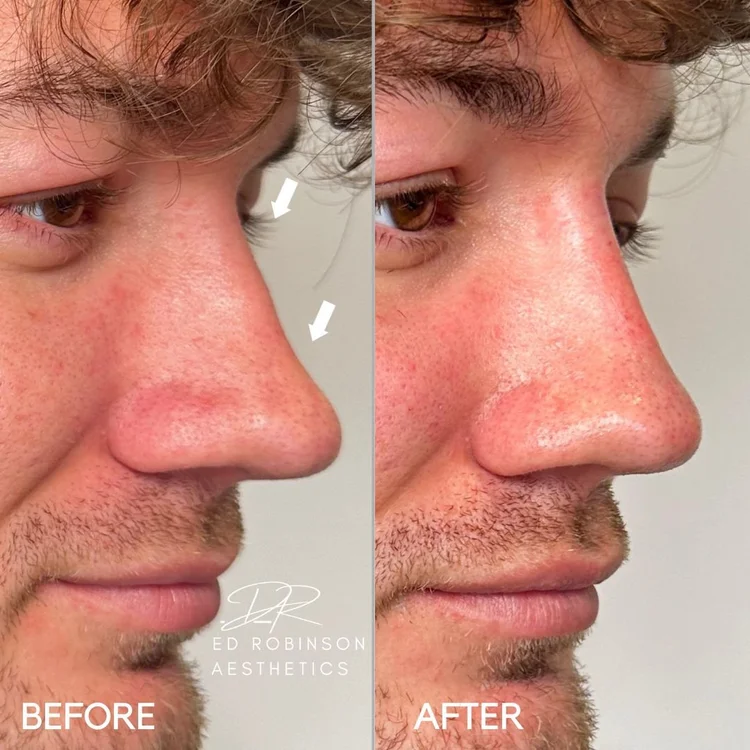
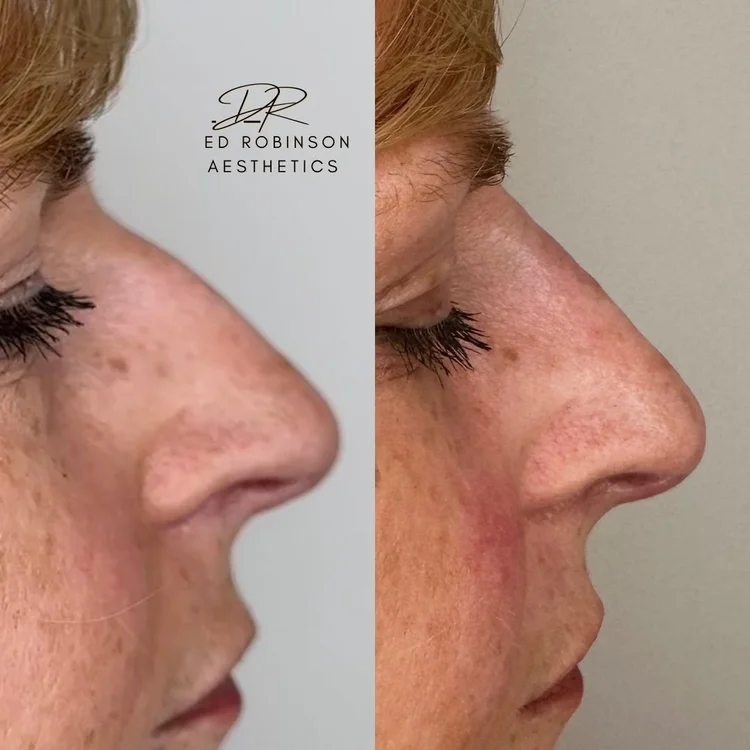
Our Before and After Gallery for Non-Surgical Rhinoplasty



Non-Surgical Rhinoplasty Aftercare

What to Avoid
Active skincare products on the day of treatment (e.g. retinols, acids).
Alcohol consumption for 24-48 hours, as it increases bruising risk.
Strenuous exercise, saunas, and steam rooms for 24-48 hours, which can worsen swelling or bruising.
Applying pressure to treated areas for 24-48 hours.

Comfort and Recovery Tips
Mild swelling may worsen for the first 24-48 hours, over-the-counter antihistamines or anti-inflammatories can help.
Results are visible immediately, but final results settle by 2 weeks once swelling resolves. Most fillers last 12-18 months (e.g. jaw/chin fillers), though lip fillers often last 6-9 months. Longevity varies by area and individual lifestyle.
Side effects may include bruising, swelling, lumps, infection, filler migration, or rare vascular occlusion. Dr Ed is trained to recognise and treat complications, including dissolving filler with hyalase if needed.
FAQs
For more general enquiries, please take a look at some of our frequently asked questions.
How long does a Non-Surgical Rhinoplasty usually take?
Treatment length depends on the individual but can vary from between 30 minutes to an hour including application of numbing cream.
Sometimes it may be appropriate to build-up the nose across more than one appointment, with time in between, to let things settle.
What is a Non-Surgical Rhinoplasty used for?
Dermal fillers are hyaluronic-based gels injected under the skin to replicate or replace volume. Hyaluronic acid occurs naturally in the body and is therefore usually very well tolerated!
For a non-surgical nose job this may be to rejuvenate the face and treat signs of ageing such as a drooping tip or as part of beautification, profile harmonisation or masculinisation
Non-surgical rhinoplasty can add volume to a small nose and correct humps and deficiencies.
They are not usually appropriate for treating a crooked nose.
How should I prepare for Non-Surgical nose job?
Please come to the clinic without make-up as this will have to be removed.
Ensure you are well-hydrated.
Avoid the use of skincare active ingredients on the day and stop any retinol-containing products 24 hours before-hand.
Ensure you have not had any aesthetic treatments such as micro needling less than 2 weeks before-hand.
Avoid alcohol for 24 hours prior to treatment as this will increase your risk of bruising.
What does Non-Surgical Rhinoplasty treatment involve?
Numbing cream may be used to anaesthetise the skin before-hand.
The area will be cleaned with anti-septic solution first.
Either a needle or cannula technique will be used to inject dermal filler under the skin of the nose.
A cannula is a blunt tube which is threaded under the skin to deposit filler without the need for repeated injections. A small needle entry point will need to be made which is usually only slightly uncomfortable.
Aftercare will be applied to reduce inflammation after treatment.
How long do Non-Surgical Rhinoplasty treatments last for?
Non-Surgical Rhinoplasty treatments usually last between 12-18 months, although studies have shown they can last much longer. The body naturally breaks the hyaluronic acid down into carbon dioxide and water.
The length of time varies depending on the individual.
Lifestyle factors such as physical activity, smoking, alcohol consumption, recreational drug use and sun exposure will result in a shorter duration of action.
When will I see results?
The results from a Non-Surgical Nose Job are noticeable immediately.
Mild swelling may occur initially which usually calms down after 48 hours and settles completely by 2 weeks. At this point you will have a good idea of the final results.
What happens after treatment?
Due to the filler insertion-process there is usually some extra inflammation which may worsen for the first 24-48 hours.
Over-the-counter antihistamines and anti-inflammatories can help calm down inflammation.
Avoid the use of active skin ingredients on the day of treatment.
Avoid alcohol-consumption for 24-48 hours as this increases your chance of bruising.
Avoid strenuous activity, saunas/steam rooms which may promote sweating as this increases your risk of bruising.
Do not apply excessive pressure to the filler for the first 24-48 hours. Avoid wearing glasses during this time if possible.
How much does a Non-Surgical Rhinoplasty treatment cost?
Non-Surgical Nose Jobs start at £400 but may vary for particularly complex cases. You will be advised on a price based on your bespoke consultation.
Does Non-Surgical Rhinoplasty treatment hurt?
A Non-Surgical Rhinoplasty may be somewhat uncomfortable but usually not painful.
As an anaesthetic doctor I am well placed to reduce anxiety and pain during procedures using a number of techniques.
Dermal fillers contain lidocaine (local anaesthetic) to anaesthetise the areas injected.
Numbing cream will be applied before the procedure.
I am trained in advanced techniques including the use of cannulas to minimise pain where possible and result in considerably fewer injections.
Are Non-Surgical Nose Jobs safe?
In the hands of an experienced, medically trained injector dermal fillers are safe, well-studied, reversible treatments and side effects are rare.
Dermal fillers are hyaluronic acid-based which occurs naturally in the body.
Dermal fillers are not suitable for patients who are pregnant or breastfeeding.
Most dermal fillers contain lidocaine and therefore allergy to lidocaine is important to note as specific brands must be used.
The NHS website is a fantastic resource regarding the safety of cosmetic procedures including Non-Surgical Rhinoplasty.
Are there any side effects?
Most common side effects are mild and short-lived. As a trained medical professional, I am well positioned to minimise these risks.
I am trained to recognise and treat dermal filler complications in the rare event that they occur. In the case of vascular occlusion or filler migration, hyalase may be used to dissolve (remove the filler)
Side-effects include:
-
Bruising or swelling at the site of injection
-
Infection
-
A lumpy appearance under the skin, which might require further treatment
-
Filler migration
-
Scarring
-
A blocked blood vessel in the face (Vascular occlusion), which can lead to skin breakdown.
Do you offer filler dissolving?
I perform filler dissolving with hyalase as an emergency to treat vascular occlusion.
I also perform elective filler dissolving, starting at £200. I would encourage in almost every circumstance to see your original practitioner if you are unhappy with your results.
What brands of dermal filler do you use?
At Dr Ed Robinson Aesthetics, I pride myself on using high quality filler brands sourced from reputable pharmacies with evidenced-based results.
I primarily use Teoxane, Juvederm and Belotero in my clinic in Altrincham, Hale, Manchester, Cheshire.