


Low mood, poor concentration and “brain fog”
Assessed by our doctors in Hale, Cheshire
Low mood, poor concentration and “brain fog” · Hale, Cheshire

Low mood and difficulty thinking clearly can be unsettling, especially when they begin to affect work, relationships or everyday decisions. “Brain fog” is a useful description of an experience, but it is not a single medical diagnosis. We take it seriously, look for contributing factors and make sure that urgent or specialist support is not missed.
Hale clinic · Consultation first
You do not need to choose a treatment before contacting us. We start by understanding the cause, then explain whether a clinic pathway, observation or a referral is the more sensible next step.
At a glance
How we think about low mood, poor concentration and “brain fog”
 Assessment focus
We ask about onset, duration, sleep, anxiety, enjoyment, motivation, memory and daily function.
 Possible pathways
Medical hormone assessment, GP or mental-health assessment, Sleep or medical referral, Supportive lifestyle measures
 Our approach
Understand the cause first; recommend treatment only when the likely benefit justifies the risk, recovery and cost.
 Medical care first
Sudden confusion, facial weakness, speech difficulty, severe new headache or loss of consciousness is an emergency.
What this concern can involve
Sleep deprivation, stress, depression, anxiety, menopause, medication, alcohol, infection and several medical conditions can affect mood, memory and concentration. Anaemia, thyroid disease, sleep apnoea and nutritional problems may contribute. Testosterone deficiency can include mood or concentration symptoms in some men, but those broad symptoms do not prove a hormone disorder. Sudden confusion or a focal neurological change belongs to an urgent medical pathway, not a wellness consultation.
Mood
Persistent low mood may be depression or anxiety.
Sleep
Poor sleep affects concentration and mood.
Medical causes
Thyroid disease, anaemia and other conditions can contribute.

Hormones
Hormone changes are one possible factor.
How we assess it
We ask about onset, duration, sleep, anxiety, enjoyment, motivation, memory and daily function. Medication, alcohol or substance use, physical symptoms and recent illness matter. We ask directly and sensitively about safety, including thoughts of self-harm, because appropriate support matters more than embarrassment. Tests are from the clinical picture, and we involve primary care or mental-health services where continuity, diagnosis or treatment lies outside our scope.
Assessment pathway
A useful consultation for low mood and brain fog follows a clear sequence rather than jumping to a product.
History
Symptoms, sleep, mood, medicines, alcohol and health.
Safety
Whether urgent support is needed.
Tests
Blood tests where they would change the plan.
Plan
Treatment, referral, support or monitoring.
Your consultation
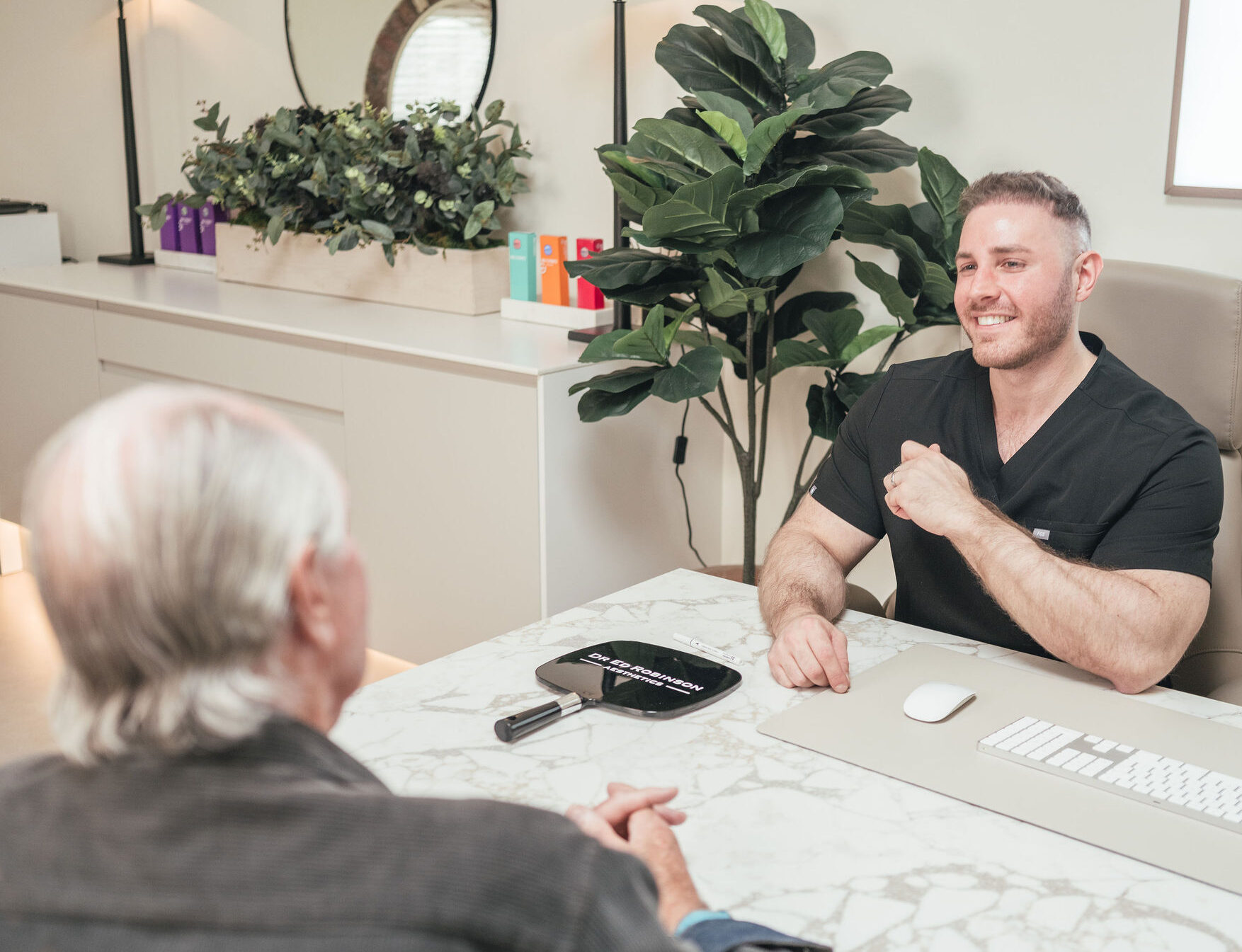
You do not need to choose a treatment before contacting us. Tell us what you have noticed, when it changed, what you have already tried and what a worthwhile result would look like to you. Male hormone care and testosterone assessment are led by Dr Ed Robinson. We consider your health, medication, previous tests and treatment, and what you would like to change.
A useful consultation may lead to treatment, a staged plan, a period of observation or a referral. We would rather explain that an option is unlikely to help than place you into a course simply because the treatment is available.
Options we may discuss
Low mood and brain fog has more than one cause, so there is no single fix. The right option depends on what we find at consultation.



What treatment may realistically achieve
Improvement follows the cause and may take time. The right outcome may be treatment here, coordinated testing, a GP plan or specialist support. We define what change would count as meaningful and review it. We do not promise sharper thinking or a lifted mood from an infusion, supplement or hormone unless there is an appropriate diagnosis and a defensible evidence base.
Related concerns we may also discuss
Low mood and brain fog often sits alongside other related findings. These related concerns help frame the wider assessment.


Medical thinking
Why choose Dr Ed Robinson Clinics
Our approach is medical, conservative and consultation-led. We look at how the concern fits the whole face, skin or health picture rather than treating an isolated photograph.
Cause before product
Low mood and brain fog have many causes. We look for the explanation, and for anything urgent, before recommending a pathway.
Led by Dr Ed Robinson
Male hormone care and testosterone assessment are led by Dr Ed Robinson, from the first consultation and blood tests to monitoring.
Honest next steps
A useful consultation may lead to treatment, observation or a referral. We would rather explain when an option is unlikely to help.
CQC Good · Hale registered service
The registered Hale service is rated Good overall and Outstanding in leadership by the CQC. That rating relates to the registered service at Hale; it should not be read as separate CQC approval of every cosmetic procedure.
Read the CQC report for the registered Hale service · Meet Dr Ed
5.0 Google rating from 478 reviews
“Be aware, he’ll be brutally honest if it’s not right for you and that’s why I cannot recommend him highly enough.”
“He takes a genuinely individualised approach rather than offering a one size fits all treatment plan.”
What you can do at home
Keep sleep and meals regular where possible, reduce heavy alcohol use and build activity gradually. Break difficult tasks into manageable steps and ask for support early. Do not self-prescribe hormones or stimulants. If you are taking antidepressants or other prescribed medication, do not stop suddenly; discuss side effects or concerns with the prescriber.
When to seek medical advice
Sudden confusion, facial weakness, speech difficulty, severe new headache or loss of consciousness is an emergency. If you feel unable to keep yourself or someone else safe, or think you may act on thoughts of self-harm, call 999 or attend A&E now. For persistent low mood or thoughts of self-harm without immediate danger, seek prompt help through your GP or NHS urgent mental-health support.
Related videos, articles and results
Further reading and clinic media that can help you understand low mood and brain fog in context.

Frequently asked questions
Is brain fog a medical diagnosis
No. It describes problems such as poor concentration, slowed thinking or forgetfulness. The next step is to explore the pattern and possible causes.
Can low testosterone cause low mood
It may be one contributor in some men with confirmed hypogonadism, but low mood is common and has many causes. Symptoms alone are not enough to diagnose a testosterone disorder.
Will TRT work like an antidepressant
No. TRT is not a general treatment for depression. Someone with suspected depression should have an appropriate mental-health assessment whether or not hormones are also being investigated.
Could menopause be relevant
Yes. Cognitive and mood symptoms can occur around perimenopause and menopause, but other causes still need consideration. The appropriate menopause or primary-care service may be the best route.
What should I do if I am having thoughts of self-harm
If there is an immediate risk that you may act, call 999 or go to A&E. Otherwise seek urgent help through your GP or NHS urgent mental-health services and tell someone you trust today.
Do I need brain scans
Not routinely. Imaging is guided by neurological symptoms, examination and medical assessment, not by the phrase brain fog alone.
Can an IV drip improve concentration
A reliable improvement cannot be promised without identifying a relevant deficiency or indication. An infusion should not delay medical or mental-health assessment.