Dr Ed is a GMC-registered doctor with a background in anaesthesia, who uses ultrasound guidance and nerve blocks to make some treatments more comfortable. Ask about this at your consultation.
Dr Ed is a GMC-registered doctor with a background in anaesthesia, who uses ultrasound guidance and nerve blocks to make some treatments more comfortable. Ask about this at your consultation.
Dr Ed is a GMC-registered doctor with a background in anaesthesia, who uses ultrasound guidance and nerve blocks to make some treatments more comfortable. Ask about this at your consultation.
Dr Ed is a GMC-registered doctor with a background in anaesthesia, who uses ultrasound guidance and nerve blocks to make some treatments more comfortable. Ask about this at your consultation.
Dr Ed is a GMC-registered doctor with a background in anaesthesia, who uses ultrasound guidance and nerve blocks to make some treatments more comfortable. Ask about this at your consultation.
A skin growth may catch on clothing, feel irritating or simply bother you. We only discuss cosmetic removal when the concern is within the scope of our benign-lesion service. We do not offer mole checks, and a cosmetic removal appointment is not a substitute for investigating a changing mole or possible skin cancer.
Hale clinic · Consultation first
You do not need to choose a treatment before contacting us. We start by understanding the cause, then explain whether a clinic pathway, observation or a referral is the more sensible next step.
How we think about skin lesions and benign growths
Assessment focus
We ask how long the lesion has been present, whether it is changing and whether it bleeds, hurts or repeatedly crusts.
Possible pathways
Erbium laser lesion removal, Cryotherapy
Our approach
Understand the cause first; recommend treatment only when the likely benefit justifies the risk, recovery and cost.
Medical care first
A changing mole, non-healing sore, recurrent spontaneous bleeding or rapidly growing lesion needs medical assessment.
What this concern can involve
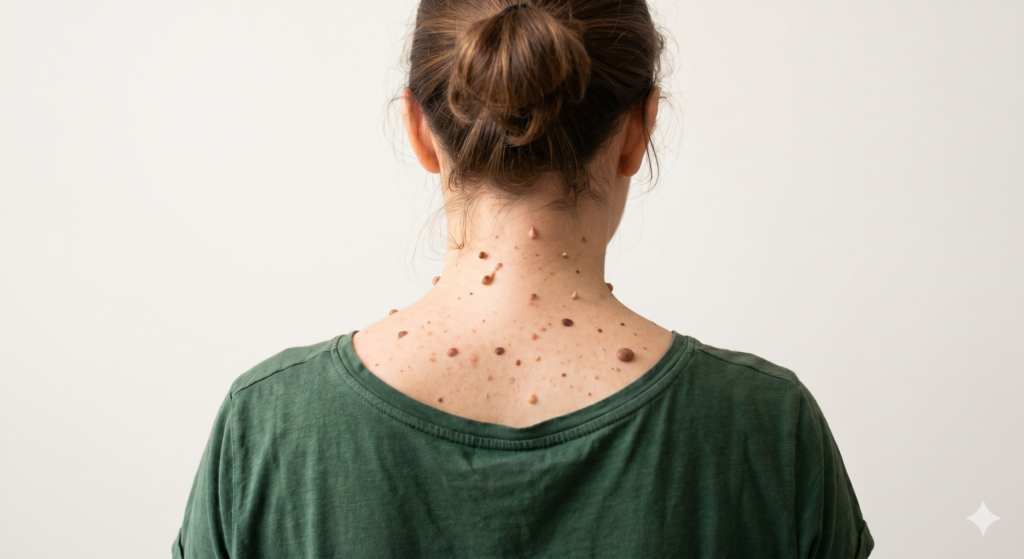
Skin tags, milia, seborrhoeic keratoses and warts are examples of different growths that can appear on the skin. They have different causes and removal options. Not every growth is suitable for cosmetic removal, and some conditions require formal dermatology assessment or a tissue sample rather than destruction with a laser or freezing device.
Skin tags
Soft tags often form where skin rubs.
Seborrhoeic keratoses
Warty, stuck-on growths are common with age.
Other growths
Some lesions look alike but behave differently.
Diagnosis
Uncertain or changing lesions need GP or specialist review.
How we assess it
We ask how long the lesion has been present, whether it is changing and whether it bleeds, hurts or repeatedly crusts. We review healing risk and the site. We do not provide mole screening or reassurance about a suspicious mole. A new or changing mole, or any lesion with concerning features, should be taken to your GP or an appropriate dermatology service before cosmetic treatment is considered.
Assessment pathway
A useful consultation for skin lesion follows a clear sequence rather than jumping to a product.
1
History
When it appeared, changes, bleeding and previous treatment.
→↓
2
Examination
Appearance, size and location.
→↓
3
Scope
Confirming the lesion is benign and suitable for treatment in clinic.
→↓
4
Plan
Laser removal or cryotherapy in clinic, or no treatment.
Your consultation
You do not need to choose a treatment before contacting us. Tell us what you have noticed, when it changed, what you have already tried and what a worthwhile result would look like to you. We consider your health, medication, previous procedures, skin or tissue characteristics and practical tolerance for recovery.
A useful consultation may lead to treatment, a staged plan, a period of observation or a referral. We would rather explain that an option is unlikely to help than place you into a course simply because the treatment is available.
✓When the growth appeared and whether it has changed
✓Any bleeding, itching or pain
✓Previous removal or treatment
✓Your skin tone and how you heal
✓Why you would like it treated
Options we may discuss
Skin lesion has more than one cause, so there is no single fix. The right option depends on what we find at consultation.
Precise laser removal of benign growths such as skin tags and seborrhoeic keratoses once the diagnosis is clear. Healing is usually quick, and scarring is uncommon but possible.
Please note, Erbium laser is only available in Hale. However, we have a guide on where to stay if you are able to travel. We promise it’s worth the visit! Planning your visit.
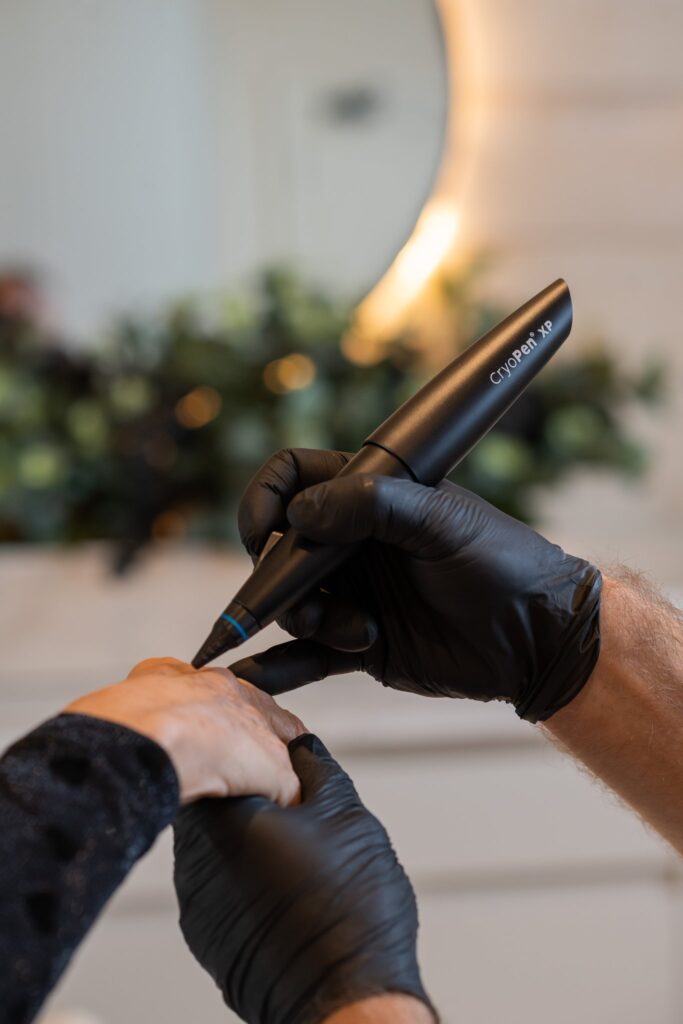
Controlled freezing that treats some benign lesions such as seborrhoeic keratoses. It may lighten the treated skin a little, especially in darker skin.
Please note, cryotherapy is only available in Hale. However, we have a guide on where to stay if you are able to travel. We promise it’s worth the visit! Planning your visit.
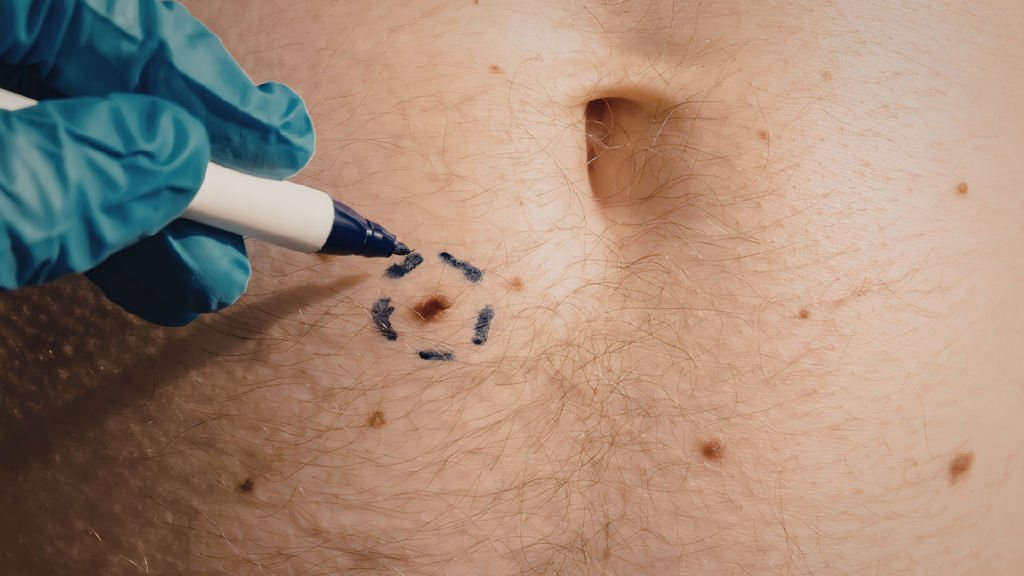
Skin tags are soft, harmless flaps of skin that often form on the neck, eyelids, underarms and under the bust, where skin rubs. They can catch on jewellery or clothing. Once Dr Ed has confirmed the diagnosis, small tags can usually be removed with Erbium laser or cryotherapy in a short appointment, with local anaesthetic where needed. Most leave a small scab that heals within one to two weeks. Larger tags, or any growth that is changing, bleeding or uncertain, may need GP or specialist review instead. Cost depends on the number and size of tags; see our prices.
Removal may leave a mark or scar even when successful, and some growths can recur. We discuss healing, dressings and whether more than one treatment may be needed. A promise of scar-free removal is not realistic. The cosmetic benefit should be weighed against the possibility that a small stable lesion is better left alone.
Related concerns we may also discuss
Skin lesion often sits alongside other related findings. These related concerns help frame the wider assessment.
Warts and persistent viral skin growths
▾
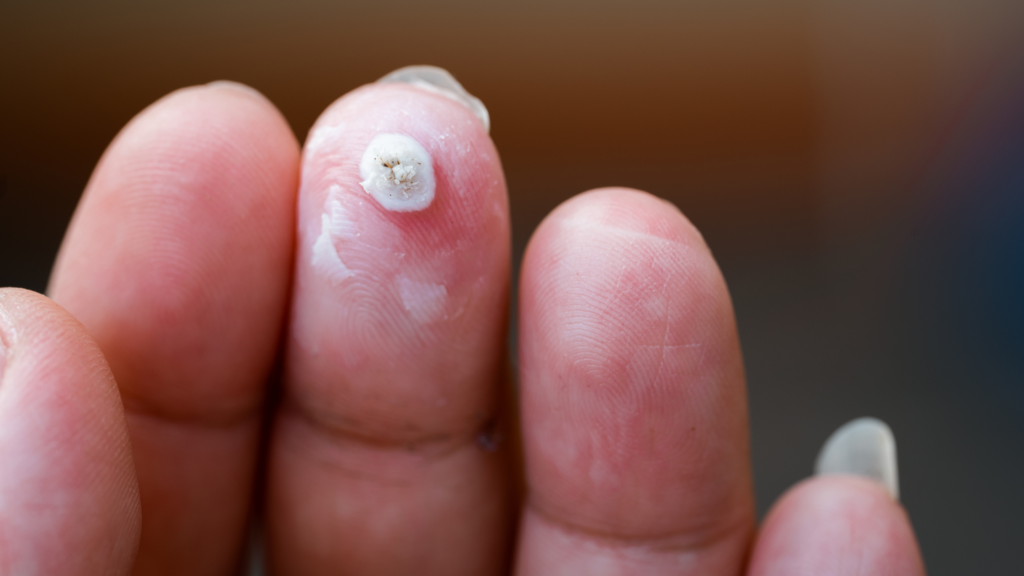
Warts are common and may disappear without treatment, but some persist, spread or become uncomfortable. We confirm that the growth is a wart before discussing options. A lesion that changes, bleeds or fails to respond should not simply be frozen repeatedly without reassessment.
Common warts are caused by human papillomavirus infection in the skin. They may occur on hands, feet or other areas, and the immune response affects how long they persist.
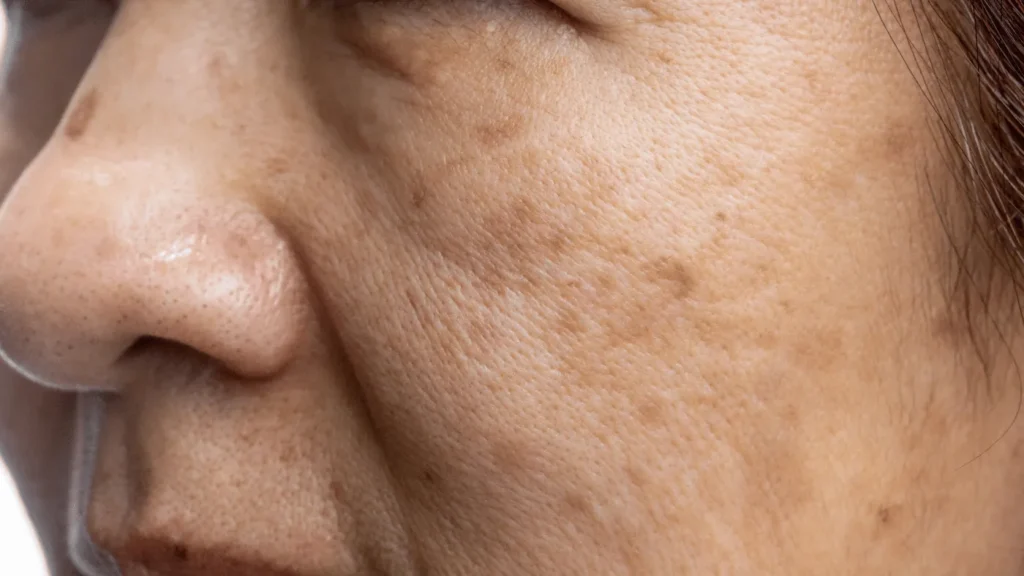
Brown marks can look similar but behave very differently. A discrete sun spot, melasma and a mark left by inflammation need different plans. We identify the pigment pattern before recommending skincare, a peel or a light-based procedure.
Melanin is the pigment that contributes to skin colour. Local changes can follow ultraviolet exposure, hormonal influences, inflammation or injury.
A red, purple or blue mark may be made up of blood vessels, but its colour does not establish the diagnosis. We assess the type of mark before discussing whether light or laser treatment is appropriate, or whether specialist care is needed.
Vascular concerns include thread veins, cherry angiomas, venous lakes and some birthmarks. A venous lake is often a compressible blue-purple mark, commonly on a lip, while a cherry angioma is typically a small red vascular growth.
Comfort planning depends on the procedure. It may include topical or local anaesthetic, cooling, paced treatment or a nerve block where clinically appropriate. A nerve block is not needed for every concern, and comfort measures do not remove treatment risk.
Device and skin treatments require careful attention to diagnosis, skin type, settings, eye protection, aftercare and escalation.
Nerve blocks and comfort
Laser removal and cryotherapy can be uncomfortable. Local anaesthetic, cooling and a paced approach are discussed beforehand, and a nerve block may be offered for some laser treatments where clinically appropriate.
Our approach is medical, conservative and consultation-led. We look at how the concern fits the whole face, skin or health picture rather than treating an isolated photograph.
Cause before product
Diagnosis comes before removal. We confirm that a lesion is benign, then treat it in clinic; we do not offer mole checks.
The registered Hale service is rated Good overall and Outstanding in leadership by the CQC. That rating relates to the registered service at Hale; it should not be read as separate CQC approval of every cosmetic procedure.
Do not cut, burn or tie off an uncertain lesion at home. After treatment, follow the wound-care plan and avoid picking. Sun protection on healed skin may help reduce persistent colour contrast.
When to seek medical advice
A changing mole, non-healing sore, recurrent spontaneous bleeding or rapidly growing lesion needs medical assessment. Do not book a cosmetic laser simply to remove a worrying mark quickly.
Related videos, articles and results
Further reading and clinic media that can help you understand skin lesion in context.
Clinic media library
Videos and clinic media that show how we talk through concerns, assessment and recovery.
No. We do not offer mole checks. If you have a new or changing mole, or a lesion that may be suspicious, contact your GP or an appropriate dermatology service. Do not book cosmetic lesion removal as a substitute.
Will the lesion be sent to a laboratory
That depends on the method and diagnostic need. If histology is required, the technique must preserve a suitable sample; freezing or laser destruction may be inappropriate.
Will I have a scar
Any removal method can leave a mark or scar. We discuss the likely trade-off between the original lesion and the healing result.
Can a skin tag come back
A treated lesion may recur or new tags may develop elsewhere. Removal does not remove every underlying tendency to form them.
Can all lesions be treated at the first visit
No. Some need further assessment, a different method or referral. Diagnosis and consent come before a decision to remove a lesion.



 Assessment focus
 Possible pathways
 Our approach
 Medical care first