


Home / Media / Ageing & Anatomy / Which Areas of the Face Lose Volume With Age?
1:32 • Published 31 Aug 2026 • Dr Ed Robinson
Which Areas of the Face Lose Volume With Age?
The short answer
It is not just wrinkles that make us look older. Volume loss in five key areas, the temples, midface, the piriform fossa beside the nose, the chin and under-lip area, and the jawline in front of the ear, changes the face's shape and support. Modest, anatomically placed filler or biostimulators can restore it naturally.Founder and Medical Director • Last reviewed 18 October 2026
In brief
Key Takeaways
- 01Temple hollowing reduces support for the eyebrows, which can make them droop.
- 02The midface fat pads often lose volume in the 30s and 40s, faster with rapid weight loss.
- 03The piriform fossa, a bony hollow beside the nose, loses volume and deepens the folds around the mouth.
- 04Fat pad shrinkage and bone loss at the chin deepen marionette lines.
- 05Volume loss in front of the ear and along the jaw contributes to jowling.
Dr Ed Robinson explains
The Detail
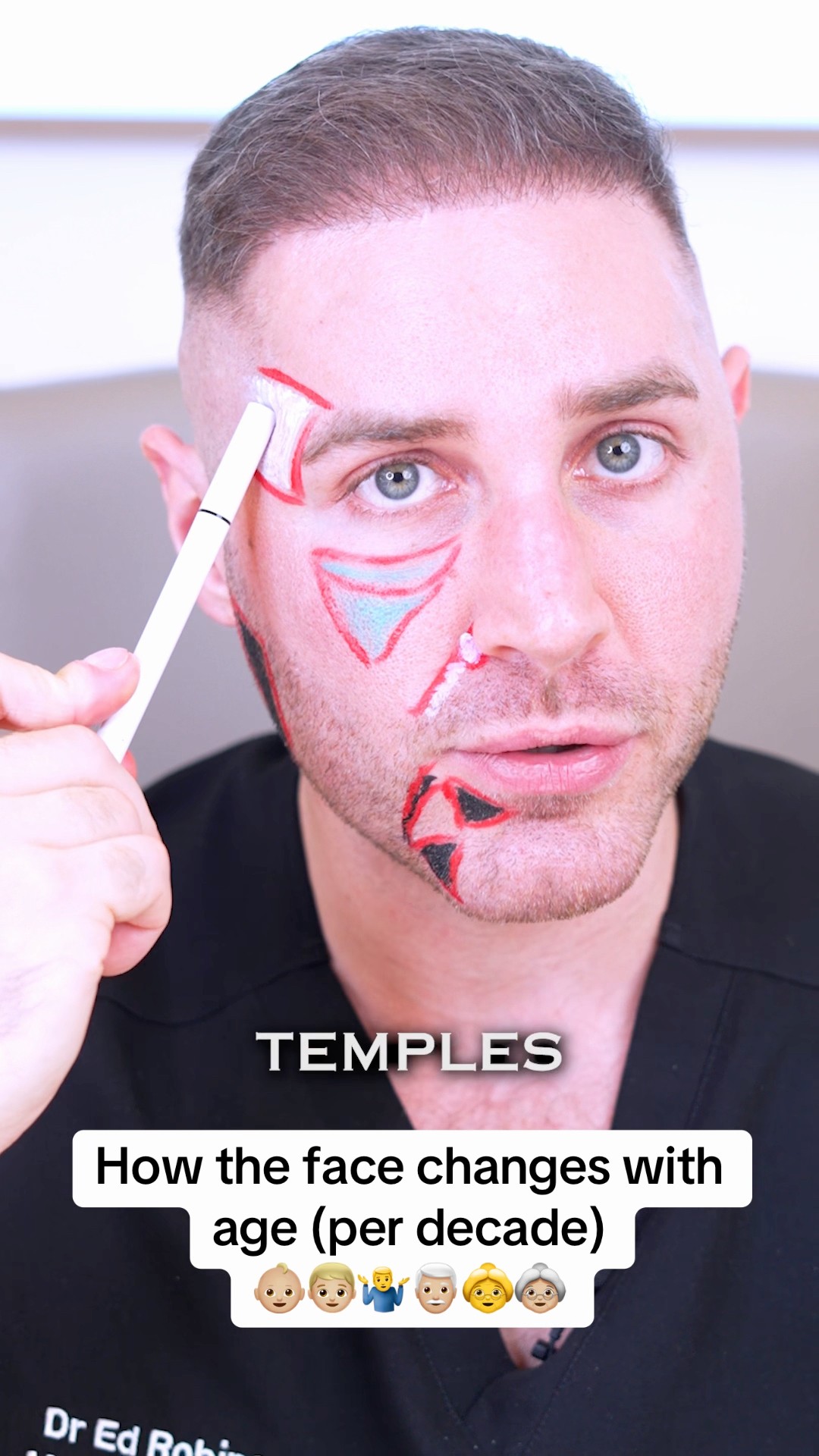
When people think about ageing, they usually think about lines and wrinkles. One of the biggest giveaways of age, though, is volume loss: the gradual hollowing and shadowing that changes the structure of the face. Here are the five areas where I see it most.
The temples. When we lose volume here, there is less support for the eyebrows, which can cause them to droop and make the face look tired.
The midface. Volume loss in the cheeks is common in the 30s and 40s. There are several fat pads here which shrink with age, and the process is accelerated by rapid weight loss. Losing support here deepens lines under the eyes and the nasolabial folds.
The piriform fossa. At the corner of the nose there is a bony depression in the upper jawbone called the piriform fossa, which loses volume as we get older and contributes to the folds around the mouth. Piriform means pear-shaped; apparently someone in ancient Rome thought it looked like a pear.
The chin and under-lip area. The fat pads here get smaller, and the chin bone itself is resorbed, providing less support. This makes marionette lines, between the lip and the jawline, look deeper.
The jawline and the area in front of the ear. Volume is lost from the pre-auricular fat pad in front of the ear and from the jawbone, the mandible. Together with the other changes, this contributes to jowling, the heaviness you see along the lower face.
Underneath all of this, the skull itself changes shape with age. The eye sockets widen, the upper jaw and chin recede, the cheekbones flatten and the jawbone loses volume. These bones act as shelves for the fat pads, ligaments, muscles and skin above them, so as the shelf shrinks, the tissues start to descend.
When I identify these areas of volume loss, treatment is often relatively simple, using dermal fillers, biostimulators or a combination of the two. Used in modest amounts and in anatomically sensible places, they can give a natural, full-face rejuvenation without looking weird or fake.
Video transcript
Edited from the video captions.
I'm an aesthetics doctor, and here are five places in your face that lose volume that can make you look older. First of all, we have the temples up here. When we start to lose volume there, we end up having less support for our eyebrows, which causes them to droop. Next, we have the midface, and it's quite common to experience volume loss here in your 30s and 40s. We've got several fat pads in our midface here, which start to lose volume as you get older, but it's also accelerated with rapid weight loss. Here at the corner of the nose, we have what's called the piriform fossa. The piriform fossa is actually a bony depression in your upper jawbone that loses volume as we get older. Piriform means pear-shaped. Apparently, someone in ancient Rome thought it looked like a pear. We also commonly see volume loss under the lip and in the chin area here. This is because of fat pads in the area that get smaller, but also we see bone resorption from the chin itself, providing less support. This volume loss causes marionette lines to appear deeper, these lines between the lip and the jawline. Finally, we see volume loss at the back of the jaw and in this preauricular fat pad here. This is due to loss of volume in the fat pad itself in front of the ear, but also bone loss from the jawbone, the mandible. The combined effect of volume loss in all of these areas contributes to jowling, so this heaviness you see below the jawline in the lower face. When patients come to me with age-related concerns and I identify these areas of volume loss, then treatment is quite simple, using dermal fillers, biostimulators, or a combination of the two. When these treatments are done in modest amounts and in anatomically sensible areas, they can look very natural and provide a full-face rejuvenation without looking weird or fake.
Questions
Frequently Asked Questions
Why does the face lose volume with age?
Fat pads shrink and move, and the bones of the face are gradually resorbed, so the structures that support the skin and soft tissues reduce.
Which areas lose volume first?
It varies, but hollowing around the eyes and midface often starts in the 30s and 40s, with the temples, the area beside the nose, the chin and the jawline following later.
Can volume loss be treated naturally?
Yes. Modest amounts of filler or biostimulators placed in anatomically sensible areas can restore support without looking overdone.
Keep watching
Related Videos

Have a Question About Treatment?
Talk it through with a doctor who will explain your anatomy and every option, with no pressure to proceed.
Book a Consultation