


Home / Media / Industry & Leadership / Why Are Doctors Trying to Be Influencers?
0:07 • Published 1 Nov 2026 • Dr Ed Robinson
Why Are Doctors Trying to Be Influencers?
The short answer
Because so much health and beauty advice online now comes from people without medical training. A large part of Dr Ed's job is education: explaining what will and will not work for your face and body, based on evidence. Short videos are a way to share a balanced medical view alongside the trends you see every day.Founder and Medical Director • Last reviewed 1 November 2026
In brief
Key Takeaways
- 01People ask why doctors are trying to be influencers. Dr Ed's answer, with tongue in cheek, is that influencers are trying to be doctors.
- 02The largest part of Dr Ed's role is educating patients about evidence-based treatments: what will and will not work for their face and body.
- 03More and more, that means de-influencing: talking patients through procedures, skincare, bio-hacking, peptides and hormone balancing they have seen promoted online.
- 04A large following or an affiliate code is not evidence that something works, or that it is right for you.
- 05A consultation with a medical professional who can assess you and explain the evidence is the best place to start.
Dr Ed Robinson explains
The Detail
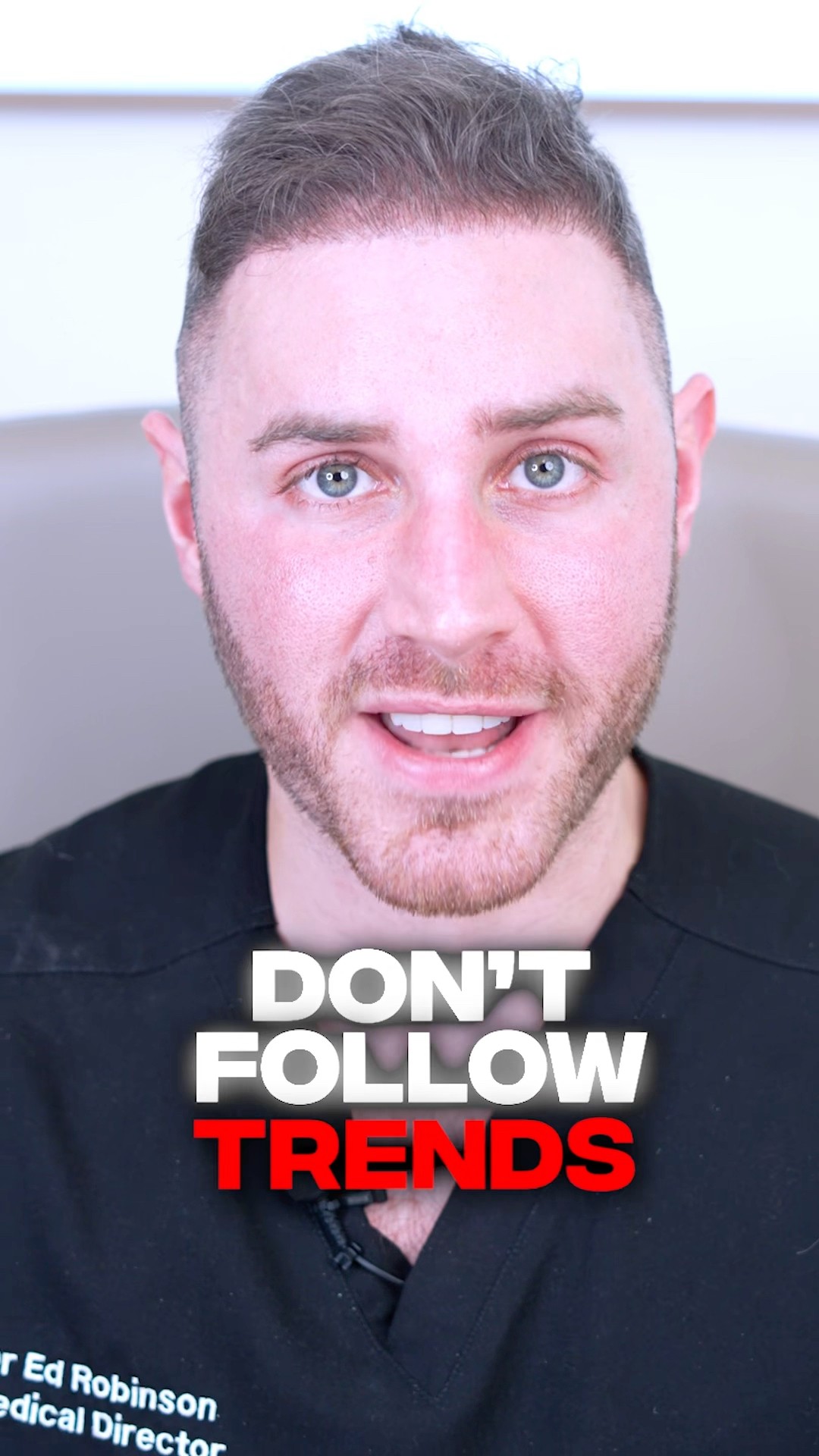
It is a fair question, and one Dr Ed is asked a lot. His short answer in this video is a light-hearted one: people ask why doctors are trying to be influencers, when really it is influencers who are trying to be doctors.
Education is most of the job. The largest part of Dr Ed's role is educating patients about evidence-based treatments and medicine. That means being clear about what will work for their face or body, and just as importantly, what will not.
Why de-influencing matters. Increasingly, our conversations involve de-influencing. Patients arrive having seen procedures, skincare, bio-hacking, peptides or hormone balancing promoted online. Some of it may be fine, some may not suit them, and some has little evidence behind it. Our job is to talk it through honestly.
Followers are not evidence. Just because someone with a lot of followers and a range of affiliate codes recommends something does not mean you should do it. A good decision about your health starts with the evidence, your own history and an assessment by someone medically qualified.
That is why Dr Ed shares short, evidence-based videos: to add a balanced medical voice to the conversation. If something you have seen online has caught your eye, we are always happy to talk it through at a consultation, with no pressure to go ahead.
Video transcript
This video has no narration. The text below is the on-screen text.
People ask why doctors are trying to be influencers… It's because influencers are trying to be doctors.
Questions
Frequently Asked Questions
Why does Dr Ed post videos on social media?
Education is the largest part of his role. Short videos are a way to share evidence-based information about what will and will not work, alongside the trends people see online.
Should I try a treatment I have seen recommended online?
Not because of the number of followers or a discount code alone. It is best to talk it through with a medical professional who can assess you and explain the evidence.
What does de-influencing mean?
Talking patients through treatments, products and trends they have seen promoted online, and being honest about the evidence and whether they are right for that person.
Keep watching
Related Videos

Have a Question About Treatment?
Talk it through with a doctor who will explain your anatomy and every option, with no pressure to proceed.
Book a Consultation