


Home / Media / Anti-Wrinkle Injections / What Does Good and Bad Botox Look Like?
0:18 • Published 26 Jun 2025 • Dr Ed Robinson
What Does Good and Bad Botox Look Like?
The short answer
The difference is placement and dose. Too many units placed too low in the forehead can drop the brows, while a minimal dose placed higher can help lift them. Crow’s feet toxin placed too low can drop the cheeks. In the lower face, the wrong muscle can give a crooked smile, while the right one can lift the corners of the mouth.Founder and Medical Director • Last reviewed 19 October 2026
In brief
Key Takeaways
- 01Toxin treatment is precision work, and understanding anatomy is key.
- 02Forehead: too many units placed too low can drop the brows. Fewer units placed higher help keep them lifted.
- 03Crow’s feet: too much, too low can drop the cheeks. Good placement can lift the tail of the brows.
- 04Lower face: treating the muscle under the lower lip (DLI) can cause a crooked smile; treating the muscle at the corners of the mouth (DAO) can lift them.
- 05Exact doses and points are decided for each person at a face-to-face consultation.
Dr Ed Robinson explains
The Detail
Understanding anatomy is key to precision-based anti-wrinkle treatment. Done poorly, it can make you look tired, or even older. Here is good and bad placement drawn on my own face.
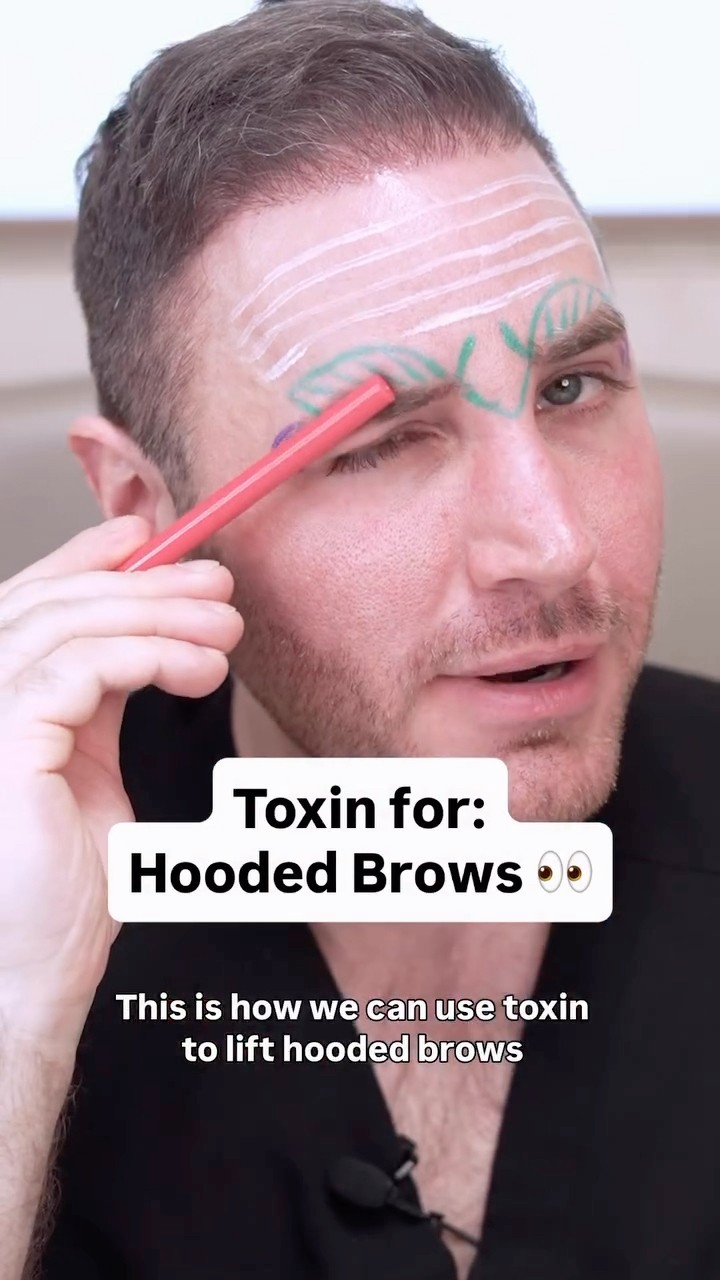
Forehead. Too many units, placed too low, can drop the brows. Minimal units placed higher up help keep the brows lifted.
Crow’s feet. Too much toxin, placed too low, can drop the cheeks. Well-placed treatment can lift the tail of the brows.
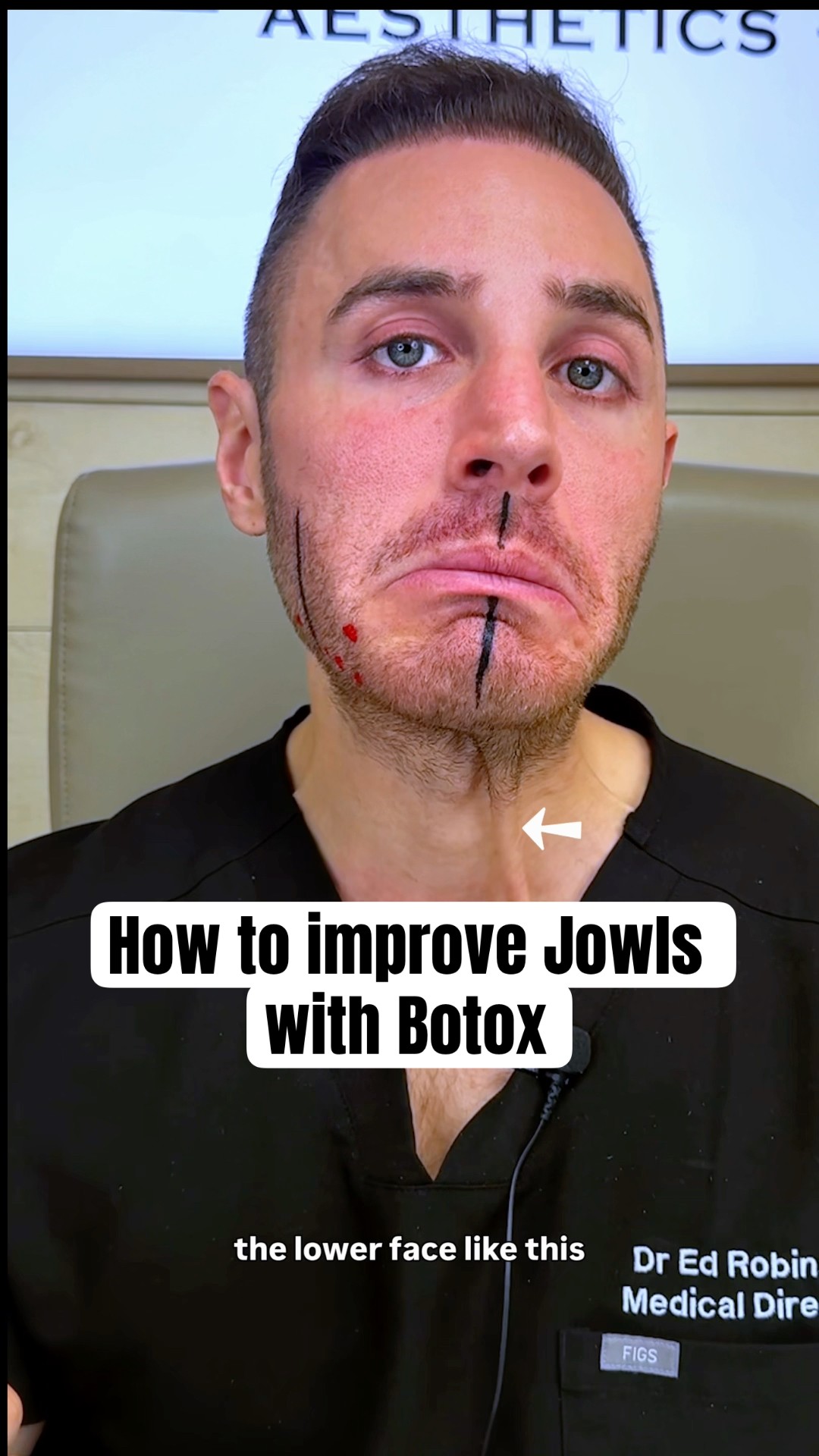
Lower face. Treating the depressor labii inferioris (DLI), the muscle that pulls the lower lip down, can cause a crooked smile. Treating the depressor anguli oris (DAO), the muscle that pulls the corners of the mouth down, can help lift them.
These drawings show principles, not a treatment plan. Your doses and injection points are decided at a face-to-face consultation with a prescriber. Your result is checked at a review appointment 2 to 4 weeks after treatment, when the toxin is fully working. Unwanted toxin effects are temporary. Most settle sooner, but they can take up to 4 months to wear off.
Video transcript
This video has music and on-screen text only, with no narration. The text below is the on-screen text; the video marks each pair with a cross (bad) and a tick (good).
Good vs bad Botox. Forehead Botox: too many units, too low drops brow (bad); minimal units high up to lift brows (good). Crow’s feet Botox: too much, too low will drop cheeks (bad); lifts tail of the brows (good). Lower face Botox: causes crooked smile (DLI) (bad); lifts corner of mouth (DAO) (good).
Questions
Frequently Asked Questions
Can Botox make my brows drop?
It can if too many units are placed too low in the forehead. Careful placement and dosing help keep the brows lifted.
Can Botox for crow’s feet affect my cheeks?
If too much is placed too low, it can drop the cheeks. Well-placed treatment can lift the tail of the brows instead.
Can Botox change my smile?
Treating the wrong muscle in the lower face can cause a crooked smile. Treating the DAO, at the corners of the mouth, can help lift them.
Keep watching
Related Videos
Have a Question About Treatment?
Talk it through with a doctor who will explain your anatomy and every option, with no pressure to proceed.
Book a Consultation