


Home / Media / Comfort & Safety / Can Botox Change Your Smile?
1:21 • Published 4 Apr 2026 • Dr Ed Robinson
Can Botox Change Your Smile?
The short answer
It can, but only when it is done wrong. Toxin that reaches muscles next to the intended target can weaken, flatten or unbalance a smile. The four areas to watch are the zygomaticus near crow’s feet, the LLSAN near bunny lines, the risorius near the masseter, and the DLI under the lower lip. These complications are rare.Founder and Medical Director • Last reviewed 18 October 2026
In brief
Key Takeaways
- 01Toxin placed too deep or too low for crow’s feet can reach the zygomaticus muscles, reducing the lift of your smile and creating a ledge beside the eye.
- 02Over-treating bunny lines on the nose can affect the LLSAN, pushing the top lip down when you smile.
- 03The risorius sets the width of your smile; affecting it during masseter treatment is very rare but can cause a crooked smile.
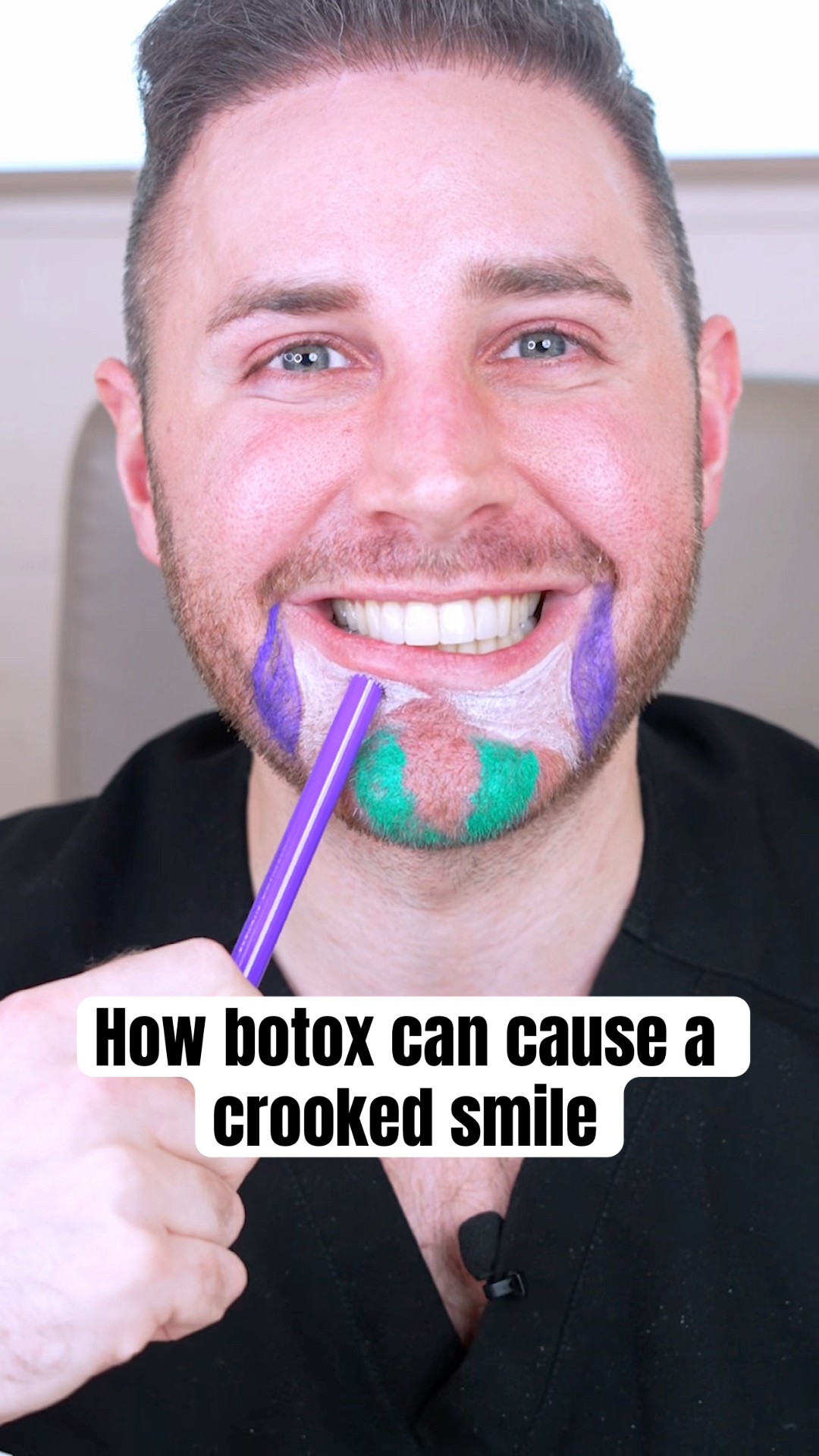
- 04The DLI, under the bottom lip, lowers the lip when you smile; affecting it while treating the chin or DAO can cause a crooked smile.
- 05These complications are rare and temporary: they wear off as the toxin wears off, which can take up to 4 months. Your injector should be able to explain how they reduce the risk.
Dr Ed Robinson explains
The Detail
Understanding anatomy is essential to delivering anti-wrinkle treatments that look natural and preserve your facial expressions. When done incorrectly, toxin can affect muscles next to the ones being targeted, which can cause asymmetry or an insincere smile. That can be very distressing as a patient. Here are four ways it can happen.
1. Crow’s feet and the zygomaticus. Toxin is commonly placed into the orbicularis oculi, the muscle that wraps around the eye and scrunches it up tight, to soften crow’s feet. If it is injected too deep or too low, in an attempt to reach the lines that run down the side of the cheek when you smile, it can affect the zygomaticus muscles, which lift the lip when you smile. That can reduce the strength of your smile and create a ledge at the corner of the eye.
2. Bunny lines and the LLSAN. The nasalis muscle on the nose is often treated to soften bunny lines. Over-treating this area can affect the LLSAN (levator labii superioris alaeque nasi), which also elevates the lip, and the top lip can look pushed down when you smile.
3. The masseter and the risorius. The risorius runs from the corner of the mouth back towards the masseter at the angle of the jaw, and it helps determine the width of your smile. It is very rarely affected when the masseter is treated for teeth grinding, but if it is, the smile can become crooked if one side is affected, or narrower if both are.
4. The chin and the DLI. The DLI (depressor labii inferioris) sits under your bottom lip and brings the lower lip down when you smile. If it is affected while treating the chin or the DAO at the corners of the mouth, the bottom lip can rise on one side when you smile.
If any of these changes does happen, it is temporary, and it wears off as the toxin wears off, which can take up to 4 months. If you notice a change in your smile after treatment, contact the clinic so we can review you.
Knowledge of anatomy, and following your aftercare instructions, makes these complications very rare. Your injector should be able to explain these potential complications, and how they reduce the risk, before you have your treatment.
Video transcript
Edited from the video captions.
Here are four ways that toxin can change your smile when it’s done wrong. Toxin is commonly placed into the orbicularis oculi muscle that wraps around the eye and scrunches it up tight. This is to reduce the appearance of crow’s feet. However, if toxin is injected too deep or too low in an attempt to hit these lines which come down the side of your cheek when you smile, this can reduce the strength of your smile by hitting the zygomaticus muscle which elevates the lip when you smile, but it also can create a ledge here at the corner of your eye. The nasalis muscle here is often treated when we’re reducing the appearance of bunny lines. However, over-treatment of this area can affect the LLSAN which elevates the lip when you smile, and this can have the effect of pushing down the top lip when you smile, which doesn’t look good. The risorius muscle travels from the corner of your mouth to where your masseter is at the back of your jawline, and it’s responsible for determining the width of your smile. This muscle is very rarely affected when the masseter is treated for teeth grinding or bruxism, but it can cause a crooked smile. Finally, the DLI muscle that sits underneath your bottom lip. This muscle is responsible for bringing your lower lip down when you smile, and inadvertently affecting this, say if you’re trying to treat the chin or the DAO, this muscle at the corner of your mouth, that can cause a crooked smile that looks like this. These complications are rare, but it highlights the importance of understanding anatomy, and your injector should be able to explain how they mitigate these risks before you have your treatment.
Questions
Frequently Asked Questions
Can Botox make my smile crooked?
Rarely. It can happen if toxin affects a nearby muscle, such as the risorius or the DLI, rather than the one being treated.
Why does my smile look different after crow’s feet treatment?
If toxin is placed too deep or too low, it can reach the zygomaticus muscles that lift the lip, which reduces the lift of your smile.
Is a changed smile after Botox permanent?
No. It is temporary, and it wears off as the toxin wears off, which can take up to 4 months.
How are these complications avoided?
Through a detailed knowledge of facial anatomy, careful placement and dosing, and following your aftercare instructions.
Keep watching
Related Videos


Have a Question About Treatment?
Talk it through with a doctor who will explain your anatomy and every option, with no pressure to proceed.
Book a Consultation