


Home / Media / Comfort & Safety / More Comfortable Aesthetic Treatments: How Nerve Blocks Work
0:53 • Published 2 Feb 2026 • Dr Ed Robinson
More Comfortable Aesthetic Treatments: How Nerve Blocks Work
The short answer
A nerve block uses a very small amount of local anaesthetic near a nerve to numb the area it supplies, usually for about 30 minutes and sometimes up to an hour. As a doctor with a background in anaesthesia, I offer dental, infraorbital and scalp blocks. A dental block numbs the infraorbital and mental nerves, the same nerves a dentist numbs, but I give it through the skin rather than from inside the mouth. These blocks can make lip, midface, laser and hair loss treatments more comfortable, and for many patients close to painless. They are optional, never essential.Founder and Medical Director • Last reviewed 20 October 2026
In brief
Key Takeaways
- 01Nerve blocks numb an area by placing a small amount of local anaesthetic near the nerve that supplies it.
- 02A dental block uses the same nerves a dentist numbs, the infraorbital and mental nerves. At the clinic it is given through the skin, not from inside the mouth, for lip, lower face and midface procedures.
- 03An infraorbital block usually reduces sensation for about 30 minutes, sometimes up to an hour, allowing comfortable under-eye, midface and lip treatment.
- 04Blocks can also make laser and radiofrequency microneedling, such as Morpheus8, more comfortable in sensitive areas.
- 05They are a specialist skill and entirely optional; treatments do not require them.
Dr Ed Robinson explains
The Detail
Before aesthetics I trained in anaesthesia, and one of the most rewarding ways I use that experience is to make treatments more comfortable. I will be honest: I have a very low pain threshold myself, so I understand why some people dread injectables.
A nerve block works by placing a small amount of local anaesthetic close to a nerve, which reduces sensation in the area that nerve supplies. It is a specialist technique that needs significant training, and I explain the anatomy in these videos so you know what to expect. They are not instructional videos.
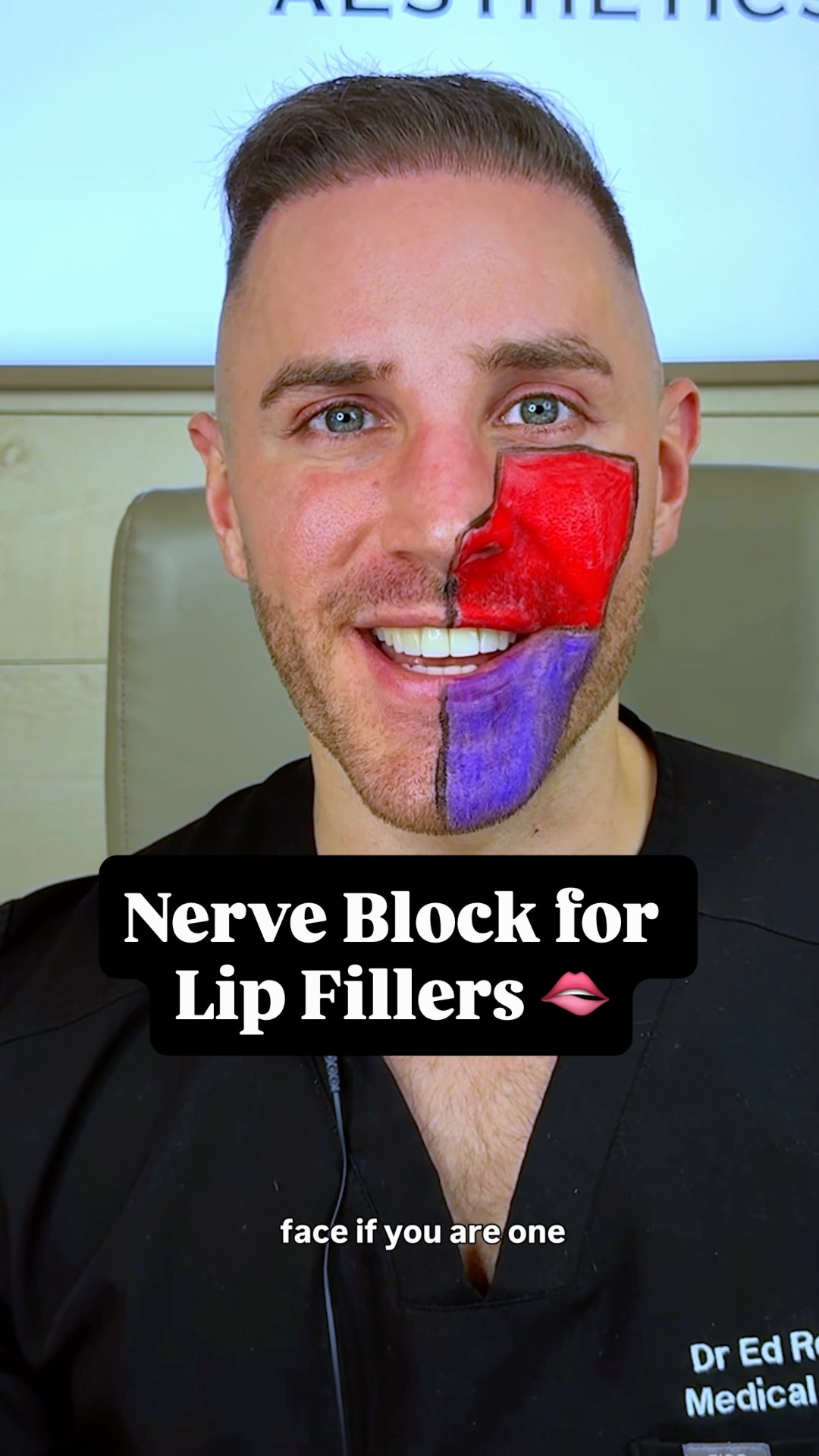
Dental block. By blocking the infraorbital and mental nerves, we can reduce discomfort for procedures on the lips, lower face and midface. I often use it for combination treatments such as lips together with smoker’s lines, and for laser or radiofrequency microneedling like Morpheus8 in sensitive areas. Unlike at the dentist, I give it with a fine needle through the skin rather than from inside the mouth.
Infraorbital block. The infraorbital nerve comes out of the skull about a centimetre and a half below the pupil, with one branch running down to the top lip and another up towards the under-eye. One small injection of lidocaine reduces sensation across this area, usually for about 30 minutes and sometimes up to an hour, so under-eye, top lip and midface treatments are far more comfortable. I often use it for combination sessions, such as under-eye injectables like Sunekos or polynucleotides, top lip treatments and smoker’s lines, and sometimes for erbium ablative laser.
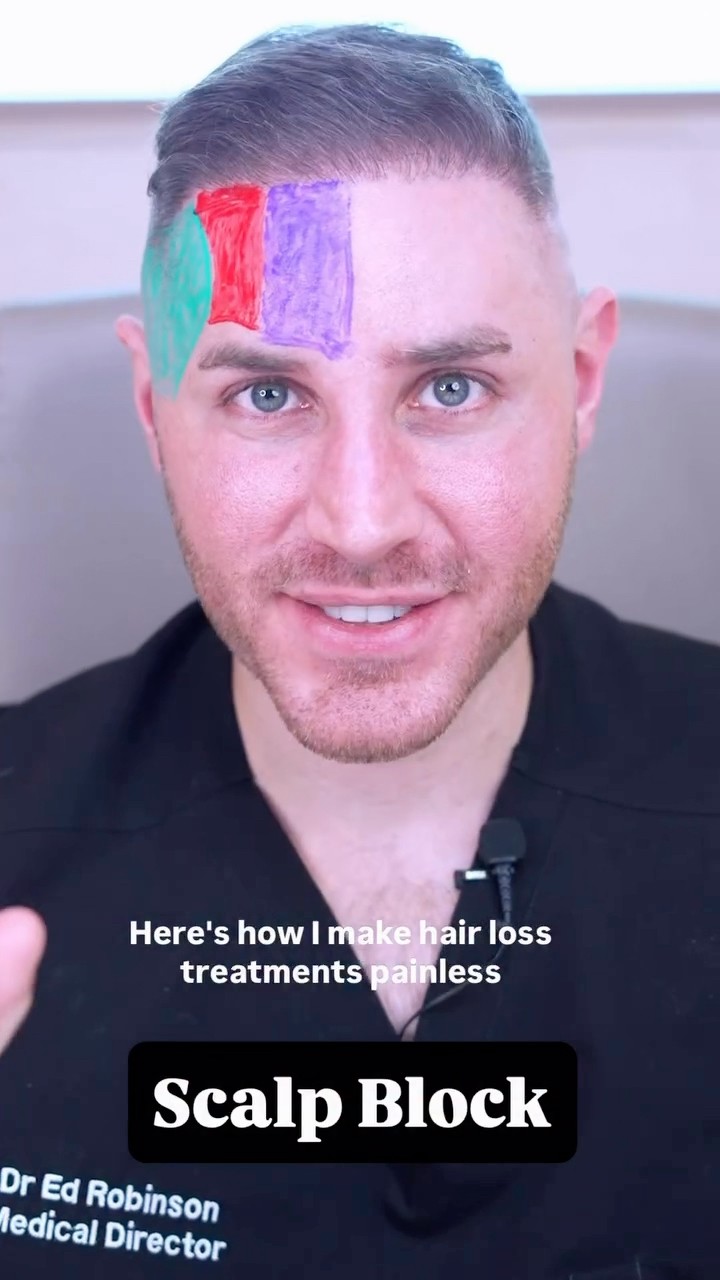
Scalp block. For non-surgical hair loss treatments such as PRP or polynucleotides, blocking the supratrochlear, supraorbital and auriculotemporal nerves can make sessions far more comfortable.
None of these blocks are required. Lip filler and regenerative treatments are routinely done without them. But if discomfort has put you off treatment in the past, it is worth asking about. We will discuss whether a block is suitable for you at your consultation.
Video transcript
Edited from the video captions.
In this video, a dental block means infraorbital and mental nerve blocks, the same nerves a dentist numbs. At the clinic, Dr Ed gives them through the skin, not from inside the mouth. Many patients find lip treatment close to painless with a block, though everyone is different.
Here’s how a dental block can make lip procedures painless. If you’ve had procedures in your lips, like skin boosters or lip fillers, you’ll know that they can pack a bit of a punch. Speaking from personal experience, I have absolutely no pain threshold whatsoever, and so this is a technique that I use. A dental block involves blocking two nerves that provide sensation to the mid and lower face, but importantly the lips as well. We have the infraorbital nerve that emerges from the skull in the midface and has a branch that heads down towards the top lip, providing sensation to the area you can see in red here. We also have another nerve called the mental nerve, which comes out in the lower face here with a branch that heads up towards the bottom lip there, and that provides sensation to this area in purple here. When both of these nerves are blocked with small amounts of lidocaine, it reduces sensation in the lips for about 30 minutes to an hour. This provides the perfect amount of time to make your lip procedure painless, both using a needle or a cannula. And if you’re someone like me who struggles with lip procedures, this might be the best option for you.
Questions
Frequently Asked Questions
How long does a nerve block last?
Numbing from an infraorbital block usually lasts about 30 minutes, and sometimes up to an hour, which is long enough for most treatments.
Do I need a nerve block for lip filler?
No. Lip filler is routinely carried out without one. A block is simply an option for people who find injections uncomfortable.
Keep watching
Related Videos

Have a Question About Treatment?
Talk it through with a doctor who will explain your anatomy and every option, with no pressure to proceed.
Book a Consultation