


Home / Media / Dermal Fillers / Should You Fill Nasolabial Folds and Marionette Lines?
1:16 • Published 13 Oct 2026 • Dr Ed Robinson
Should You Fill Nasolabial Folds and Marionette Lines?
The short answer
Usually not directly. Smile lines and marionette lines deepen because structures in the mid and lower face descend as we lose volume and bone support. Filling the lines themselves can soften them at first but often leaves the lower face looking puffy and heavy. Restoring support where volume has been lost gives a more natural result.Founder and Medical Director • Last reviewed 18 October 2026
In brief
Key Takeaways
- 01Nasolabial folds are not a sign of ageing on their own; even babies have deep smile lines.
- 02With age, volume loss in muscle, fat pads and bone allows tissues to descend over fixed ligaments, which makes these lines more prominent.
- 03Injecting filler straight into the lines can create a swollen, heavy look because nothing has been lost there.
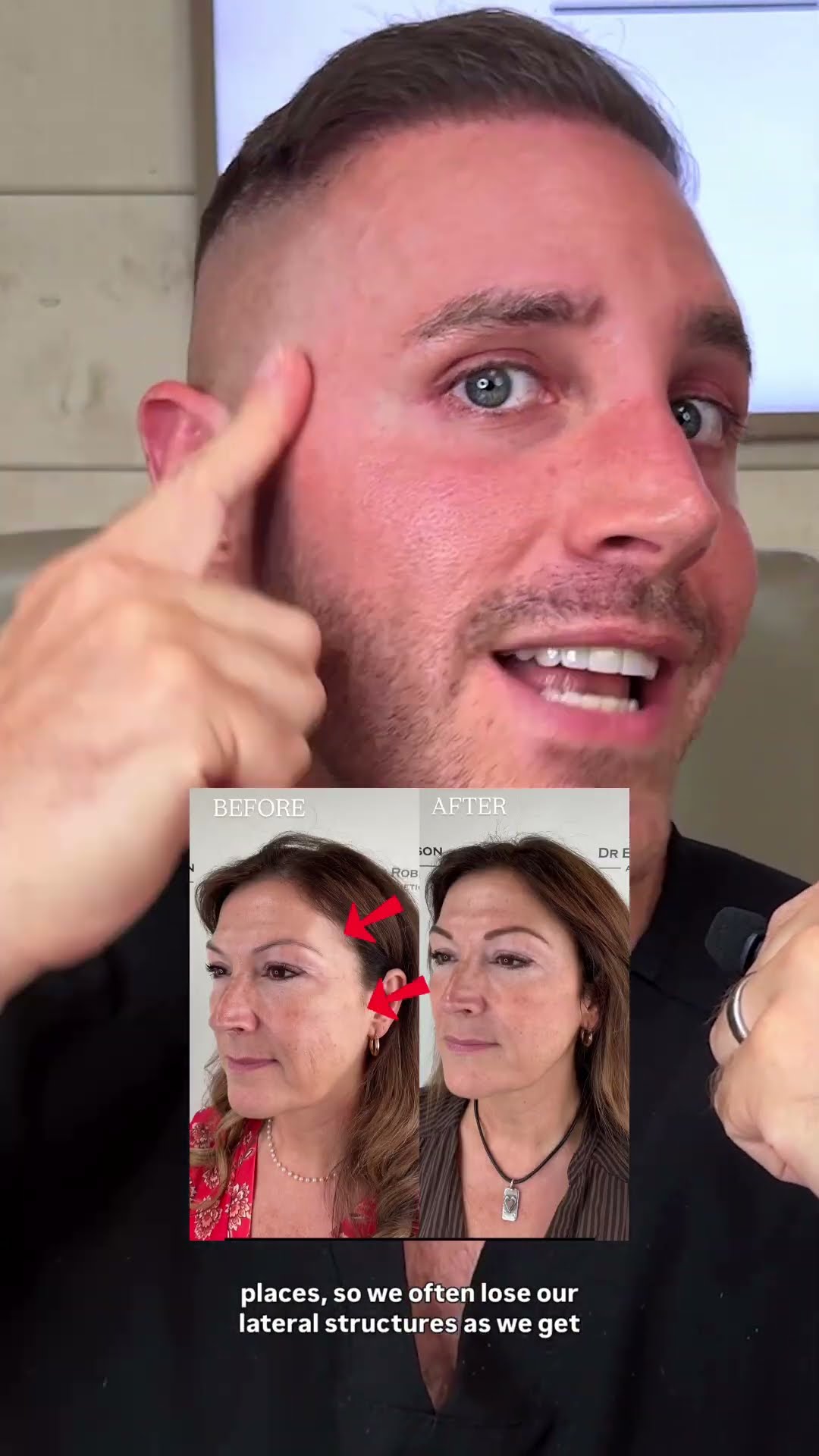
- 04A better approach is to support the areas that have lost volume, such as the temples, cheeks, the area in front of the ear and the jawline, depending on your anatomy.
- 05Filler replaces volume and structure; it does not truly lift tissue, so expectations matter.
Dr Ed Robinson explains
The Detail
Smile lines (nasolabial folds) and marionette lines are among the most common reasons people come to see me, and there is a mistake I see often: putting filler directly into the lines.
It helps to understand why the lines become more noticeable. Smile lines are not, by themselves, a sign of ageing, because babies have very deep ones. What changes as we age is the support around them. We lose muscle bulk, the fat pads of the mid and lower face shrink, and bone density in the skull reduces. The tissues above then descend over the fixed ligaments of the face, and the folds look deeper.
If filler is placed straight into the line, it can look as though things have softened at first. Over time, though, it tends to create a puffy, heavy lower face, because we are adding volume to an area that has not actually lost any.
Instead, I look at where volume has genuinely been lost and restore that structure. Depending on your anatomy, that might include the temples, the outer and inner cheek, the area in front of the ear, the jawline, and sometimes a small amount beside the nose in the piriform fossa. Less is more, and placement is everything.
It is also worth being honest about what filler can do. Filler replaces volume and provides structural support, which can create the impression of a lift, but it does not meaningfully lift tissue in the way surgery does. Non-surgical and surgical treatments do different things, and knowing the difference helps us set realistic expectations together.
A consultation is the place to talk this through. I will assess your face at rest and in movement, explain what is causing the lines you are noticing, and recommend a plan, which may include doing less than you expected.
Video transcript
Edited from the video captions.
I’m an aesthetics doctor, and I’m going to tell you one common filler mistake that I wish more people knew about. And if you’re thinking about having injectables, you’re going to want to watch this first. As we get older, we lose collagen and elastin in our skin, so lose skin quality, we get descent of our facial fat pads, and also loss of bone structure, which is particularly apparent from the lateral or outer part of the face. This results in structures moving from the upper parts of the face down towards the midface and the lower face as well, towards the jawline. This process exaggerates the nose-to-mouth lines and these marionette lines here as well. I will often see injectors advocate for treating these nose-to-mouth lines and marionette lines here directly with filler into the line, but this is a really good recipe for looking swollen, puffy, and just not looking good in general. This is because we haven’t actually lost any volume from the line itself. They’ve become more apparent due to the descent of structures flopping over fixed ligaments in the face here, which makes them look more obvious. Instead, filler should be placed towards the lateral parts of the face, including the temples up here, the preauricular area in front of the ear, as well as the lower jawline. Now, this approach results in a much more harmonious, natural-looking result that actually addresses the underlying cause of the lines that people are bothered about.
Questions
Frequently Asked Questions
Why not just put filler in the smile line?
Because nothing has been lost in the line itself. Filling it directly can soften it briefly but tends to create a puffy, heavy look. Supporting the areas that have lost volume usually looks more natural.
Does filler lift the face?
Not truly. Filler replaces volume and can give structural support and the illusion of lift, but only surgery removes and repositions tissue.
Keep watching
Related Videos


Have a Question About Treatment?
Talk it through with a doctor who will explain your anatomy and every option, with no pressure to proceed.
Book a Consultation