


Unwanted facial hair: causes, assessment and treatment options
Skin specialist assessment in Hale, Cheshire
Unwanted facial hair · Hale, Cheshire
Unwanted facial hair is common, but the reason it is growing matters. A few gradually appearing chin hairs around menopause are a different situation from coarse hair that has developed quickly alongside irregular periods, acne or scalp hair thinning. One may be an age-related change; the other may need a medical assessment before we talk about hair reduction.
At our Hale clinic, we look at the pattern, colour and thickness of the hair, your skin tone, how quickly the change has happened and what you have already tried. For suitable coarse, dark hair, Sciton BBL® HEROic™ can provide long-lasting reduction. It cannot treat a hormonal condition, it will not recognise every hair colour, and treating fine facial hair is not always the safest choice. If the likely benefit does not justify the risk, we will say so.
Hale clinic · Consultation first
You do not need to choose a treatment before contacting us. We start by understanding the cause, then explain whether a clinic pathway, observation or a referral is the more sensible next step.
At a glance
How we think about unwanted facial hair
 Assessment focus
Where the hair is growing; whether it is fine or coarse; its colour; when it began; how quickly it is changing; your skin tone and tanning history; periods, menopause, acne, scalp hair change, medicines and previous hair removal.
 Possible pathways
GP, dermatology, gynaecology or endocrinology assessment where indicated; BBL HEROic light-based hair reduction for suitable pigmented hair; electrolysis with an appropriately qualified external practitioner for some light hairs; or a practical home-removal and skin-care plan.
 Our approach
Separate the cause of the growth from the method used to reduce it. We recommend treatment only when the hair is a worthwhile target and the safety margin is acceptable.
 Medical care first
New, rapidly increasing coarse hair needs prompt GP assessment, particularly when it appears with a lower voice, increased muscle, irregular or absent periods, significant acne or scalp hair loss. Cosmetic treatment should not delay that investigation.
What this concern can involve
Not every visible facial hair is hirsutism. Most faces naturally have fine, soft hairs, often called vellus hairs. These can become more noticeable with age, lighting, changes in skin colour or closer inspection. Hirsutism is the medical term for thicker, darker hair growing in an androgen-sensitive pattern in women, commonly on the upper lip, chin, jawline, neck, chest or abdomen. Hypertrichosis is a different term for increased hair growth that is not limited to that pattern.
Common explanations include:
Normal variation and family pattern
Hair density and distribution vary between people and ethnic groups. Some women have coarse facial hair with normal hormone tests and no underlying disease.
Perimenopause and menopause
As the balance between oestrogen and androgens changes, some women notice more chin or upper-lip hair at the same time as scalp hair becomes finer. A slow, modest change is common; a sudden or marked change still deserves assessment.

PCOS or PMOS
Polycystic ovary syndrome is the term many patients still search for, while polyendocrine metabolic ovarian syndrome is now also used by the NHS. It can cause coarse facial hair, acne, irregular periods and scalp hair thinning. Not everyone has every symptom.
Medicines or hormone exposure
Testosterone, anabolic steroids and some other medicines can increase hair growth. Do not stop prescribed treatment without speaking to the prescriber.
Less common hormonal conditions
Thyroid, adrenal, pituitary or ovarian conditions are much less common, but the timing and associated symptoms may make investigation important.

Repeated irritation from hair removal
Plucking, waxing, threading and close shaving do not create new follicles, but they can contribute to inflammation, ingrown hairs, shaving rash and the dark marks that follow inflammation.
The amount of hair does not determine how much it is allowed to bother you. Some patients are concerned by a handful of coarse chin hairs; others have a larger area and are not troubled by it. The useful question is not whether you should remove it. It is whether the method is appropriate for the hair and skin in front of us.
How we assess it
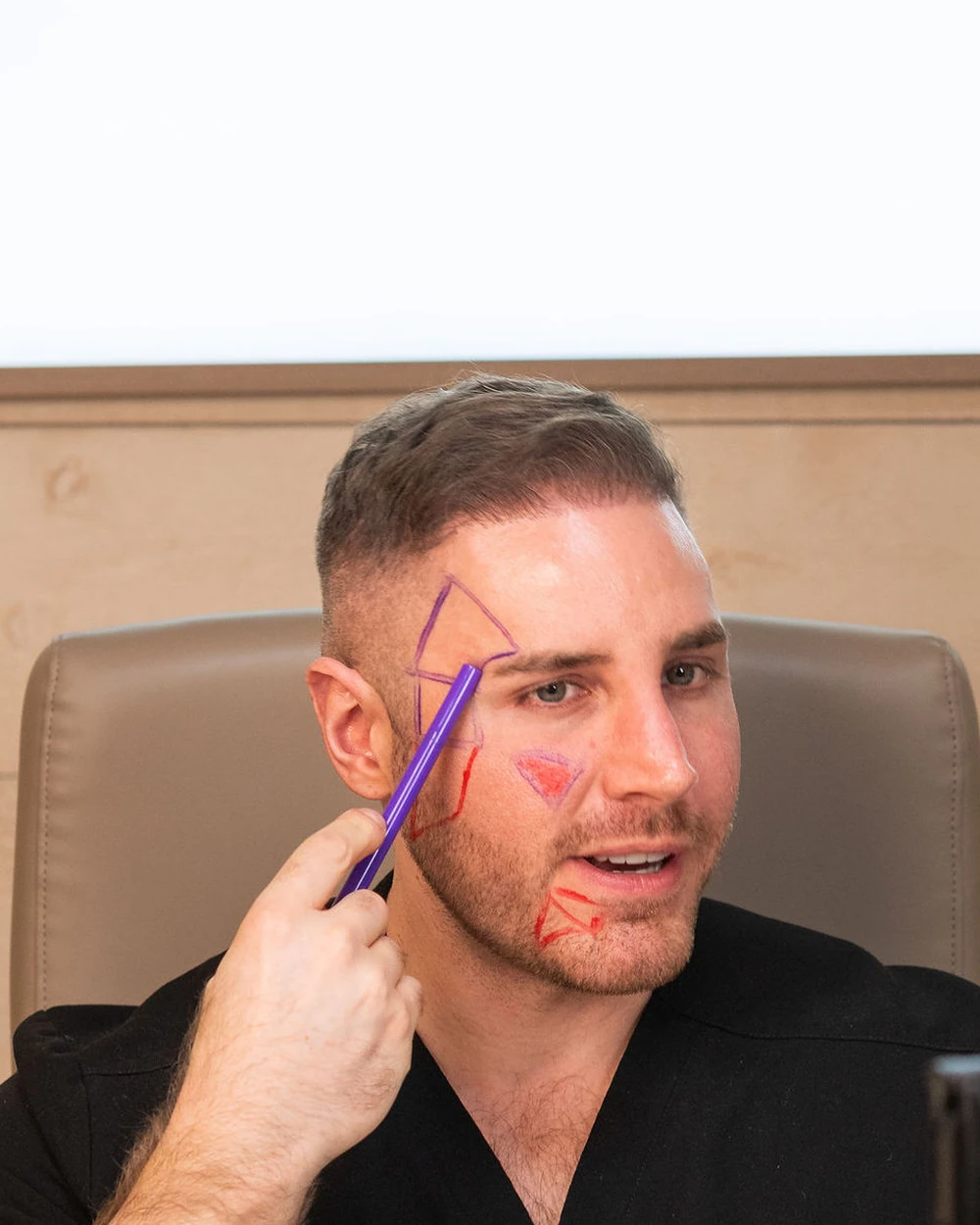
We start with the history. We ask when the hair became noticeable, whether it has changed gradually or quickly and whether it is confined to the face or appears elsewhere. We ask about periods, fertility treatment, pregnancy, menopause, acne, changes to scalp hair, weight change and relevant medication or supplements. A list of previous laser or light treatments is particularly helpful, including any burns, pigment change or unexpected increase in hair.
Examination focuses on the colour, diameter and density of the hair, the condition of the surrounding skin and whether there are signs of ingrowing or inflammation. For light-based treatment, we also assess your natural skin tone, any current or recent tan, fake tan, photosensitising products and whether there is enough contrast between the hair and skin to treat safely. A patch test is required before a course.
A cosmetic consultation does not replace a hormonal assessment. If the history suggests PCOS/PMOS or another medical cause, we may advise you to speak to your GP. Blood tests or referral to gynaecology, endocrinology or dermatology may be appropriate. We do not need every patient to have a battery of tests, but we do need to recognise when reducing the hair is only one part of the plan.
Assessment pathway
A useful consultation for unwanted facial hair follows a clear sequence rather than jumping to a product.
History
When the hair appeared, how quickly it changed, periods, menopause, medicines and previous hair removal.
Examination
Hair colour, thickness and density, and the condition of the skin around it.
Medical context
Whether a GP review, blood tests or a specialist referral should come first.
Plan
BBL HEROic after a patch test, another method, observation or referral.
Your consultation
You do not need to choose a treatment before contacting us. Tell us what you have noticed, when it changed, what you have already tried and what a worthwhile result would look like to you. We consider your health, medication, previous procedures, skin characteristics and practical tolerance for recovery.
A useful consultation may lead to treatment, a staged plan, a period of observation or a referral. We would rather explain that an option is unlikely to help than place you into a course simply because the treatment is available.

Options we may discuss
Unwanted facial hair has more than one cause, so there is no single fix. The right option depends on what we find at consultation.




What treatment may realistically achieve
The honest aim is long-lasting hair reduction, not a guarantee of permanent removal. Hair grows in cycles and only a proportion is in the responsive growth phase at any one appointment. A course is therefore required, commonly with sessions spaced around four to eight weeks apart according to the area and regrowth pattern.
Early signs can include slower regrowth and shedding of treated hair over the following one to three weeks. Improvement should be judged by less dense regrowth, finer hair and less time spent removing it, rather than whether the skin looks hair-free immediately after shaving. As the course progresses, remaining hair may be finer, lighter or more hormone-driven, so the value of another session should be reviewed rather than assumed.
Hormonal facial hair often needs a longer-term plan. PCOS/PMOS, menopause, pregnancy, medication and ageing can activate previously quiet follicles. Maintenance is not necessarily a treatment failure, but it should be discussed before you begin. If the hair is no longer a good light target, continuing the same treatment indefinitely may offer little value.
Related concerns we may also discuss
Unwanted facial hair often sits alongside other related findings. These related concerns help frame the wider assessment.


Comfort, safety and clinical judgement
Most patients describe BBL HEROic hair reduction as a brief warm snap. The skin is cooled during treatment and numbing is not normally required. Temporary redness, warmth and small follicular bumps can occur. Less common complications include burns, blistering, pigment darkening or lightening, infection, scarring, eye injury, patchy response and paradoxical increased hair growth.
Safety begins with selection. We assess recent tanning, medications and products that may increase light sensitivity, active skin disease, previous reactions, tattoos and pigmented lesions in the planned field. Eye protection, a patch test, careful settings, cooling, systematic coverage and clear aftercare are clinical essentials. We postpone elective BBL HEROic hair reduction during pregnancy and discuss breastfeeding and the return of normal hair cycles individually.
BBL HEROic hair reduction is not an injectable treatment, so ultrasound guidance and nerve blocks are not relevant to this procedure. If a separate treatment is considered for another concern, its own comfort and safety plan should be explained separately.
Medical thinking
Why choose Dr Ed Robinson Clinics
Our approach is medical, conservative and consultation-led. We do not assume that every facial hair should be treated, or that the most visible option is automatically the cause of the problem. We assess the hair, the skin around it and the wider history, then explain what treatment can and cannot change.
Cause before treatment
We separate the cause of the growth from the method used to reduce it, and recommend treatment only when the hair is a worthwhile target and the safety margin is acceptable.
Treatment planned with care
Comfort and what to expect are discussed before any treatment, so you know how the appointment will feel and what happens afterwards.
Honest next steps
A useful consultation may lead to treatment, observation or a referral. We would rather explain when an option is unlikely to help.
CQC Good · Hale registered service
The registered Hale service is rated Good overall and Outstanding in leadership by the CQC. That rating relates to the registered service at Hale; it should not be read as separate CQC approval of every cosmetic procedure.
Read the CQC report for the registered Hale service · Meet Dr Ed
What you can do at home
Shaving does not make a follicle produce thicker or darker hair. It cuts the shaft at the surface, so the blunt regrowth can temporarily feel coarser. If shaving suits you, use a clean blade, avoid repeatedly passing over irritated skin and shave in the direction of growth if ingrowing is a problem.
Waxing, plucking, threading and epilating remove the hair from the follicle. They can be useful as personal hair-removal methods, but they leave no pigmented target for BBL HEROic. If you are preparing for a course, follow the interval given by the clinic and shave or trim instead. Do not start or stop prescription medicines, hormone treatment or supplements purely to make yourself eligible for cosmetic treatment.
Keep the skin barrier simple if removal has made the area sore: a gentle cleanser, a non-comedogenic moisturiser and daily broad-spectrum sunscreen are usually more useful than scrubbing. Persistent painful bumps, pus or spreading redness should be medically assessed rather than repeatedly exfoliated.
When to seek medical advice
Arrange a GP assessment if coarse, dark facial or body hair is new or is becoming noticeably worse, particularly if you also have irregular or absent periods, difficulty conceiving, significant acne, scalp hair thinning or other unexplained symptoms.
Ask for urgent GP advice if thick dark hair has appeared suddenly and is accompanied by a lowering voice, increased muscle bulk or other rapid changes. These causes are uncommon, but they should not be managed first as a cosmetic concern.
Seek medical care for a hot, painful or rapidly spreading area of redness, fever, pus, significant swelling or a severe reaction after any hair-removal method. Do not wait for a routine WhatsApp reply if you feel acutely unwell.
Related videos, articles and results
Further reading and clinic media that can help you understand unwanted facial hair in context.

Frequently asked questions
Why am I suddenly getting chin hair?
A few chin hairs can become more common with age and around menopause. New or rapidly increasing coarse hair can also be linked with PCOS/PMOS, medication or, less commonly, another hormonal condition. The speed of change and associated symptoms are more informative than the presence of one hair. Speak to your GP if the change is sudden, marked or accompanied by irregular periods, scalp hair loss, significant acne or a lower voice.
Is facial hair normal in women?
Yes. Fine facial hair is normal, and many women also develop some coarser upper-lip or chin hair with age. “Normal” does not mean you have to like it or keep it. It does mean we should avoid labelling every visible hair as disease and choose removal methods according to the type of hair rather than embarrassment.
Does menopause cause facial hair?
Menopause can make chin and upper-lip hair more noticeable as the balance between oestrogen and androgens changes. This is usually gradual. A rapid increase in coarse hair, especially with other hormonal symptoms, should still be assessed rather than assumed to be menopause.
Is facial hair always a sign of PCOS or PMOS?
No. PCOS/PMOS is a common cause of hirsutism before menopause, but family pattern, normal age-related change, medicines and other causes are possible. Some women with PCOS have no excess hair, and some women with hirsutism have normal hormone tests. Diagnosis depends on the wider history and appropriate medical assessment.
When should I see my GP about facial hair?
See your GP if the hair is coarse and new, is increasing quickly, or appears with irregular periods, fertility concerns, marked acne or scalp hair loss. Ask for urgent advice if rapid hair growth is accompanied by a deepening voice, increased muscle or other fast physical change.
Does shaving make facial hair grow back thicker?
No. Shaving cannot change the number or size of follicles beneath the skin. The cut hair has a blunt end, so early regrowth can feel stiffer and may look darker before it tapers. That appearance is not the same as the follicle becoming thicker.
Is laser hair removal permanent on the face?
No responsible clinic should promise that every hair will disappear permanently. The accurate term is long-lasting hair reduction. Hormones and ageing can activate new growth, and facial hair linked with PCOS/PMOS or menopause is more likely to need maintenance.
Is BBL HEROic the same as laser hair removal?
BBL HEROic is a light-based treatment rather than a true laser. It uses a broad spectrum of filtered light, while a laser uses a more specific wavelength. Both can heat pigment within suitable hair follicles, which is why patients commonly search for BBL HEROic treatment as laser hair removal.
Which facial hair colours respond to BBL HEROic?
Coarse dark brown or black hair usually provides the clearest target. Blonde, white, grey and many red hairs contain too little of the pigment BBL HEROic needs, so they are unlikely to respond. Electrolysis may be worth discussing with a qualified external practitioner when pigment is the limiting factor.
Can laser or BBL HEROic make facial hair worse?
Uncommonly, laser and light treatments can stimulate increased or coarser hair, known as paradoxical hypertrichosis. It is reported more often around the face and neck, particularly where hair is fine or a poor target. This is why we assess the individual hairs and may advise against treating downy areas.
How many sessions will I need for chin or upper-lip hair?
You will need a course because only hairs in the right growth phase respond at each appointment. Sessions are commonly spaced around four to eight weeks apart, then reviewed according to regrowth. The total varies with density, hair colour, skin tone, hormones and response; a fixed number promised before assessment is not very meaningful.
Can I have facial hair removal if I have PCOS or PMOS?
Yes, if the hair and skin are suitable. BBL HEROic can reduce existing coarse, pigmented hair but does not treat the hormonal driver. Patients with PCOS/PMOS may need more sessions and occasional maintenance, alongside appropriate care from their GP or specialist.
Do I need to stop waxing or plucking before BBL HEROic?
Yes. BBL HEROic needs pigment within the follicle, so waxing, threading, plucking and epilating interfere with the target. We will tell you how long to leave between the last root-removal method and your patch test or treatment. Shaving or trimming is usually allowed because it leaves the follicle in place.
Can facial hair removal help ingrown hairs?
Reducing coarse hair and the need for close shaving can reduce recurrent ingrowing for some patients. It cannot guarantee that every bump will stop, and active infection or significant inflammation may need treatment first. Marks left by previous bumps are assessed separately.
Can darker skin tones have BBL HEROic hair reduction?
Sometimes, but suitability and settings need particular care because melanin is present in both the hair and the surrounding skin. There are situations where the skin-to-hair contrast does not provide a sufficient safety margin and another technology would be safer. We do not treat recently tanned skin and will not proceed simply because a particular date is convenient.
Can I have facial hair removal during pregnancy or breastfeeding?
We postpone elective BBL HEROic hair reduction during pregnancy. Hair growth also changes during and after pregnancy, so waiting allows the pattern to settle. Breastfeeding, medication and the return of normal hair cycles are discussed individually.
Can BBL HEROic be used around my eyebrows or eyelids?
No. We do not use BBL HEROic hair reduction around the eyelids or to shape eyebrows. The eye area requires strict protection, and the proximity of the target makes this an inappropriate use of the treatment.