


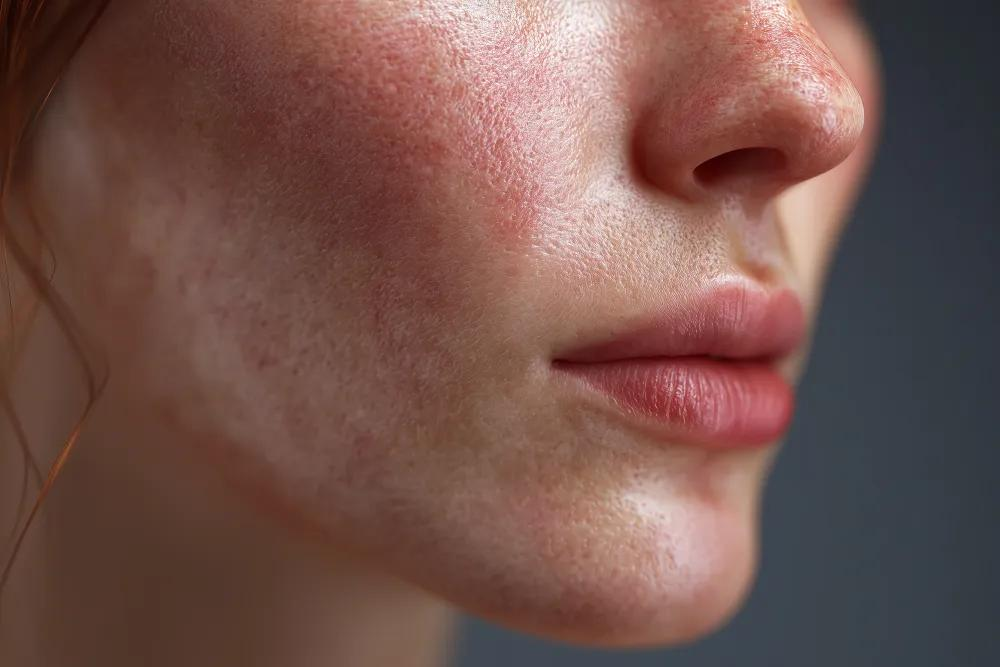
If you live with psoriasis, you may recognise a frustrating pattern. Your skin settles, the redness and scaling improve and, for a while, it can feel as though the problem has gone. Then the same patch starts to return, or psoriasis appears somewhere new. Sometimes there is an obvious reason for a psoriasis flare up. At other times, it seems to happen without warning.
Psoriasis is a long-term inflammatory skin condition, which means the tendency to develop it remains even when your skin looks clear. Understanding this flare, clear, repeat cycle can make the condition feel less unpredictable and help you recognise when something has changed.
At Dr Ed Robinson Aesthetics in Hale, Cheshire, our dermatology service provides specialist assessment for psoriasis and other ongoing skin concerns, helping patients understand what may be contributing to their symptoms and how best to manage them.
Why Does Psoriasis Keep Coming Back After It Has Cleared?
One of the confusing things about psoriasis is that your skin can look completely clear between flare ups.
Psoriasis is linked to the immune system becoming overactive and speeding up the normal production of skin cells. Instead of being replaced gradually, new skin cells build up too quickly. This creates the thickened, scaly and inflamed patches associated with psoriasis.
When a flare settles, those patches may become much less noticeable or disappear altogether. However, the tendency for the immune system to trigger psoriasis is still there, so symptoms can return.
Some people may go months between flare ups. Others find that their psoriasis comes and goes much more frequently.
The goal of managing psoriasis is therefore not necessarily to expect it never to appear again, but to keep symptoms under good control and recognise when the pattern starts to change.
How Do I Know If My Psoriasis Is Flaring Up?
A psoriasis flare does not always begin with an obvious plaque. You may first notice a familiar area becoming itchy, tight or rough before the redness and scaling become more noticeable.
Common signs include:
- Red or discoloured patches
- Dry, thickened or scaly skin
- Silvery or flaky scale
- Itching, irritation or soreness
- Cracking
- Changes to the scalp or nails
Flares can be influenced by several factors, including stress, infections, skin injuries, certain medicines, smoking, alcohol and changes in weather. Triggers vary considerably between people, and sometimes there is no obvious reason for psoriasis to return.
You may also find that psoriasis repeatedly appears in the same place, particularly on the elbows, knees or scalp. In some people, a scratch, cut or repeated rubbing can trigger psoriasis in that area, something known as the Koebner response.
Rather than trying to avoid every possible trigger, look for patterns in your own skin. If your psoriasis consistently worsens during stressful periods, at a particular time of year or following certain events, this can be useful information to share with your dermatologist.
If a new rash looks or feels different from your usual psoriasis, it is worth having it assessed. Eczema, fungal infections and other skin conditions can sometimes cause similar symptoms.
What If My Usual Psoriasis Treatment Isn’t Working Anymore?
Psoriasis does not necessarily stay the same throughout your life. Perhaps you previously had one small patch on an elbow, but you are now noticing psoriasis on your scalp as well. Your flare ups may be happening more frequently, lasting longer or becoming more uncomfortable.
That can mean it is time to review how the condition is being managed. The amount of psoriasis you have is only part of the picture. We also consider where it is, how uncomfortable it feels and how much it affects your everyday life.
A small patch on the hand, for example, can be very disruptive if it repeatedly cracks and becomes sore. Scalp psoriasis may be particularly frustrating if it causes persistent itching and visible flaking. Someone with psoriasis across several areas of the body may need a different approach again.
For milder cases, medical management may involve prescription topical treatments applied directly to the affected skin, alongside appropriate everyday skin care. If psoriasis becomes more persistent, widespread or difficult to control, a dermatologist can assess whether oral prescription treatment or another medical management approach may be appropriate.
The right treatment will depend on the individual. Your dermatologist will consider the type and severity of your psoriasis, where it appears, your general health, how much it affects your everyday life and what you have already tried. This means treatment can be adjusted as your psoriasis changes rather than simply continuing with something that is no longer giving you enough control.
It may be worth arranging a dermatology review if:
- Your flare ups are becoming more frequent
- Each flare seems to last longer
- Psoriasis is appearing in new places
- What previously worked is no longer helping
- Your skin is becoming increasingly sore or uncomfortable
- Psoriasis is interfering with sleep or everyday activities
- You are no longer sure that the changes you are seeing are psoriasis
At Dr Ed Robinson Aesthetics, we look at more than how your skin appears during one appointment. Knowing where your psoriasis started, how it has changed, what you have previously tried and whether you have noticed particular triggers can help build a much clearer picture.
Why See a Private Dermatologist for Psoriasis?
Many people first speak to their GP when psoriasis develops, and primary care can play an important role in managing the condition. However, if psoriasis keeps returning, becomes more difficult to control or you are unsure whether your current treatment is still right for you, seeing a dermatologist can provide a more specialist assessment.
A private dermatology appointment gives you dedicated time with a doctor who specialises in diagnosing and treating skin conditions. Rather than looking only at the flare you have on the day, your dermatologist can consider how your psoriasis has behaved over time, previous treatments, possible triggers and the impact it is having on you.
It also provides an opportunity to discuss prescription treatment options, including topical and oral medicines where clinically appropriate, without needing to name or choose a particular medicine yourself.
For some patients, another benefit of private dermatology is being able to access specialist advice directly rather than waiting for referral into secondary care. This can be particularly useful when psoriasis has been repeatedly managed but is no longer responding in the same way.
The aim is not necessarily to prescribe more treatment. It is to make sure the treatment you are using is appropriate for the way your psoriasis is behaving now.
How Can LED Therapy Support Psoriasis?
Alongside medical management, LED light therapy may be a helpful addition for some people with psoriasis, particularly when the skin is red, inflamed or easily irritated.
At Dr Ed Robinson Aesthetics, we use Dermalux Triwave LED Therapy, a gentle, non-invasive treatment that uses specific wavelengths of light to support the skin. Unlike traditional UV phototherapy, it does not use ultraviolet light.
How Does LED Therapy Work?
LED Therapy works by exposing the skin to carefully selected wavelengths of light. These wavelengths are absorbed by cells within the skin, where they can influence natural processes involved in inflammation, repair and recovery. There is no heat damage, resurfacing or controlled injury to the skin.
This is particularly interesting in psoriasis because the condition involves both inflammation and skin cells being produced much faster than normal. Research suggests that certain wavelengths of visible light may help calm inflammatory activity and influence this rapid skin cell turnover. Studies have reported improvements in psoriasis plaques using different forms of visible LED light, although research into its role in psoriasis is still developing.
During a Dermalux Triwave session, the LED panel is positioned over the treatment area while you relax beneath the light. Nothing is injected or removed from the skin, and the treatment does not peel or resurface it. A session takes around 30 minutes, no numbing is required and there is no expected downtime.
At the clinic, Dermalux Triwave is used to help reduce redness and inflammation, support skin healing and improve overall skin health. For someone experiencing recurring psoriasis, these effects may make LED Therapy a useful supportive addition alongside the medical management recommended by their dermatologist, where appropriate.
It is also a treatment where benefits can build with regular sessions. Rather than expecting one appointment to completely change a long-term inflammatory condition, a course may be considered where appropriate to provide ongoing support for the skin.
Every case of psoriasis is different, so assessment comes first. We would look at where your psoriasis appears, how active it is and the condition of the surrounding skin before deciding whether Dermalux Triwave is a suitable option and how it could fit into your overall approach to managing your psoriasis.
Is Psoriasis Only a Skin Condition?
Not always, which is one reason it is worth mentioning symptoms that might initially seem unrelated to your skin.
Some people with psoriasis develop psoriatic arthritis, which causes inflammation in the joints. If you have psoriasis and start experiencing persistent joint pain, swelling or stiffness, speak to an appropriate medical professional.
Psoriasis can also affect your nails. You might notice tiny dents or pits in the nail surface, changes in colour, thickening or part of the nail beginning to lift away from the skin underneath.
You do not need to decide for yourself whether these changes are connected. Simply mention them during your consultation so they can be considered alongside your skin symptoms.
Frequently Asked Questions About Psoriasis
Can psoriasis suddenly start when you’re an adult?
Yes. Psoriasis can first appear at different stages of life, including adulthood. If you develop a new rash that is persistent, scaly or inflamed, having it assessed can help establish whether psoriasis or another skin condition is responsible.
Is psoriasis contagious?
No. You cannot catch psoriasis from somebody else through touching their skin, sharing towels, swimming or close physical contact.
Can I have psoriasis even if nobody in my family has it?
Yes. Family history can increase the likelihood of developing psoriasis, but not everybody with the condition has a relative who is known to have it.
Can hormones make psoriasis worse?
Some people notice changes in their psoriasis during periods of hormonal change, although this varies considerably from person to person. If you have noticed a clear pattern, mention it during your assessment.
Should I moisturise psoriasis when it isn’t flaring?
Keeping psoriasis-prone skin moisturised can help with dryness and support the skin barrier even between flare ups. If your skin is particularly sensitive or easily irritated, ask for advice about what is suitable for you.
Getting to Know Your Psoriasis Pattern
Living with psoriasis can sometimes feel like repeatedly dealing with the same problem. But if your skin keeps flaring, it is worth paying attention to what has changed rather than simply treating each new patch in isolation.
Are your flare ups happening more often? Are they lasting longer? Has psoriasis appeared somewhere new? Is something that previously worked becoming less effective?
These details can help build a much clearer picture of what your skin needs.
At Dr Ed Robinson Aesthetics in Hale, Cheshire, a dermatology consultation provides an opportunity to have recurring or changing psoriasis properly assessed and discuss the most appropriate next steps. This may include prescription topical or oral treatment where clinically appropriate, with Dermalux Triwave LED Therapy also considered as a supportive option for suitable patients.
If your psoriasis is becoming harder to manage, you can book a dermatology consultation at our Hale clinic, welcoming patients from Altrincham, Wilmslow, Knutsford and across Cheshire and Greater Manchester.